


loader image

PDO Thread Lift In Spring Hill, FL

What A PDO Thread Lift Does, And What It Does Not Do

Polydioxanone has been used as an absorbable surgical suture for decades. The threads used in aesthetics are the same material, shaped with barbs or cogs so they grip tissue and hold it in a new position. Placement takes under an hour with local anesthesia.

Two things follow from how the material behaves. First, the lift is temporary by design. The suture hydrolyzes and the mechanical hold goes with it. Second, and this is the part almost no treatment page prints: most PDO thread devices hold 510(k) clearance from the FDA for soft tissue approximation, meaning holding tissue together where an absorbable suture is appropriate. Cosmetic facial lifting sits outside that cleared indication and is performed off-label. Off-label use is legal and routine across medicine. It is not the same thing as a regulator signing off on facial lifting, and “FDA cleared” on a menu is doing more work than the phrase can carry.

Formation has written about this at length in our discussion of what a thread feels like under the skin. We hold the landing page to the same standard as the blog.

6 months post high-definition liposuction with moderate definition.The goal wasn’t just less fat. It was a leaner, more athletic contour with visible definition through the abdomen and torso, without pushing the result to the highest level of definition.High-definition liposuction strategically sculpts around the underlying anatomy and can be customized based on a patient’s anatomy, muscle structure, and the degree of definition they want to achieve.For this patient, moderate definition created the balance Dr. Gopal was looking for.Results vary by patient and depend on individual anatomy, skin quality, and treatment plan.Considering HD liposuction? Schedule a consultation with Dr. Gopal Grandhige at Formation Tampa. Link in bio.#HDLiposuction #Liposuction #BodyContouring #MaleLiposuction #tampa

10 1
Your lipo results at 2 weeks are not your final results.And sometimes, what you see during those early weeks can be unsettling.Swelling can temporarily make the treated area look larger. The tissue may feel firm, tight or lumpy. The definition you were expecting may not be visible yet.That doesn’t necessarily mean something went wrong. It simply means your body is still healing.After liposuction, recovery happens in stages, from the initial inflammation and swelling to tissue repair, skin contraction and the gradual emergence of the new contour.Significant changes often become more apparent around the 3–6 month mark, with continued refinement as the tissues heal and mature.That’s why comparing yourself a few weeks after surgery to someone’s polished before-and-after photo can create a very unrealistic expectation. Those two photos may represent months of healing in between.The operation creates the contour. The final result reveals itself over time.If you’re considering HD liposuction, schedule a consultation with Dr. Gopal to understand the procedure, recovery, and what to realistically expect from your results (link in bio).#tampa #liposuction #hdliposuction

73 1
Some surgical decisions are much harder to correct than they are to avoid.That’s what Dr. Gopal means when he says, “I wish more patients knew that you pay more to undo a cheaper procedure.”With liposuction and body contouring, removing fat is only one part of the process. Your surgeon has to understand your anatomy, know how much fat to remove and where to preserve it, create smooth transitions between areas, and consider how the final contour fits the rest of your body.But the procedure doesn’t end when you leave the operating room. Recovery and aftercare matter too. The right guidance around compression, lymphatic massage, incision and drainage care, activity and nutrition can help manage swelling and support your body as it heals.When something doesn’t go as planned, correcting dents, irregularities, poor proportions or an unnatural contour can be more complicated than doing the procedure properly the first time. And sometimes, there’s less to work with the second time around.So when you’re comparing surgeons, don’t compare price alone. Look at their training, experience, surgical approach, before-and-after results, and what their care includes before and after surgery.Because a cheaper procedure can become a very expensive one when you have to do it twice.#tampa #HDLiposuction #lipo

13 0
Lipo recovery can be a lot.There can be swelling, drainage, compression garments, limited activity, and a period where your body may look worse before it starts looking better. And when the final result can take months to fully reveal itself, recovery can take an emotional toll too.That’s why Dr. Gopal views a successful surgical experience as three equally important parts: pre-op care, the operation itself, and post-op care.At Formation, that process starts four weeks before surgery. Patients are prepared physically for the procedure and mentally for what they may experience during recovery.That support continues after surgery with a private nurse during the initial recovery period, supplies and education for at-home care, nutritious meals, and in-home lymphatic massage to help manage postoperative swelling and fluid.None of those pieces are considered extras. They’re part of the surgical experience.Because the goal isn’t just to perform the procedure. It’s to make sure you know what to expect, you’re prepared for it, and you’re properly cared for through the recovery that follows.Considering liposuction or body contouring in Tampa? Schedule a consultation with Dr. Gopal Grandhige at Formation Tampa.#tampa #hdLiposuction

68 4
Many surgeons abandon this lipo technique because it’s so physically demanding.The approach to HD liposuction Dr. Gopal uses requires an extraordinary level of detail and precision. Rather than simply etching lines, every contour and transition is shaped around the patient’s underlying anatomy, a process that can take several hours.Dr. Gopal trained in this technique in Barcelona with one of the world’s leaders in HD liposuction and now teaches it to other physicians. It’s a demanding approach, but that level of precision is what allows for definition that looks natural to the individual.Considering HD liposuction in Tampa? Schedule a consultation at Formation Tampa (link in bio).

61 7
“Glad I took my time researching.”That line matters.Choosing to have plastic surgery isn’t just about deciding you want a change. It’s about deciding who you trust to understand the result you’re looking for, especially when the goal isn’t simply removing fat, but creating a shape that still looks natural to you.For our lovely patient, that meant a tighter stomach and waist, feeling more comfortable in fitted clothing, and most importantly, getting the result she wanted “without looking fake.”That’s the goal of thoughtful body contouring: not to make you look like someone else, but to create a result that works with your body and your goals.Dr. Gopal Grandhige specializes in liposuction and body contouring in Tampa, creating treatment plans around each patient’s anatomy, proportions, and goals.Considering liposuction? DM us or Schedule a consultation at Formation to learn what approach may be right for you (link in bio).

6 0
More definition doesn’t automatically mean a better liposuction result.The goal of body contouring is to create definition that makes sense for your anatomy, not to create the most sculpted abdomen possible simply because we can.Low-, medium-, and high-definition liposuction can create very different looks, from subtle contouring to a more athletic or highly sculpted appearance. The right level depends on your existing muscle definition, proportions, surrounding areas of the body, and the result you want to achieve.For Dr. Gopal Grandhige, a board-certified surgeon specializing in body contouring and high-definition liposuction in Tampa, the goal is balance: the abdomen, chest, back, arms and shoulders should look like they belong to the same body.The result should feel cohesive, proportional, and natural to your anatomy.Considering liposuction? DM us or schedule a consultation at Formation to discuss the level of definition that makes sense for your body and your goals (link in bio).

34 2

The Four-Layer Neck Read

Necks and jawlines lose definition for four separate reasons, and most people show more than one at once. Dr. Grandhige works through all four before recommending anything. We call it the Four-Layer Neck Read.

Layer One: Fat

Fullness under the chin that sits above the muscle. Threads do not remove fat. Pulling a fat pad backward with a suture moves the problem rather than solving it. Layer one belongs to neck and jawline contouring, where the fat comes out.

Layer Two: The Platysma

The platysma is the sheet of muscle across the front of the neck. When its edges separate with age, you get vertical platysmal bands that stand out when you talk. A dissolving thread cannot hold a muscle edge. This layer calls for MyEllevate, a permanent suspension suture, combined with platysmaplasty. The suture stays put and can be removed if needed, which is the opposite of what barbed threads do.

man gently patting his face dry after a shower following PDO threads in Tampa

Layer Three: Skin

Skin that has lost recoil. Pinch it, release it, and watch how fast it returns. Slow return means the skin itself is the problem, and a thread will tent it rather than tighten it. This layer responds to FaceTite, which works from beneath the skin rather than across its surface. Reasonable elasticity, roughly skin age 25 to 55, is what makes any of the non-excisional options work.

Layer Four: Chin Projection And Jaw Angle

Sometimes the jawline is soft because the bone underneath does not project far enough to give the soft tissue anywhere to drape. No amount of lifting fixes a frame problem. This is where structural filler belongs, either Radiesse, a calcium hydroxylapatite, or Juvederm, a hyaluronic acid, placed on the chin or along the angle.

Threads occupy the space between these layers: mild early descent of soft tissue, decent skin quality, a patient who wants the result now and accepts that it will fade. That is a real patient. It is not most patients.

Why Age Matters More Here Than The Brochures Admit

Spring Hill is older than the state it sits in. Census figures put the median age around 46, against roughly 43 for Florida and 39 nationally, and close to one in four residents is 65 or older. Hernando County as a whole runs older still.

That matters clinically, not just demographically, because age is one of two things that independently predict thread complications. A multicenter cohort study of 2,000 PDO thread lift cases across 105 clinics, published in Aesthetic Plastic Surgery, found the odds of a complication rose with each decade: an odds ratio of 2.14 for patients in their forties, 3.38 for their fifties, and 5.08 for those 60 and older. Thread count carried its own effect, an odds ratio of 1.12 for every additional thread placed.

Read those two findings together and the practical conclusion writes itself. The older the patient, the fewer threads the anatomy will tolerate. The fewer threads placed, the smaller the lift. Past a certain point the arithmetic stops working, and a treatment that promises more lift by adding more threads is quietly stacking risk on the exact patients least able to absorb it.

The study is retrospective and drawn from a single clinic network, so the absolute numbers should be read as directional rather than precise. The direction is the useful part, and it is the reason a Spring Hill consultation at Formation spends more time on candidacy than on technique.

What The Published Complication Data Actually Says

The same 2,000-case study put the overall complication rate at 12.4%. Skin retraction accounted for 6.35%, asymmetry 2.9%, and lingering pain 1.75%. Those are not catastrophic figures. They are also not the “minimal downtime, minimal risk” framing that dominates this search result.

Most of what goes wrong is visible rather than dangerous: a dimple that will not settle, one side sitting higher than the other, a thread you can feel under the skin. Most of it resolves. Some of it needs a second appointment to correct, and a small share needs the thread removed.

Dr. Grandhige’s position on this is consistent with how he approaches everything at Formation. If a treatment sounds easy and guaranteed, that is a red flag, and a provider who will not discuss what goes wrong is not giving you enough to decide with. You can read more about that standard in our philosophy.

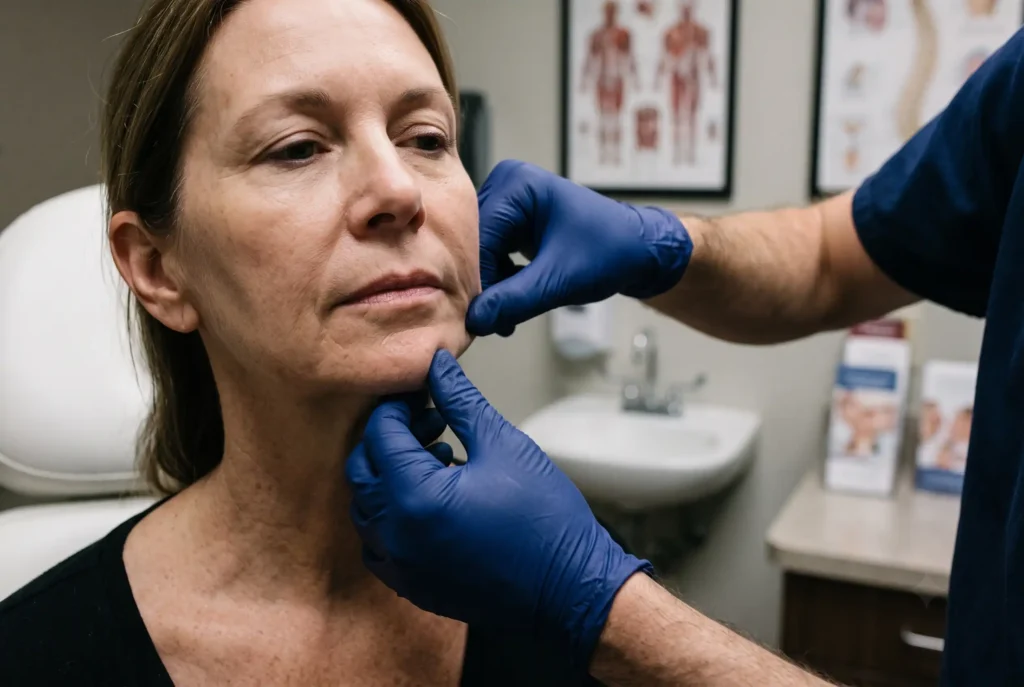
Surgeon checking skin laxity to judge if PDO threads suit the patient

What Threads Can Cost You Later

This is the part almost nobody raises, and for a population where surgery may eventually be on the table, it is the most important paragraph on this page.

A 2025 case series in Aesthetic Plastic Surgery reviewed facelifts performed on patients who had prior thread lifting. Operating on those patients, the surgeon found fibrosis, tissue distortion, and layers of the face fused together where they should have separated cleanly. Dissection was harder and the planes were less predictable.

The series covered ten patients under one surgeon, which is small, and it should be weighed accordingly. But the mechanism is not mysterious. Threads work partly by provoking a healing response along their track, and healing responses leave tissue behind.

So if surgery is a realistic option for you in the next five to ten years, threads are a decision with a downstream cost, not a free trial. If surgery is genuinely off the table, that cost may not matter to you at all. Either answer is fine. Making the choice without knowing is not.

How Formation Prepares You Before A Single Thread Goes In

Every practice buys the same threads from the same suppliers. The instrument is identical everywhere. What differs is the thinking around it.

Before treatment, your health and diet are assessed. Nutrition, supplements and peptides are adjusted in the window immediately before and after so your body builds as much structure as it can while the material is in place and as it absorbs. Inflammation control and protein intake are dialed in rather than left to chance, because the tissue response is the entire mechanism here. Dr. Grandhige treats aftercare as roughly forty percent of the result, with the procedure itself accounting for the other sixty. Poor aftercare can undo well-placed work.

Dr. Grandhige evaluates every patient himself and performs every placement himself. Nothing is handed to a technician. Formation runs a deliberately limited volume so that stays true. You can see the range of work in the before and after gallery.

What The Day Looks Like And How Recovery Runs

Placement is done in the office under local anesthesia. Threads go in through fine cannulas along vectors mapped to your anatomy. Most patients describe pressure and tugging rather than pain, and the appointment runs under an hour.

Expect swelling, tightness and some bruising for the first several days. Sleep elevated. Skip strenuous exercise, facial massage, dental work and wide yawning for about two weeks so the barbs are not pulled loose before tissue settles around them. Minor dimpling in the first days is common and usually smooths as things relax. A dimple still present at four weeks, a firm cord that has not changed, or any spreading redness or warmth is a reason to call rather than wait.

The lift is visible immediately and softens over the following months as the material absorbs. Published series generally put useful duration in the range of a year to eighteen months, with wide individual variation.

Worth naming the contrast plainly: the surgical neck and jawline pathway runs differently. There, patients are back to work at about one week wearing a chin compression garment twelve to twenty-four hours a day, skin tightening becomes visible around three months, and the final result lands at six to nine months. Longer commitment, longer result. Threads trade one for the other.

Consultation Options For Spring Hill Patients

Given the drive, most Hernando County patients start remotely. Formation offers a complimentary virtual evaluation with patient coordinator Hanna, who reviews your goals and outlines a plan before you commit to the trip. It costs nothing and it is conducted by video.

The in-office consultation with Dr. Grandhige carries a fee. It is a full surgical assessment: anatomical evaluation, candidacy across all four layers, and an honest discussion of options and limitations. That fee can be applied toward any procedure or product at the practice. Start with the virtual evaluation, and come down once there is a reason to.

Formation performs surgical procedures in Quad A accredited facilities. Dr. Grandhige’s certification is verifiable through the American Board of Surgery, and his training and credentials are detailed on his physician profile. Broader information on the treatment sits on our main PDO thread lift page.

The Honest Summary For Spring Hill Patients

A PDO thread lift is a real tool with a narrow window. If your skin still recoils, your jawline has softened rather than collapsed, and you want something visible now that you accept will fade, it can work well.

If any of the other three layers is driving what you see in photographs, threads will disappoint you, and they may complicate what comes next. The Four-Layer Neck Read exists so that gets sorted before anyone books a treatment room rather than after.

Start with the complimentary virtual evaluation. If threads are right for you, we will say so. If something else is, we will say that instead, and if the answer is to wait, you will hear that too.

Frequently Asked Questions About PDO Thread Lifts

 Published series generally report useful duration of about twelve to eighteen months, with wide variation by individual. The threads themselves absorb over roughly six to nine months. Duration depends on your tissue, how many threads were placed, and where.

 Most patients report pressure and tugging rather than pain. Local anesthesia is placed first. Soreness for a few days afterward is normal, particularly when you move your jaw.

 Anyone whose main issue is fat under the chin, separated platysmal bands, genuinely lax skin, or a recessed chin. Threads address soft tissue position, not those four things. Active skin infection in the area and certain connective tissue disorders also rule it out.

 No. Most PDO thread devices are 510(k) cleared for soft tissue approximation, not approved for cosmetic lifting. Using them for facial lifting is off-label, which is legal and common but is not the same as regulatory approval for that use.

Possibly. A 2025 case series found fibrosis and tissue distortion at surgery in patients who had prior thread lifting. The series was small, ten patients under one surgeon, so it should be weighed rather than treated as settled. If surgery is a realistic future option for you, raise this at consultation.

 It changes the risk calculation. A 2,000-case study found complication odds climbing with each decade, with patients 60 and older carrying an odds ratio above five. It does not rule anyone out. It does mean older patients should expect a more conservative thread count and a correspondingly smaller lift.

 That depends entirely on your anatomy and is decided at consultation. Be cautious of any provider who quotes a number before examining you, since thread count is itself an independent predictor of complications.

 Often, yes, and frequently the better plan is a different treatment entirely rather than a combination. Dr. Grandhige will tell you if energy-based tightening or contouring would serve you better than threads, including when that means recommending nothing at all for now.