
Close
A PDO thread lift repositions loose skin along the jawline in about an hour, using dissolvable sutures placed under the skin instead of an incision. You drive yourself home the same afternoon. At Formation, a board-certified general surgeon reads the anatomy, places every thread himself, and tells you when threads are the wrong tool for your face. Ruskin sits roughly 25 miles south of the office, so this is one appointment and one drive rather than a trip you plan a week around.
Two things happen, on two different clocks.
The first is mechanical and visible before you leave the room. Barbed threads pass under the skin, catch the underside of the tissue and draw it upward along the vectors your anatomy allows. Nothing biological has happened yet. It is mechanics and geometry.
PDO is polydioxanone, the same absorbable suture material general surgeons have worked with for decades. It dissolves. Dr. Grandhige places threads along the jawline, lower cheek and upper neck, the three zones that soften earliest and the same zones he works in surgically. The zone-by-zone technique is covered on Formation’s jawline PDO thread lift page.
The second clock runs for months. As the polydioxanone breaks down across three to six months, your body treats each thread track as a controlled injury and builds collagen along it. That collagen is the durable half of the result, and it arrives after the threads are largely gone. Month four often photographs better than week two. Day one is a preview.
Threads answer one of four things that soften a jawline. Most necks show aging in more than one layer at once, which is why a thread lift disappoints people who needed something else. Dr. Grandhige runs this read before anyone discusses thread counts.
Fullness under the chin that keeps its shape no matter what the scale does. Threads cannot remove fat. They can only move it. The answer is jaw and neck liposuction, done in the office under local anesthesia.
Vertical platysmal bands that stand up when you talk or clench. Threads pull skin. Bands are muscle. The answer is MyEllevate, a permanent suspension suture, paired with platysmaplasty, and only where bands are actually present. That suture stays put and can be removed later, which is the opposite of how a dissolving barbed thread behaves.
Skin that has gone slack and no longer springs back when you pinch and release it. This is the layer threads are built for, and only while recoil remains. Once recoil is gone, threads pull and then give out early. Energy-based tightening such as FaceTite reaches a depth threads cannot, because it works from underneath rather than pulling from above.
A weak chin or a soft jaw angle reads as a poor jawline even when skin and fat are fine. Lifting does not build bone. Structural filler supplies the frame instead: Radiesse, a calcium hydroxylapatite, or Juvederm, a hyaluronic acid, placed at the chin and along the border. The superhero jawline people ask for is usually a frame problem rather than a skin problem.
Threads are the layer-three answer for skin that still recoils. That is the whole indication.
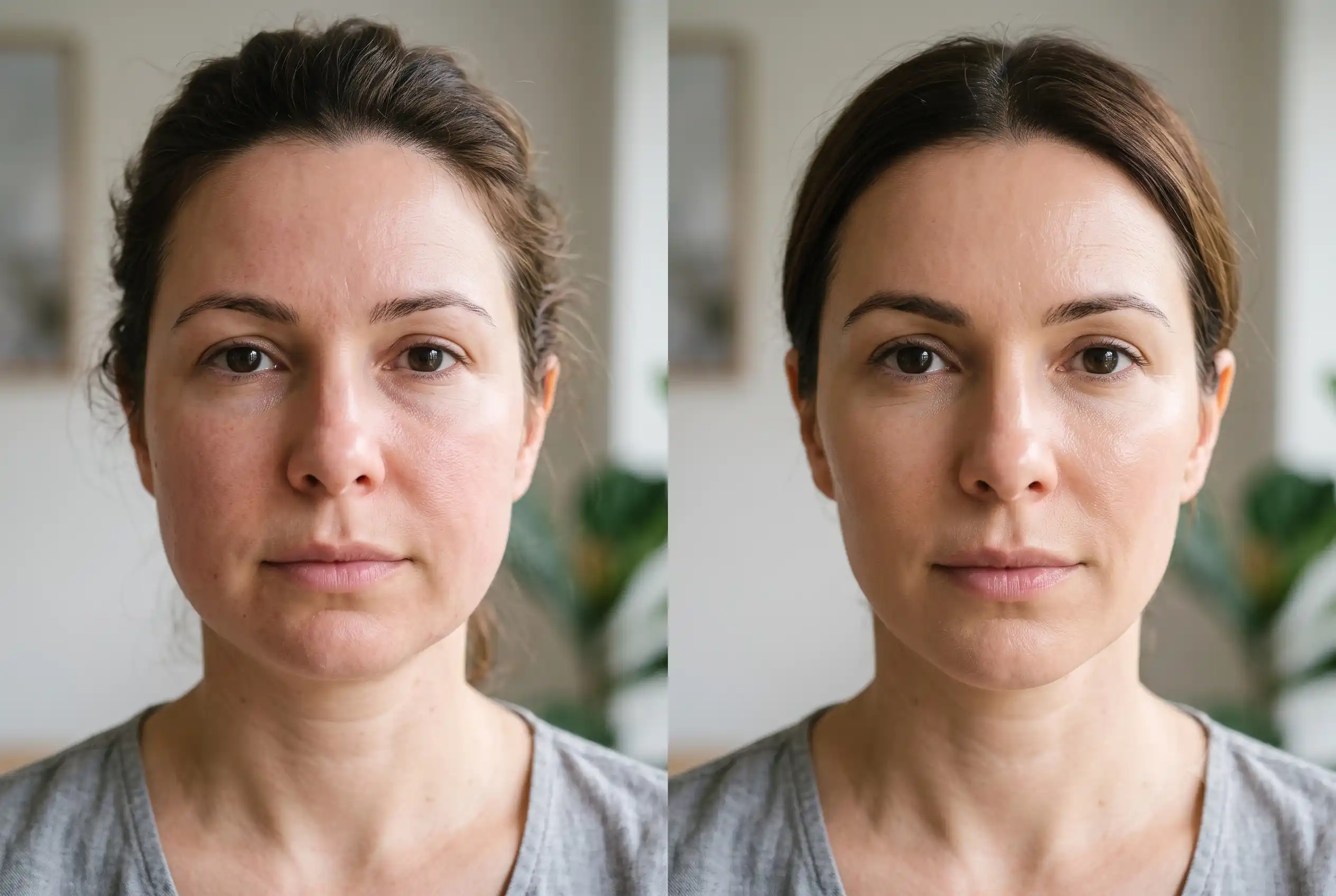
Formation reads skin age rather than birth year, and the working window sits at roughly 25 to 55.
That matters more here than in most of the service area. Ruskin borders Sun City Center, one of the largest age-restricted communities in Florida, and shares a corridor with Apollo Beach and Wimauma. A larger share of local inquiries arrive from outside the window, which means a larger share of honest answers here are no, or not this procedure.
The published data supports the caution. A meta-analysis of facial thread lifting in Aesthetic Plastic Surgery, pooling 26 studies, found patients over 50 running dimpling at 16 percent against 5.6 percent, and infection at 5.9 percent against 0.7 percent. Read it with the limitation the authors state: pooled data blends thread types, techniques and operators across 26 studies, so the figures describe a range rather than your outcome.
Sun exposure pushes the same way. Years on a boat out of E.G. Simmons, in the fields around Wimauma or on a job site in this climate can put your skin’s recoil a decade ahead of your age. That gets assessed by hand at the consultation, not on an intake form. Men more often come in for jawline and neck definition than for a lifted look, covered on the thread lift for men page.
Ask these anywhere you go, including here.
How many threads, and what is the reasoning behind that count? A number with anatomy behind it means someone measured your face instead of quoting a package.
Who physically places them, and under what supervision? In Florida, placing threads is a medical act. A physician may delegate it to licensed clinicians within their scope, unlicensed staff cannot perform it at all, and the requirements are set by the state rather than by the clinic. Arrangements vary, so ask.
Which thread, and does its cleared indication cover facial lifting? PDO threads are 510(k)-cleared, not FDA-approved, and for most PDO products the cleared indication is soft tissue approximation. Off-label use of a cleared device is legal and routine. What it means for you is that no regulator has reviewed lifting data for these threads, so the operator carries the entire result.
Do you also operate on patients who had threads placed elsewhere? Only a surgeon can answer that honestly, and the answer tells you whether anyone is thinking about your face in five years or five weeks.
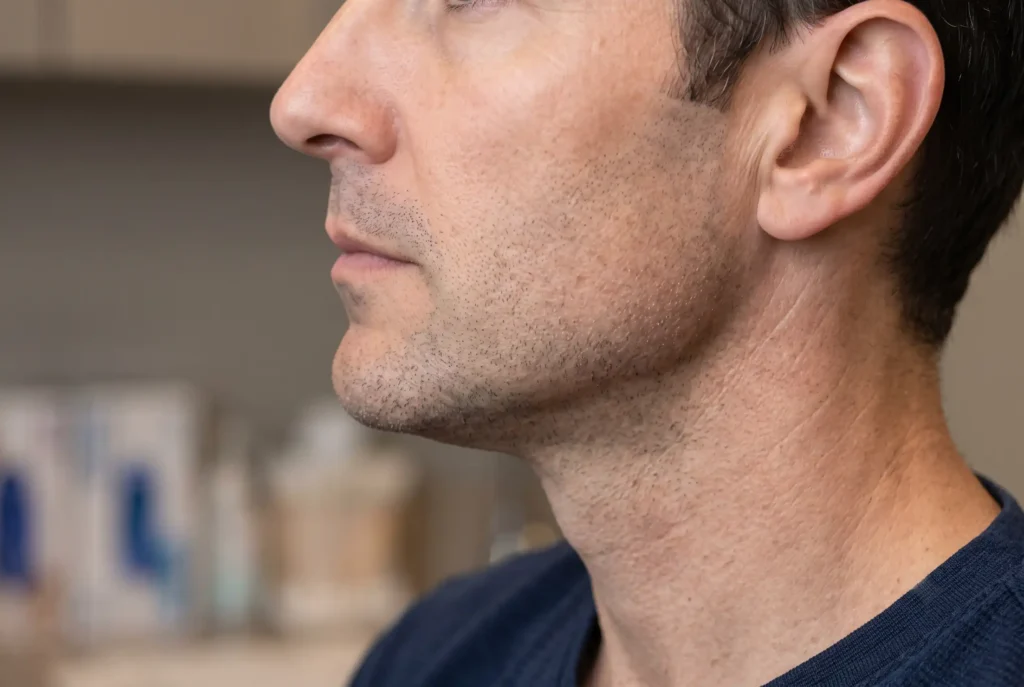
The variable in a thread lift is the hand, not the product.
Dr. Gopal Grandhige is a board-certified general surgeon who specializes in aesthetic surgery. He attended the University of Michigan Medical School, matched into the combined plastic surgery residency at Yale, then completed a full general surgery residency with fellowships in burn surgery, critical care, and minimally invasive metabolic and foregut surgery. His certification is verifiable through the American Board of Surgery.
Burn and critical care surgery is where a surgeon learns how tissue behaves after it has been injured. A thread lift is a controlled tissue injury. He has operated for over fifteen years across several thousand cases and keeps his volume low enough to evaluate you, plan the case, place the threads and follow you himself for a full year.
Expect the mechanical lift to read clearest for six to twelve months, with the collagen contribution carrying a softer version past that.
The twelve-to-eighteen-month figure printed on nearly every clinic page is the optimistic end of a real range, not its middle. What moves your number is starting skin quality, thread type, thread count and placement, not the brand on the box.
Judge it on outcomes instead of numbers. The non-surgical neck and jawline contouring gallery shows what this looks like on real faces. Nobody here will promise you eighteen months.
The durable half of a thread result is collagen your own body builds, so what your body has to build with is a real variable.
Before treatment, Dr. Grandhige assesses your health and diet. Protein intake, inflammation, sleep and training load all get reviewed, because each one feeds tissue healing. In the window immediately before and after placement, nutrition, supplements and peptides get adjusted so your body builds as much structure as it can while the threads are still there to build along. The plan is dialed in before the appointment and revisited at every follow-up.
Formation runs this on what the practice calls the 60/40 Recovery Standard. The procedure is sixty percent of the result. Aftercare is the other forty, and poor aftercare can undo good work.
The instrument is identical at every practice between here and Ruskin. The thinking around it is not.
Plan on a few visible days and one week back to full training.
The first few days bring swelling, some bruising and a tight pulling sensation along the thread lines. Sleep on your back, slightly elevated. Most people look normal enough for work by day four or five. At one week you are back at work, back to social plans and back to training.
Swelling clears across weeks two to four and you see your true starting point. Skip saunas, steam rooms and hot yoga in that window, because heat and heavy sweating raise swelling and slow the settling. In this climate that is a bigger ask than it sounds.
At three months the collagen contribution starts to show. Six to nine months is the final read.
One scheduling note for the bay side. Hurricane season runs June 1 through November 30, and much of coastal Ruskin sits in the first evacuation zones called during a storm. A procedure with a follow-up calendar attached takes some planning inside that window.
Threads can make a later facelift harder, and almost nobody selling them says so.
The mechanism is the one that makes threads work. Collagen forms along each track, and that fibrosis can persist after the polydioxanone is gone. Surgeons operating later on patients with a thread history report denser, less predictable tissue planes and longer dissection. That is not a reason to avoid threads. It is a reason to sequence them deliberately. If a facelift is realistically five or ten years out, it belongs in the conversation before the first thread goes in.
The same pooled analysis puts the rest in proportion: swelling in roughly 35 percent of cases, dimpling in 10 percent, paresthesia in 6 percent, visible or palpable threads in 4 percent, and infection and extrusion in about 2 percent each. Absorbable threads, which is what PDO is, carried lower paresthesia and extrusion rates than non-absorbable ones. Most of it resolves.
When a neck is past what threads or tightening can reach, Formation does not stretch the tool to fit. Dr. Grandhige stays in contact with the surgeons who do facelift and necklift work well and points you to the right one.
Formation is at 1315 South Howard Avenue in South Tampa’s SoHo district, roughly 25 miles north of Ruskin.
The cleanest route is I-75 north from Exit 240 or Exit 246, west on the Selmon Expressway, then out at Willow Avenue. Off-peak that runs about 35 minutes. Northbound I-75 through the Big Bend stretch is the choke point on weekday mornings, and US-41 north through Gibsonton is the fallback when it stacks up. From this direction an afternoon appointment is an easier drive than a nine o’clock slot.
Because a thread lift runs on local anesthesia and takes about an hour, none of this needs an overnight. That changes if the four-layer read points toward surgery instead. For patients traveling in for procedures, Formation holds relationships with nearby hotels at reduced rates, and Dr. Grandhige visits them in their rooms during the early days so they are not driving back and forth. South county patients already use that arrangement for neck and jawline contouring.
There are two ways to start. The in-office consultation with Dr. Grandhige is by appointment and carries a fee, because it is a full surgical assessment covering anatomy, candidacy, honest alternatives and timing rather than a sales meeting, and that fee can be applied toward any procedure or product at the practice. If you would rather get your bearings before making the drive, Formation offers a complimentary virtual evaluation with patient coordinator Hanna, who reviews your goals and outlines a plan before you decide whether to come in.
A thread lift is one of the simplest ways to sharpen a softening jawline without surgery. The outcome comes down to three things: how many threads, who places them, and whether anyone told you the truth about what threads cannot reach.
Threads answer one layer of four. If the problem is fat, muscle or frame, they will underdeliver no matter how well they are placed.
Most people do not tell the surgeon their real fear. They tell the front desk, and the most common one is that it will look done. Formation’s staff pass those concerns through before the consultation starts, so the question gets answered whether or not you say it out loud.
If you are in Ruskin, Apollo Beach or Sun City Center and want a sharper, more rested profile without weeks of downtime, start by finding out whether this is actually your procedure.
Roughly 25 miles, about 35 minutes off-peak. I-75 north from Exit 240 or 246, west on the Selmon Expressway, out at Willow Avenue. US-41 through Gibsonton is the alternative when I-75 backs up at Big Bend.
It depends on your anatomy, and the number should arrive with a reason attached. The count is set during the four-layer read, not quoted over the phone.
No. They are 510(k)-cleared as a medical device, and for most PDO products the cleared indication is soft tissue approximation rather than facial lifting. Off-label use of a cleared device is legal and routine.
The working window is roughly 25 to 55, so you are at its edge, and recoil decides rather than the birthday. Pooled data also shows patients over 50 running higher rates of dimpling and infection. You may be a better fit for tightening or liposuction, and you will be told which.
They can. Collagen laid along each track can persist as fibrosis after the material dissolves, and surgeons operating later report denser, less predictable planes. If surgery is on your ten-year horizon, sequence it on purpose.
Most people look presentable by day four or five and are back to full training at one week. Skip saunas, steam rooms and hot yoga for two to four weeks.
No. A thread lift is done under local anesthesia, so you drive yourself home. That changes if the plan shifts toward a procedure requiring sedation.
You get told so, and you get told what would work instead. Sometimes that is liposuction, tightening or filler. Sometimes it is waiting.



