


loader image

Neck Liposuction In Live Oaks Square, FL

Why Live Oaks Square Patients Choose Formation For Neck Liposuction

They come for a surgeon who will tell them no.

Most neck fullness is not one problem. It’s two, mixed together in a ratio that decides your entire plan. Get that ratio wrong and you either leave fat behind or you remove support the skin still needed. Formation is a boutique practice with limited surgical volume, which means Dr. Grandhige evaluates every patient personally, designs the plan himself, and stays involved for a full year afterward. About one in six people who come in for a neck consultation leave without a surgery date, because waiting is the better answer for them.

Dr. Grandhige is a board-certified general surgeon who specializes in aesthetic surgery. His background runs through critical care, burn surgery, and minimally invasive metabolic surgery before he concentrated on body contouring. That matters here for one reason: the neck is a small, unforgiving area where healing biology decides the result as much as technique does.

What Formation's Own Neck Cases Show

Across 214 neck and jawline cases at Formation over the last 24 months, the pattern is consistent enough to plan around.

  • 68 percent were mixed cases, fat plus mild to moderate laxity, treated with liposuction and radiofrequency tightening in one visit
  • 19 percent were fat-dominant, treated with liposuction alone
  • 13 percent were laxity-dominant and were steered toward a lift or a non-surgical path instead
  • Median return to desk work: day 5. Median return to unrestricted training: day 14
  • Average procedure time: 41 minutes, awake, in the office
  • 5 of every 100 neck cases developed a small fluid collection, drained in the office at a follow-up visit rather than left alone
  • GLP-1 weight loss was a factor in 31 percent of neck consultations across 2025 and 2026, up from 9 percent in 2023

One pattern worth knowing before you book. Patients who logged 18 or more hours a day in the chin compression garment during week one reached a visibly sharper jawline roughly two weeks earlier than patients who wore it under 12 hours. Same surgeon, same technique. The variable was the garment.

6 months post high-definition liposuction with moderate definition.The goal wasn’t just less fat. It was a leaner, more athletic contour with visible definition through the abdomen and torso, without pushing the result to the highest level of definition.High-definition liposuction strategically sculpts around the underlying anatomy and can be customized based on a patient’s anatomy, muscle structure, and the degree of definition they want to achieve.For this patient, moderate definition created the balance Dr. Gopal was looking for.Results vary by patient and depend on individual anatomy, skin quality, and treatment plan.Considering HD liposuction? Schedule a consultation with Dr. Gopal Grandhige at Formation Tampa. Link in bio.#HDLiposuction #Liposuction #BodyContouring #MaleLiposuction #tampa

9 1
Your lipo results at 2 weeks are not your final results.And sometimes, what you see during those early weeks can be unsettling.Swelling can temporarily make the treated area look larger. The tissue may feel firm, tight or lumpy. The definition you were expecting may not be visible yet.That doesn’t necessarily mean something went wrong. It simply means your body is still healing.After liposuction, recovery happens in stages, from the initial inflammation and swelling to tissue repair, skin contraction and the gradual emergence of the new contour.Significant changes often become more apparent around the 3–6 month mark, with continued refinement as the tissues heal and mature.That’s why comparing yourself a few weeks after surgery to someone’s polished before-and-after photo can create a very unrealistic expectation. Those two photos may represent months of healing in between.The operation creates the contour. The final result reveals itself over time.If you’re considering HD liposuction, schedule a consultation with Dr. Gopal to understand the procedure, recovery, and what to realistically expect from your results (link in bio).#tampa #liposuction #hdliposuction

71 1
Some surgical decisions are much harder to correct than they are to avoid.That’s what Dr. Gopal means when he says, “I wish more patients knew that you pay more to undo a cheaper procedure.”With liposuction and body contouring, removing fat is only one part of the process. Your surgeon has to understand your anatomy, know how much fat to remove and where to preserve it, create smooth transitions between areas, and consider how the final contour fits the rest of your body.But the procedure doesn’t end when you leave the operating room. Recovery and aftercare matter too. The right guidance around compression, lymphatic massage, incision and drainage care, activity and nutrition can help manage swelling and support your body as it heals.When something doesn’t go as planned, correcting dents, irregularities, poor proportions or an unnatural contour can be more complicated than doing the procedure properly the first time. And sometimes, there’s less to work with the second time around.So when you’re comparing surgeons, don’t compare price alone. Look at their training, experience, surgical approach, before-and-after results, and what their care includes before and after surgery.Because a cheaper procedure can become a very expensive one when you have to do it twice.#tampa #HDLiposuction #lipo

13 0
Lipo recovery can be a lot.There can be swelling, drainage, compression garments, limited activity, and a period where your body may look worse before it starts looking better. And when the final result can take months to fully reveal itself, recovery can take an emotional toll too.That’s why Dr. Gopal views a successful surgical experience as three equally important parts: pre-op care, the operation itself, and post-op care.At Formation, that process starts four weeks before surgery. Patients are prepared physically for the procedure and mentally for what they may experience during recovery.That support continues after surgery with a private nurse during the initial recovery period, supplies and education for at-home care, nutritious meals, and in-home lymphatic massage to help manage postoperative swelling and fluid.None of those pieces are considered extras. They’re part of the surgical experience.Because the goal isn’t just to perform the procedure. It’s to make sure you know what to expect, you’re prepared for it, and you’re properly cared for through the recovery that follows.Considering liposuction or body contouring in Tampa? Schedule a consultation with Dr. Gopal Grandhige at Formation Tampa.#tampa #hdLiposuction

68 4
Many surgeons abandon this lipo technique because it’s so physically demanding.The approach to HD liposuction Dr. Gopal uses requires an extraordinary level of detail and precision. Rather than simply etching lines, every contour and transition is shaped around the patient’s underlying anatomy, a process that can take several hours.Dr. Gopal trained in this technique in Barcelona with one of the world’s leaders in HD liposuction and now teaches it to other physicians. It’s a demanding approach, but that level of precision is what allows for definition that looks natural to the individual.Considering HD liposuction in Tampa? Schedule a consultation at Formation Tampa (link in bio).

61 7
“Glad I took my time researching.”That line matters.Choosing to have plastic surgery isn’t just about deciding you want a change. It’s about deciding who you trust to understand the result you’re looking for, especially when the goal isn’t simply removing fat, but creating a shape that still looks natural to you.For our lovely patient, that meant a tighter stomach and waist, feeling more comfortable in fitted clothing, and most importantly, getting the result she wanted “without looking fake.”That’s the goal of thoughtful body contouring: not to make you look like someone else, but to create a result that works with your body and your goals.Dr. Gopal Grandhige specializes in liposuction and body contouring in Tampa, creating treatment plans around each patient’s anatomy, proportions, and goals.Considering liposuction? DM us or Schedule a consultation at Formation to learn what approach may be right for you (link in bio).

6 0
More definition doesn’t automatically mean a better liposuction result.The goal of body contouring is to create definition that makes sense for your anatomy, not to create the most sculpted abdomen possible simply because we can.Low-, medium-, and high-definition liposuction can create very different looks, from subtle contouring to a more athletic or highly sculpted appearance. The right level depends on your existing muscle definition, proportions, surrounding areas of the body, and the result you want to achieve.For Dr. Gopal Grandhige, a board-certified surgeon specializing in body contouring and high-definition liposuction in Tampa, the goal is balance: the abdomen, chest, back, arms and shoulders should look like they belong to the same body.The result should feel cohesive, proportional, and natural to your anatomy.Considering liposuction? DM us or schedule a consultation at Formation to discuss the level of definition that makes sense for your body and your goals (link in bio).

34 2

What Neck Liposuction Treats, And What It Does Not

Neck liposuction, also called submental liposuction, removes the fat pocket under the chin and along the jaw that stays put no matter how lean you get. It sharpens the line between your face and your neck. On its own, it does not tighten skin that has lost its recoil.

That single distinction drives your whole plan.

  • Fat is the main issue: liposuction alone usually does the job
  • Loose skin is the main issue: removing fat without addressing the skin can make things look worse than before
  • Both are present: liposuction paired with radiofrequency skin tightening in the same visit, so the skin re-drapes cleanly over the new contour

Most neck cases fall into that third group. The same principles apply across every version of this procedure, and you can see the wider approach on our neck liposuction in Tampa page.

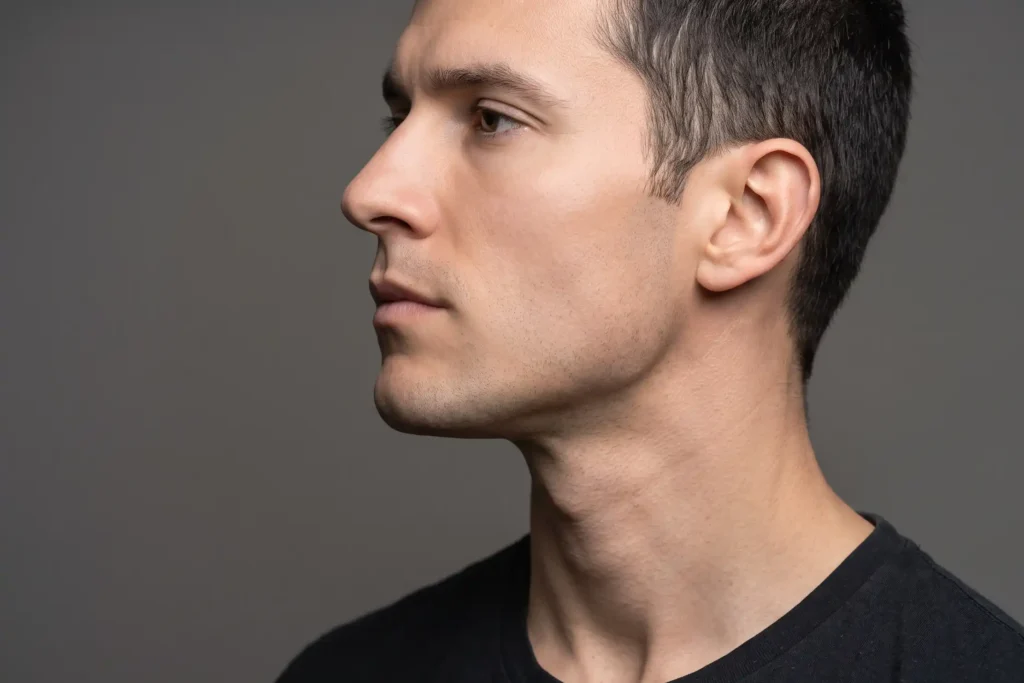
Close-up of a sharp male jawline and neck contour after liposuction

The Three-Second Pinch Test

Run this at home before your consultation. Look in a mirror, tip your chin down slightly, and gently pinch the tissue under your chin. Let go and count.

  • Snaps back inside about a second: fat is likely the dominant issue, and you’re probably a strong liposuction candidate
  • Takes two or three seconds to settle: mixed picture, and tightening in the same session is likely part of the plan
  • Hangs or creases as it releases: laxity is dominant, and liposuction alone will disappoint you

This is a starting point, not a diagnosis. What it does is let you walk in with a sharper question than “am I a candidate.”

The Four-Read Neck Assessment

At the consultation, Dr. Grandhige reads four things in a fixed order. Knowing the order tells you what he’s actually looking at while you’re in the chair.

  • Fat volume and depth. How much sits above the platysma muscle versus below it. Fat below the muscle behaves differently and changes the technique.
  • Skin recoil. The pinch test, done properly, plus how the skin has behaved through your weight history.
  • Platysma banding. Vertical cords in the neck that show up when you tense. Liposuction does nothing for these. If they’re the main complaint, you need a different procedure.
  • Bony landmarks and jaw angle. How much definition your own mandible can support. A weak jaw angle limits how sharp any result can get, and nobody should promise you past that limit.

The Cervicomental Angle: Why A Sharp Jawline Is About Angle, Not Volume

A defined jawline is less about how much fat comes out and more about the angle where the underside of your jaw meets your neck. Surgeons call this the cervicomental angle. From the side, it’s the single feature that reads as sharp or heavy.

A crisp angle reads as lean and young. A soft, filled-in one makes a fit person look older and heavier in every profile photo and every video call.

The mistake is assuming more fat removal produces a sharper angle. It doesn’t. Strip too much and you flatten the natural contour, expose small irregularities, and produce a scooped look that ages badly over the next decade. Over-resection is one of the few outcomes in aesthetic surgery that gets worse with time instead of settling.

So Dr. Grandhige shapes the jawline and neck as one unit. He removes fat where it blurs the angle, leaves a healthy layer where the skin needs something to sit on, and respects the bony landmarks that give the jaw its line. For men in particular, that combined read is what separates a natural result from an obvious one, and it runs through all of his men’s aesthetic surgery work.

Why More Live Oaks Square Patients Are Asking About Loose Neck Skin In 2026

Rapid weight loss changed the mix of who walks in.

GLP-1 medications have helped a lot of people drop weight fast. When the fat under the chin shrinks quickly, the skin doesn’t always shrink with it. A peer-reviewed 2025 review published through the National Institutes of Health found structural changes in the dermis after rapid weight loss, including altered density of collagen and elastic fibers. That’s the mechanism behind necks that look looser after weight loss than they did before it.

The demand shift is measurable. In a December 2025 member survey by the American Academy of Facial Plastic and Reconstructive Surgery, 67 percent of respondents reported more patients seeking treatment for aesthetic changes tied to rapid weight loss, a 45 percent jump over 2024.

For you, this changes one thing: the fat-versus-laxity read matters more now than it did three years ago. Someone 40 pounds down on a GLP-1 often has less fat to remove and more skin to manage. That’s a different operation. If the skin is the dominant problem rather than the fat, the honest answer is a different procedure, and we cover those options on our plastic surgery for loose neck skin page.

If your weight is still moving, Dr. Grandhige will tell you to wait. Operating on a moving target rarely holds up.

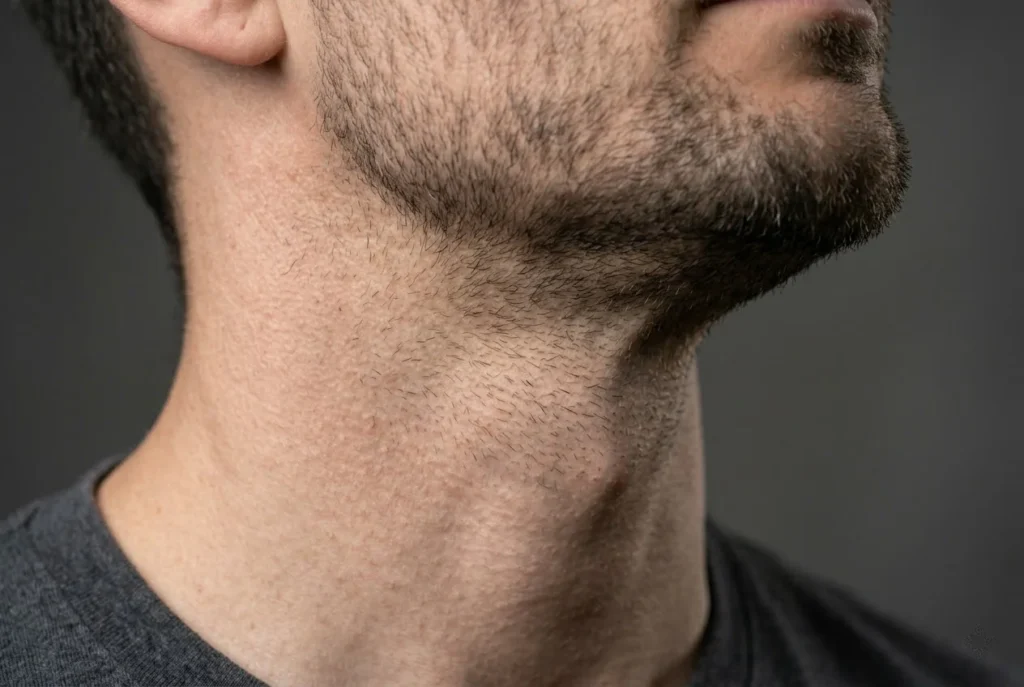
Close-up of the under-chin and neck area targeted by neck liposuction for a sharper jawline

What The 2026 Numbers Say About Neck And Jawline Work

Two national data points are worth putting next to your own decision, because almost no local page mentions them.

  • Liposuction is the single most common cosmetic surgical procedure in the United States, according to the 2024 ASPS Plastic Surgery Statistics Report
  • Patients in their mid-40s to mid-50s accounted for more than 45 percent of all liposuction procedures in 2024, which lines up with what we see in neck cases specifically
  • Chin and neck work sits at the smaller-intervention end of that volume, which is exactly why it gets underestimated

The takeaway for a Live Oaks Square resident in their 40s: you are squarely in the most common demographic for this procedure, and the questions you’re asking are the same ones most of our neck patients arrive with.

A Live Oaks Square Patient's Experience

One patient from Live Oaks Square, a man in his mid-40s working in the Ybor City corridor, came in because his neck and jawline made him look heavier and older than he felt. His weight was stable and he trained regularly. The fullness under his chin never moved. He said he had always looked that way, and he had stopped getting into photos.

The pinch test put him at roughly two seconds. Dr. Grandhige’s four-read assessment found fat above and slightly below the platysma, mild laxity, no meaningful banding, and a strong jaw angle to work with. The plan was liposuction plus radiofrequency tightening in one awake, in-office visit.

He was back at his desk on day 4. By week three the jawline had started to sharpen. Around the three-month mark the skin had settled into a match with the rest of his face. Colleagues told him he looked rested. He started showing up in pictures again and stopped angling his chin away from the camera.

Every anatomy and every result differs, which is why the plan gets built around your read rather than a template. You can see real outcomes across Formation’s before-and-after gallery.

What Actually Happens On Procedure Day

Awake, in the office, and usually finished inside an hour.

You take an oral sedative and Dr. Grandhige numbs the area with local anesthetic. No general anesthesia, no breathing tube, no overnight stay. Average procedure time across our neck cases is 41 minutes. You walk out the same day, and this awake liposuction approach tends to mean a calmer day and a faster start to recovery than a general anesthetic case.

The work happens through a few small incisions placed under the chin and behind the ears, where they’re easy to hide and heal to near-invisible. Dr. Grandhige removes fat around the jaw angle and deliberately leaves a layer behind, because that remaining layer is what keeps the result smooth instead of hollow. When laxity is part of the picture, radiofrequency tightening runs in the same session.

Safety is structural, not a talking point. Formation operates in Quad A accredited facilities, the accreditation level built specifically for office-based and outpatient surgery. Dr. Grandhige works with the same anesthesia provider and the same core team on every case, so everyone in the room already knows his methods and the plan.

Consultations are by appointment and carry a consultation fee. That fee exists so the visit can be a full surgical assessment rather than a sales meeting, and so nobody is rushed through a 20-minute screening.

Neck Liposuction Compared With A Neck Lift And Non-Surgical Tightening

Match the tool to the problem. Here is how the three paths differ.

Neck liposuction, with or without tightening

  • Fixes: fat under the chin and along the jaw, plus mild to moderate skin laxity when tightening is added
  • Anesthesia: local with an oral sedative, awake, in the office
  • Downtime: desk work around day 5, unrestricted training around day 14
  • Longevity: the removed fat cells don’t come back, so results hold as long as your weight stays stable
  • Right for you if: your pinch test returns in under three seconds and fat is the visible problem

Neck lift

  • Fixes: advanced skin laxity, hanging tissue, and platysma banding
  • Anesthesia: a larger procedure with a longer recovery
  • Downtime: substantially longer than liposuction
  • Longevity: durable, and the right answer when laxity has passed what tightening can reach
  • Right for you if: skin hangs or creases on release, or vertical cords show when you tense. At Formation this is handled by Dr. Ahmad Saad, our board-certified plastic surgeon

Non-surgical tightening

  • Fixes: early laxity and modest contour softening
  • Anesthesia: none to minimal
  • Downtime: little to none
  • Longevity: milder results that don’t last as long as surgery, with maintenance sessions expected
  • Right for you if: you want a smaller change, or you’re not ready for a procedure yet

Nobody here is going to push you toward the largest option. Two of those three paths exist partly so we can tell you when liposuction isn’t your answer.

Recovering In Tampa: The 60/40 Rule And The Sun And Season Window

Dr. Grandhige treats surgery as 60 percent of your result and post-operative care as the other 40 percent. Good work in the procedure room can still be undone by a passive recovery, so aftercare at Formation is planned rather than handed to you as a pamphlet.

What that looks like:

  • A chin compression garment, ideally 18 or more hours a day through week one, based on what our own case data shows about how fast the jawline sharpens
  • Lymphatic support starting at your first post-operative visit, which moves fluid and heads off collections before they form
  • If a small fluid collection does appear, it gets drained in the office rather than watched
  • Scheduled follow-ups with clear milestones, and Dr. Grandhige stays with you for a full year

That 60/40 split comes from a larger idea about how surgery should work, which you can read about in Formation’s philosophy.

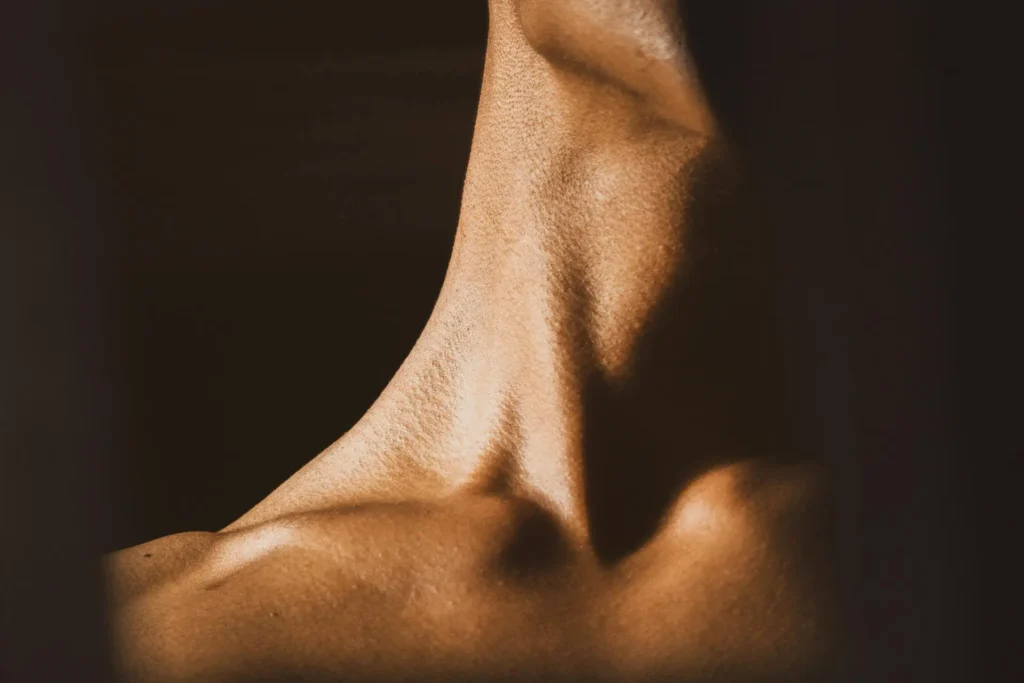
Medium shot of a person's neck after having neck liposuction

The Sun And Season Window

Most neck liposuction pages ignore the fact that Tampa’s climate changes your recovery calendar. Fresh incisions and heavy UV don’t mix, and swelling holds on longer when you’re overheated. Timing your procedure around the season is a small decision that protects months of result.

  • June through September: the hardest window. High heat, high humidity, peak UV, and hurricane season overlapping your follow-up schedule. Plan on three weeks out of direct sun and off hard training, and keep incisions covered any time you’re outside
  • October and November: the best window in Tampa. Lower humidity, milder UV, and the two-to-three week restriction is easy to hold to
  • December through February: also strong. Cooler temperatures mean less swelling discomfort under the garment, which matters more than people expect
  • March through May: workable, with UV climbing through April. Sunscreen once the incisions have closed, plus a hat outdoors
  • Any month: if you have a wedding, a vacation, or a photographed work event, count backward at least three months. The jawline sharpens by week three, but final contour arrives between three and six months

Getting Here From Live Oaks Square

Live Oaks Square sits in East Tampa, in the 33610 ZIP, near the I-4 and Hillsborough Avenue corridors. The drive to our office at 1315 South Howard Avenue typically runs 15 to 20 minutes outside rush hour.

That short distance changes the math on aftercare. Post-operative visits and lymphatic sessions aren’t a logistical problem for you the way they are for our patients driving in from Orlando or Naples. Plan on your first follow-up within the first week, then a visit schedule that thins out as swelling resolves. If a fluid collection shows up, you can be in and out the same day rather than waiting it out.

Are You A Good Candidate For Neck Liposuction?

The strongest candidates are at or near a stable weight, bothered by chin fat that ignores diet and exercise, and still have reasonable skin recoil. Skin quality tends to track with age, and this procedure works especially well between roughly 25 and 55.

Signs it fits:

  • You keep a healthy weight, but the fat under your chin won’t move
  • You dislike your profile in photos and on video calls
  • Your face reads heavier or more tired than it used to, even though your body hasn’t changed
  • You want a permanent change rather than repeat maintenance appointments
  • Your pinch test returns in under three seconds

Now the honest part. The American Society of Plastic Surgeons makes the same point we do about liposuction candidacy: skin that has lost elasticity from weight loss or aging will not reshape as well, and some patients need a skin-tightening or skin-removal procedure instead.

When Formation Will Tell You To Wait

  • Your weight is still actively moving, whether up or down. About one in six of our neck consultations end here
  • You’re early in a GLP-1 course and haven’t reached a stable weight yet
  • Platysma banding, not fat, is your main complaint
  • Your skin hangs on release, which points toward a lift rather than liposuction
  • You have an event inside 10 weeks and want a finished result by then

Hearing “wait” is not a soft rejection. It’s the answer that produces a result you’ll still like in five years.

Book Your Neck Liposuction Consultation In Live Oaks Square

A sharper jawline starts with an accurate read, not a booking.

At your consultation, Dr. Grandhige runs the four-read assessment in person, tells you whether your case is fat-dominant, mixed, or laxity-dominant, and gives you the plan that matches. If liposuction is the wrong tool, he’ll say so and point you to the right one. If the timing is wrong, he’ll tell you to wait.

You’ll leave knowing exactly where you stand. About one in six people leave without a surgery date, and that’s the system working.

Live Oaks Square is 15 to 20 minutes away, which makes the follow-up schedule that protects your result genuinely practical. Use the form below to request your consultation and the team will reach out to schedule your visit.

Frequently Asked Questions About Neck Liposuction In Live Oaks Square

Some change is visible in the first week once early swelling drops. The jawline starts sharpening noticeably around weeks two to four. If tightening was part of your procedure, skin continues settling for three to six months, with the final contour landing in that window. Anyone promising a finished result in a week is describing swelling, not contour.

If your weight is stable, chin fat won't respond to diet and exercise, and your skin snaps back inside about three seconds when you pinch and release, you're likely a strong candidate. If the skin hangs or you have vertical cords in your neck when you tense, a different procedure is the better tool. The four-read assessment at your consultation settles it.

Days one to three bring mild swelling and tightness, managed with the chin garment and over-the-counter pain relief. Most people are back at a desk around day 5 and back to unrestricted training around day 14. Stay out of direct sun and off hard workouts for two to three weeks, and keep incisions covered outdoors. Summer recoveries need more discipline than winter ones.

Incisions are small and placed under the chin and behind the ears. They heal to marks most people can't find without being told where to look. Sun exposure on a fresh incision is the main thing that turns a good scar into a noticeable one, which is why the two-to-three week sun restriction is not optional.

Liposuction removes fat and sharpens the angle. A neck lift removes and repositions skin and addresses the platysma muscle underneath. Liposuction is a shorter awake procedure with a fast recovery. A neck lift is a larger operation with a longer one. The choice depends on whether fat or skin is your dominant problem, not on which sounds more thorough.

Not by itself. Liposuction removes fat. When mild to moderate laxity is present, radiofrequency tightening runs in the same visit so the skin re-drapes over the new contour. When laxity is advanced, no amount of fat removal will fix it, and a lift is the honest answer.

The fat cells removed do not come back. Results are considered permanent as long as your weight stays stable. Natural aging continues, but removing excess fat in this area can slow how quickly future laxity shows.

Remaining fat cells elsewhere can still enlarge, and the neck can soften again with a meaningful weight gain. This is one reason Dr. Grandhige spends consultation time on long-term habits rather than just the procedure itself.