
Written By: Jeffrey Atlas, PA-C, Health Content Writer
Medically Reviewed By: Dr. Gopal Grandhige, MD, FACS, Board-Certified Surgeon
Last Reviewed: September 8, 2026
Most patients can’t feel the PDO thread itself. They feel tightness, pulling, and an odd twinge when they smile or chew. Those two experiences get confused constantly, and telling them apart matters more than anything else on this page. One is normal healing. The other can mean a thread sat too shallow.
I’ll say something the thread industry leaves out of its brochures. Feeling something after your appointment isn’t a warning sign. It’s expected.
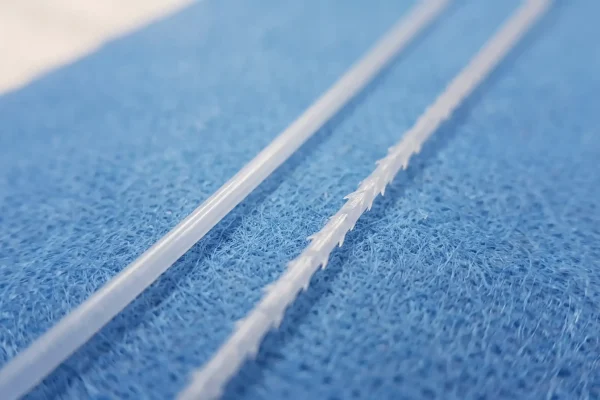
A PDO thread is a fine absorbable suture made from polydioxanone, placed under the skin to reposition soft tissue and trigger new collagen. Patients rarely feel the thread as a separate object they can trace. They feel tightness and pulling for days to a few weeks while tissue settles around it, then nothing.
Patients who were promised they’d feel nothing at all spend week two convinced something went wrong. Nothing did. They were handed bad expectations by whoever sold them the treatment.
It feels like tension, not like a wire. Think of the soreness in a muscle two days after a hard workout, except it sits along your jaw or cheek and pulls a little when your face moves.
Patient forums and clinical write-ups line up almost exactly on this. Tightness. Tugging with a wide smile or a big bite of food. Sometimes a quick sharp sensation that passes in a second and doesn’t come back.
These are two separate experiences, and telling them apart tells you whether to relax or call the office.
The barbed threads create more sensation than smooth ones, and they should. Barbs grip tissue to hold a lift, so your face is doing more work to accommodate them. Smooth threads mostly sit there and stimulate collagen, which is why people who got those often report feeling almost nothing.
Thin, mobile skin is where sensation lives. The jawline margin, the temple, and the area right under the chin are the three places patients bring up.
Skin thickness varies across the face by several millimeters. Place the same thread at the same depth in two different zones and one disappears while the other sits close enough to notice. That’s anatomy, not a mistake.
Discomfort, yes. Pain, rarely. Most patients describe pressure and soreness rather than anything needing more than over-the-counter relief.
Peak discomfort lands in the first one to seven days. Milder tenderness can hang around for two weeks. Areas that move all day, like the jawline near the mouth, feel more noticeable because you’re chewing and talking through them.
The honest number here is higher than most treatment menus admit. In a 2025 randomized trial published in Aesthetic Surgery Journal Open Forum, half reported pain at the 20 day check, 11 of 22 patients, and every one of them was free of it by day 60. So discomfort is common and temporary. Not rare and temporary. There’s a difference, and patients deserve the real version.
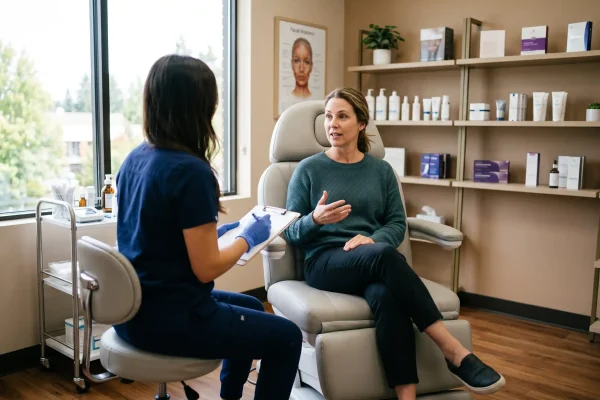
Here’s what I tell patients in consultation: if you find dental work unbearable, say so before we plan anything. It changes how I approach numbing and how many threads I’d place in one sitting.
Worried about your face moving normally? Smiling after treatment feels strange for a week or two, then stops being a thought.
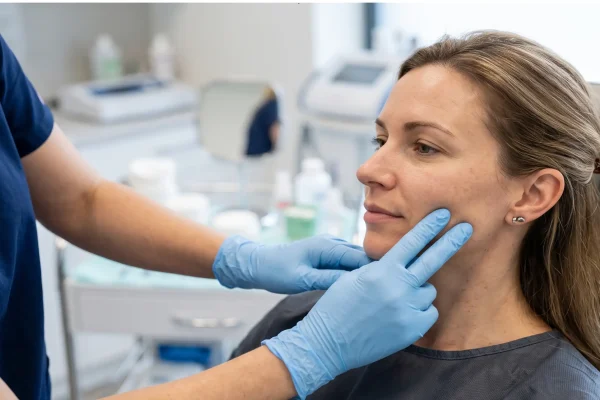
The appointment usually runs 15 to 45 minutes in the office under local anesthetic. Nothing about it requires general anesthesia or a surgical facility.
Depth is what separates a thread you’ll never notice from one you’ll be pressing on for months. Too deep and the lift does nothing. Too shallow and the patient feels a cord. The correct plane is narrow, and finding it every time is the part that takes years rather than a weekend course. If you want the longer version of how thread depth and placement work, I’ve written that out separately.
One more detail nobody mentions: whether the provider ties a knot between threads. A knot left sitting high is one of the more common reasons a patient can feel a firm point months later. Knotless technique avoids that entirely.
Most sensation fades within two to six weeks. The threads themselves take six to nine months to break down completely.
Here’s the timeline as it actually runs:
That last point gets buried in marketing and it’s the one worth keeping. Your lift at month ten isn’t coming from threads. They’re gone. What remains is the collagen your body laid down in response. Once the threads dissolve, the result you keep is the one your own tissue built.
Which flips the whole question. If the durable part is biological, then feeling the thread was never the point. It was just the receipt.
Recovery here is mostly about not disturbing what was placed. Two weeks of restraint protects the result.
Skip aggressive facial massage, facials, and any dental work you can reschedule for two weeks. Sleep on your back if you can manage it. Keep exercise light for one to two weeks, since a face flushed with blood flow swells more, and swelling is what makes threads easier to feel in the first place.
Don’t open your mouth as wide as it will go. No giant sandwiches, no long dental appointments early on. Patients underestimate this one constantly.
And leave the entry points alone. Picking at a scab there is how a clean recovery turns into an infection conversation.
The other half of aftercare is patience with biology. The collagen threads stimulate takes months to build, so judging your result at week three is judging it too early.
Most sensations resolve on their own. A short list doesn’t, and those are worth a phone call rather than a worry spiral.
The published numbers disagree with each other, which tells you something about how much technique matters. Niu and colleagues, in a series in the Chinese Journal of Plastic and Reconstructive Surgery, logged swelling in roughly 35% of cases, dimpling in about 10%, altered sensation in 6%, threads that could be seen or felt in 4%, and infection and extrusion each around 2%. Bertossi’s group, reviewing 160 thread procedures, put the early complication rate at 34% overall, with barbed sutures shifting position in 11.2% and both dimpling and minor infection at 6.2%. A 2025 review in the journal Life reported bleeding in 15% to 20% of barbed-thread cases and dimpling in 12% to 18%, while smooth threads stayed under 5%.
Those spreads are wide because they’re measuring different hands doing the same procedure.
For scale, this is not a fringe treatment. A December 2025 review in PRS Global Open counted 111,948 facial thread procedures performed across more than 100 clinics in one Japanese group between 2020 and 2024, with median patient age rising across those five years. Common and well documented still isn’t the same as risk-free.
If you want the full picture of what can go wrong, I’ve covered that in more detail elsewhere. Here’s the short version on sorting normal from not.
A thread you can see through the skin, or trace clearly with a finger, was probably placed too superficially. Reported rates run from about 2% to as high as 10% depending on the series.
It usually resolves as the material absorbs. Get it looked at anyway rather than waiting nine months on hope, because a thread that shallow can often be repositioned early.
A thread end breaking the surface is different, and it’s the one thing here that shouldn’t wait. Call the office the day you notice it.
An open channel through skin is an infection route. Extrusion shows up in roughly 2% to 4% of cases across pooled reviews. The fix is usually simple: the thread comes out, the skin heals, and you talk later about whether to replace it.
Small dimples where the skin was pulled are the most common thing patients see in the mirror. Most flatten out in two to three weeks as tension distributes.
If a dimple is still there at week four, it needs hands on it. A displaced thread can often be released with a needle in a five minute office visit.
Waiting doesn’t help.
Swelling should peak around day two or three and then improve. Swelling that’s worse on day five than day three, especially with warmth, spreading redness, or fever, gets a same-day phone call.
Infection sits around 2% to 6% across the published series. It’s uncommon and it’s manageable, but only if someone looks at it early. Skip the home remedies and call.
No, and this is where I part ways with a lot of the industry. That 2025 randomized trial compared 6 threads against 12 and found no meaningful gain in sustained lift, volume, or patient satisfaction at 60 days. The initial improvement faded in both groups.
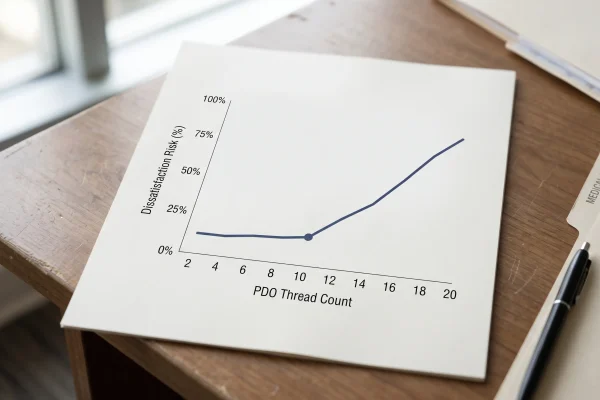
The data actually runs the other direction. A 2025 multicenter analysis of 1,500 PDO patients in PRS Global Open found that dissatisfaction rose with each thread added, with the odds climbing about 9% per thread and a practical cutoff around ten. Dissatisfaction overall sat at 3.4%. Age mattered too, with risk rising past roughly 43.
So a bigger thread count buys you more sensation, more dimpling risk, and more chance you come back unhappy. It buys the person selling it more revenue. Those two facts aren’t unrelated.
Actually, that framing isn’t generous enough. Plenty of providers really do believe more threads mean more lift, because that’s what they were taught by a company that sells threads by the pack. The incentive is baked in one step upstream, not into the person holding the cannula.
Most PDO thread devices are cleared under 510(k) for soft tissue approximation, not for cosmetic lifting or tightening. That’s the part nobody prints on a treatment menu. Clearance covers holding tissue together where an absorbable suture makes sense, and stops there.
That distinction has teeth. In July 2025 the FDA warned a thread supplier whose product was cleared for “soft tissue approximation where use of absorbable suture is appropriate” but was being promoted for lifting, tightening, and adding volume. The agency named the specific risks that go with cosmetic use: migration, extrusion, asymmetry, visible scarring, and poor cosmetic outcomes. It had already raised the issue with that firm a year earlier.
I’m not telling you threads are unsafe. I place them. I’m telling you that “FDA cleared” on a brochure doesn’t mean what most patients read into it, and any provider who uses that phrase to end a conversation is the wrong provider.
The right candidate has mild to moderate laxity and skin with real elasticity left in it. That’s a narrower group than most websites suggest.
Threads work when there’s something to reposition and enough collagen response left to hold it. They fall apart as a plan for heavy jowling, advanced neck laxity, or major volume loss. In those cases a thread lift is money spent on a result that fades before you’ve stopped thinking about it, and I’ll say so in consultation rather than after.
Where I see the best outcomes: patients in their late thirties to early fifties, fit, with early softening along the jawline and neck who want to look rested rather than done. That lines up with the 1,500 patient data, where satisfaction dropped off as age climbed past the early forties.
Where I say no: severe laxity, anyone chasing a facelift result without a facelift, and patients who can’t leave the treated area alone for two weeks.
This article won’t tell you which thread brand to ask for. That’s the wrong question. Providers who lead with brand names are usually filling the space where technique should be. Depth, vector, count, and whether a knot got left behind are what decide your result. The logo on the package doesn’t.
So, can you feel the PDO thread? Briefly, as tightness rather than as a wire, and it should be gone inside six weeks.
If it isn’t, that’s information worth acting on rather than worrying about. At Formation in Tampa, Dr. Gopal Grandhige is a board-certified general surgeon whose fellowship training in burn surgery and critical care means he reads healing tissue for a living. He’ll tell you plainly whether what you’re feeling is normal, and he’ll tell you just as plainly if you aren’t a candidate for a Tampa thread lift at all.
Bring your questions, including whether you’ll feel the PDO thread once it’s in. The consultation
Yes, but not as a wire. Most patients feel tightness, pulling with a wide smile, and occasional brief twinges for two to six weeks. Barbed threads feel more noticeable than smooth ones. A firm cord you can trace in one spot is different and should be examined.
Most sensation fades within two to six weeks. The polydioxanone itself takes six to nine months to break down completely. After that there's nothing left to feel, and your result comes from the collagen your body produced.
Yes. Pulling during chewing, yawning, or a wide smile is one of the most commonly reported sensations in the first month, especially with barbed threads. It improves week over week. Avoid opening your mouth as wide as it will go for the first two weeks.
It usually means the thread was placed too superficially. Reported rates run from about 2% to 10% depending on the study. It typically resolves as the material absorbs, but an early visit lets the thread be repositioned instead of waiting months.
No. A 2025 randomized trial compared 6 threads against 12 and found no meaningful gain in sustained lift or satisfaction at 60 days. A separate 1,500-patient analysis in PRS Global Open found dissatisfaction odds rose roughly 9% per additional thread, with overall dissatisfaction at 3.4%.
No. Most PDO thread devices are FDA cleared under 510(k) for soft tissue approximation, not specifically for cosmetic lifting or tightening. In July 2025 the FDA warned a thread supplier for promoting lifting, tightening, and volume claims beyond its clearance.
Call the same day if a thread end breaks through the skin, if swelling worsens after day three, or if you notice spreading redness, warmth, or fever. Call within a week if a dimple persists past week four or a firm cord hasn't changed. Infection appears in roughly 2% to 6% of published series.
6 months post high-definition liposuction with moderate definition.
The goal wasn’t just less fat. It was a leaner, more athletic contour with visible definition through the abdomen and torso, without pushing the result to the highest level of definition.
High-definition liposuction strategically sculpts around the underlying anatomy and can be customized based on a patient’s anatomy, muscle structure, and the degree of definition they want to achieve.
For this patient, moderate definition created the balance Dr. Gopal was looking for.
Results vary by patient and depend on individual anatomy, skin quality, and treatment plan.
Considering HD liposuction? Schedule a consultation with Dr. Gopal Grandhige at Formation Tampa. Link in bio.
#HDLiposuction #Liposuction #BodyContouring #MaleLiposuction #tampa
6 months post high-definition liposuction with moderate definition.
The goal wasn’t just less fat. It was a leaner, more athletic contour with visible definition through the abdomen and torso, without pushing the result to the highest level of definition.
High-definition liposuction strategically sculpts around the underlying anatomy and can be customized based on a patient’s anatomy, muscle structure, and the degree of definition they want to achieve.
For this patient, moderate definition created the balance Dr. Gopal was looking for.
Results vary by patient and depend on individual anatomy, skin quality, and treatment plan.
Considering HD liposuction? Schedule a consultation with Dr. Gopal Grandhige at Formation Tampa. Link in bio.
#HDLiposuction #Liposuction #BodyContouring #MaleLiposuction #tampa
Your lipo results at 2 weeks are not your final results.
And sometimes, what you see during those early weeks can be unsettling.
Swelling can temporarily make the treated area look larger. The tissue may feel firm, tight or lumpy. The definition you were expecting may not be visible yet.
That doesn’t necessarily mean something went wrong. It simply means your body is still healing.
After liposuction, recovery happens in stages, from the initial inflammation and swelling to tissue repair, skin contraction and the gradual emergence of the new contour.
Significant changes often become more apparent around the 3–6 month mark, with continued refinement as the tissues heal and mature.
That’s why comparing yourself a few weeks after surgery to someone’s polished before-and-after photo can create a very unrealistic expectation. Those two photos may represent months of healing in between.
The operation creates the contour. The final result reveals itself over time.
If you’re considering HD liposuction, schedule a consultation with Dr. Gopal to understand the procedure, recovery, and what to realistically expect from your results (link in bio).
#tampa #liposuction #hdliposuction
Your lipo results at 2 weeks are not your final results.
And sometimes, what you see during those early weeks can be unsettling.
Swelling can temporarily make the treated area look larger. The tissue may feel firm, tight or lumpy. The definition you were expecting may not be visible yet.
That doesn’t necessarily mean something went wrong. It simply means your body is still healing.
After liposuction, recovery happens in stages, from the initial inflammation and swelling to tissue repair, skin contraction and the gradual emergence of the new contour.
Significant changes often become more apparent around the 3–6 month mark, with continued refinement as the tissues heal and mature.
That’s why comparing yourself a few weeks after surgery to someone’s polished before-and-after photo can create a very unrealistic expectation. Those two photos may represent months of healing in between.
The operation creates the contour. The final result reveals itself over time.
If you’re considering HD liposuction, schedule a consultation with Dr. Gopal to understand the procedure, recovery, and what to realistically expect from your results (link in bio).
#tampa #liposuction #hdliposuction
Some surgical decisions are much harder to correct than they are to avoid.
That’s what Dr. Gopal means when he says, “I wish more patients knew that you pay more to undo a cheaper procedure.”
With liposuction and body contouring, removing fat is only one part of the process. Your surgeon has to understand your anatomy, know how much fat to remove and where to preserve it, create smooth transitions between areas, and consider how the final contour fits the rest of your body.
But the procedure doesn’t end when you leave the operating room. Recovery and aftercare matter too. The right guidance around compression, lymphatic massage, incision and drainage care, activity and nutrition can help manage swelling and support your body as it heals.
When something doesn’t go as planned, correcting dents, irregularities, poor proportions or an unnatural contour can be more complicated than doing the procedure properly the first time. And sometimes, there’s less to work with the second time around.
So when you’re comparing surgeons, don’t compare price alone. Look at their training, experience, surgical approach, before-and-after results, and what their care includes before and after surgery.
Because a cheaper procedure can become a very expensive one when you have to do it twice.
#tampa #HDLiposuction #lipo
Some surgical decisions are much harder to correct than they are to avoid.
That’s what Dr. Gopal means when he says, “I wish more patients knew that you pay more to undo a cheaper procedure.”
With liposuction and body contouring, removing fat is only one part of the process. Your surgeon has to understand your anatomy, know how much fat to remove and where to preserve it, create smooth transitions between areas, and consider how the final contour fits the rest of your body.
But the procedure doesn’t end when you leave the operating room. Recovery and aftercare matter too. The right guidance around compression, lymphatic massage, incision and drainage care, activity and nutrition can help manage swelling and support your body as it heals.
When something doesn’t go as planned, correcting dents, irregularities, poor proportions or an unnatural contour can be more complicated than doing the procedure properly the first time. And sometimes, there’s less to work with the second time around.
So when you’re comparing surgeons, don’t compare price alone. Look at their training, experience, surgical approach, before-and-after results, and what their care includes before and after surgery.
Because a cheaper procedure can become a very expensive one when you have to do it twice.
#tampa #HDLiposuction #lipo
Lipo recovery can be a lot.
There can be swelling, drainage, compression garments, limited activity, and a period where your body may look worse before it starts looking better. And when the final result can take months to fully reveal itself, recovery can take an emotional toll too.
That’s why Dr. Gopal views a successful surgical experience as three equally important parts: pre-op care, the operation itself, and post-op care.
At Formation, that process starts four weeks before surgery. Patients are prepared physically for the procedure and mentally for what they may experience during recovery.
That support continues after surgery with a private nurse during the initial recovery period, supplies and education for at-home care, nutritious meals, and in-home lymphatic massage to help manage postoperative swelling and fluid.
None of those pieces are considered extras. They’re part of the surgical experience.
Because the goal isn’t just to perform the procedure. It’s to make sure you know what to expect, you’re prepared for it, and you’re properly cared for through the recovery that follows.
Considering liposuction or body contouring in Tampa? Schedule a consultation with Dr. Gopal Grandhige at Formation Tampa.
#tampa #hdLiposuction
Lipo recovery can be a lot.
There can be swelling, drainage, compression garments, limited activity, and a period where your body may look worse before it starts looking better. And when the final result can take months to fully reveal itself, recovery can take an emotional toll too.
That’s why Dr. Gopal views a successful surgical experience as three equally important parts: pre-op care, the operation itself, and post-op care.
At Formation, that process starts four weeks before surgery. Patients are prepared physically for the procedure and mentally for what they may experience during recovery.
That support continues after surgery with a private nurse during the initial recovery period, supplies and education for at-home care, nutritious meals, and in-home lymphatic massage to help manage postoperative swelling and fluid.
None of those pieces are considered extras. They’re part of the surgical experience.
Because the goal isn’t just to perform the procedure. It’s to make sure you know what to expect, you’re prepared for it, and you’re properly cared for through the recovery that follows.
Considering liposuction or body contouring in Tampa? Schedule a consultation with Dr. Gopal Grandhige at Formation Tampa.
#tampa #hdLiposuction
Your body decides where fat comes off, and it doesn’t always come from the area you want it to.
For someone who is already at a stable weight, continuing to lose weight can mean getting leaner in the face, arms, legs or other areas while localized abdominal fat remains.
That’s where the difference between weight loss and body contouring matters.
Liposuction isn’t designed to make the number on the scale significantly lower. It’s designed to address localized fat and change contour and proportion.
So if you’ve reached a weight you feel good at, but there’s still an area that doesn’t seem to change no matter what you do, you may not need to keep chasing a lower number on the scale.
It may be worth finding out whether liposuction is appropriate for your body and the result you’re trying to achieve.
DM us or schedule a consultation with Dr. Gopal Grandhige at Formation Tampa (link in bio).
Your body decides where fat comes off, and it doesn’t always come from the area you want it to.
For someone who is already at a stable weight, continuing to lose weight can mean getting leaner in the face, arms, legs or other areas while localized abdominal fat remains.
That’s where the difference between weight loss and body contouring matters.
Liposuction isn’t designed to make the number on the scale significantly lower. It’s designed to address localized fat and change contour and proportion.
So if you’ve reached a weight you feel good at, but there’s still an area that doesn’t seem to change no matter what you do, you may not need to keep chasing a lower number on the scale.
It may be worth finding out whether liposuction is appropriate for your body and the result you’re trying to achieve.
DM us or schedule a consultation with Dr. Gopal Grandhige at Formation Tampa (link in bio).
The abdomen can be one of the most stubborn areas to change, even with consistent diet and exercise.
For this patient, HD liposuction addressed the persistent abdominal fullness while creating more definition through the waist and midsection.
At 10 months post-op, you can see how much that one area affected the proportions of her entire torso.
If you’re dealing with stubborn abdominal fat despite diet and exercise, schedule a consultation with Dr. Gopal at Formation Tampa to learn whether liposuction may be appropriate for you.
#HDLiposuction #LiposuctionTampa #FemaleLiposuction #BodyContouring
The abdomen can be one of the most stubborn areas to change, even with consistent diet and exercise.
For this patient, HD liposuction addressed the persistent abdominal fullness while creating more definition through the waist and midsection.
At 10 months post-op, you can see how much that one area affected the proportions of her entire torso.
If you’re dealing with stubborn abdominal fat despite diet and exercise, schedule a consultation with Dr. Gopal at Formation Tampa to learn whether liposuction may be appropriate for you.
#HDLiposuction #LiposuctionTampa #FemaleLiposuction #BodyContouring
Many surgeons abandon this lipo technique because it’s so physically demanding.
The approach to HD liposuction Dr. Gopal uses requires an extraordinary level of detail and precision.
Rather than simply etching lines, every contour and transition is shaped around the patient’s underlying anatomy, a process that can take several hours.
Dr. Gopal trained in this technique in Barcelona with one of the world’s leaders in HD liposuction and now teaches it to other physicians. It’s a demanding approach, but that level of precision is what allows for definition that looks natural to the individual.
Considering HD liposuction in Tampa? Schedule a consultation at Formation Tampa (link in bio).
Many surgeons abandon this lipo technique because it’s so physically demanding.
The approach to HD liposuction Dr. Gopal uses requires an extraordinary level of detail and precision.
Rather than simply etching lines, every contour and transition is shaped around the patient’s underlying anatomy, a process that can take several hours.
Dr. Gopal trained in this technique in Barcelona with one of the world’s leaders in HD liposuction and now teaches it to other physicians. It’s a demanding approach, but that level of precision is what allows for definition that looks natural to the individual.
Considering HD liposuction in Tampa? Schedule a consultation at Formation Tampa (link in bio).
“Glad I took my time researching.”
That line matters.
Choosing to have plastic surgery isn’t just about deciding you want a change. It’s about deciding who you trust to understand the result you’re looking for, especially when the goal isn’t simply removing fat, but creating a shape that still looks natural to you.
For our lovely patient, that meant a tighter stomach and waist, feeling more comfortable in fitted clothing, and most importantly, getting the result she wanted “without looking fake.”
That’s the goal of thoughtful body contouring: not to make you look like someone else, but to create a result that works with your body and your goals.
Dr. Gopal Grandhige specializes in liposuction and body contouring in Tampa, creating treatment plans around each patient’s anatomy, proportions, and goals.
Considering liposuction? DM us or Schedule a consultation at Formation to learn what approach may be right for you (link in bio).
“Glad I took my time researching.”
That line matters.
Choosing to have plastic surgery isn’t just about deciding you want a change. It’s about deciding who you trust to understand the result you’re looking for, especially when the goal isn’t simply removing fat, but creating a shape that still looks natural to you.
For our lovely patient, that meant a tighter stomach and waist, feeling more comfortable in fitted clothing, and most importantly, getting the result she wanted “without looking fake.”
That’s the goal of thoughtful body contouring: not to make you look like someone else, but to create a result that works with your body and your goals.
Dr. Gopal Grandhige specializes in liposuction and body contouring in Tampa, creating treatment plans around each patient’s anatomy, proportions, and goals.
Considering liposuction? DM us or Schedule a consultation at Formation to learn what approach may be right for you (link in bio).
More definition doesn’t automatically mean a better liposuction result.
The goal of body contouring is to create definition that makes sense for your anatomy, not to create the most sculpted abdomen possible simply because we can.
Low-, medium-, and high-definition liposuction can create very different looks, from subtle contouring to a more athletic or highly sculpted appearance.
The right level depends on your existing muscle definition, proportions, surrounding areas of the body, and the result you want to achieve.
For Dr. Gopal Grandhige, a board-certified surgeon specializing in body contouring and high-definition liposuction in Tampa, the goal is balance: the abdomen, chest, back, arms and shoulders should look like they belong to the same body.
The result should feel cohesive, proportional, and natural to your anatomy.
Considering liposuction? DM us or schedule a consultation at Formation to discuss the level of definition that makes sense for your body and your goals (link in bio).
More definition doesn’t automatically mean a better liposuction result.
The goal of body contouring is to create definition that makes sense for your anatomy, not to create the most sculpted abdomen possible simply because we can.
Low-, medium-, and high-definition liposuction can create very different looks, from subtle contouring to a more athletic or highly sculpted appearance.
The right level depends on your existing muscle definition, proportions, surrounding areas of the body, and the result you want to achieve.
For Dr. Gopal Grandhige, a board-certified surgeon specializing in body contouring and high-definition liposuction in Tampa, the goal is balance: the abdomen, chest, back, arms and shoulders should look like they belong to the same body.
The result should feel cohesive, proportional, and natural to your anatomy.
Considering liposuction? DM us or schedule a consultation at Formation to discuss the level of definition that makes sense for your body and your goals (link in bio).
One of the biggest misconceptions about liposuction? That the fat either “comes back” or simply moves somewhere else.
Liposuction permanently removes fat cells from the treated area. But it doesn’t remove every fat cell, and the cells that remain can still grow larger with weight gain.
That’s why long-term results aren’t just about what happens during the procedure. Maintaining a relatively stable weight helps preserve the contour created through liposuction.
Dr. Gopal Grandhige specializes in advanced high definition liposuction and body contouring, with an emphasis on creating results that complement each patient’s natural anatomy.
If you’re considering liposuction in Tampa, schedule a consultation at Formation to learn what approach makes sense for your body and goals (Link in bio).

One of the biggest misconceptions about liposuction? That the fat either “comes back” or simply moves somewhere else.
Liposuction permanently removes fat cells from the treated area. But it doesn’t remove every fat cell, and the cells that remain can still grow larger with weight gain.
That’s why long-term results aren’t just about what happens during the procedure. Maintaining a relatively stable weight helps preserve the contour created through liposuction.
Dr. Gopal Grandhige specializes in advanced high definition liposuction and body contouring, with an emphasis on creating results that complement each patient’s natural anatomy.
If you’re considering liposuction in Tampa, schedule a consultation at Formation to learn what approach makes sense for your body and goals (Link in bio).