




loader image

PDO Thread Lift In Lake Magdalene, FL

Lift the jawline and jowls in about an hour, under local anesthesia, with the lift visible before you walk out.

What A PDO Thread Lift Does, In Plain Terms

A PDO thread lift repositions loose skin along the jawline, the jowls and the upper neck using absorbable barbed sutures placed just under the surface. The lift is there when you stand up from the table. PDO stands for polydioxanone, the same suture material surgeons have used to close wounds for decades, and the barbs catch the underside of the skin and hold it higher while the body lays down collagen along each thread track.

That gives you two results on two different clocks. The mechanical lift shows up immediately and softens as the threads absorb over roughly six to nine months. The collagen response builds slowly and outlasts the thread itself. Most patients see the combined result hold somewhere in the 12 to 18 month range before they start thinking about a repeat. If you want the procedure covered without the neighborhood framing, the PDO thread lift page for Tampa walks through the same ground at the city level.

What a thread lift does not do is change the volume, the muscle or the bone underneath. That limit is the whole reason the next section exists.

The Four-Layer Neck Read: Which Layer Is Actually Loose

Threads treat one of the four things that soften a jawline. Dr. Gopal Grandhige reads all four before agreeing that a thread lift is the right tool, because most necks show aging in more than one layer at once, and treating the wrong one is how a technically clean procedure ends in disappointment.

Layer One: Fat Under The Chin

Pinch the tissue under your chin. A soft pad that stays put when you tip your head down is volume, and lifting does not remove volume. Threads pulled across a fat pad move the pad higher without making it smaller, which can read as a thicker neck rather than a sharper one. Fat comes out with neck and jawline contouring, done in office under local anesthesia with an oral sedative.

Layer Two: The Platysma Muscle And Platysmal Bands

Clench your teeth in front of a mirror. Two vertical cords standing up from the collarbone toward the chin are platysmal bands, and they are muscle. Threads sit above muscle and cannot reach them. The answer for banding is MyEllevate, a permanent suspension suture, paired with platysmaplasty to address the muscle directly. That suture is nonabsorbable and can be removed if it ever needs to be, which is the opposite of a barbed thread that dissolves whether you like the result or not.

Layer Three: Skin And The Elasticity Window

Pull the skin at your jawline gently outward and let it go. Skin with recoil left snaps back toward the bone. Skin that drifts back slowly, or hangs at rest, needs tightening rather than suspension. The usable window sits at roughly skin ages 25 to 55. When the problem is quality rather than position, the answer is energy, and FaceTite, a radiofrequency-assisted tightening device, works from under the skin outward instead of from the surface down.

Layer Four: Chin Projection And Jaw Angle

Sometimes nothing is sagging. The jaw is set back, and the soft tissue has nowhere to drape. Lifting a recessed chin higher produces a shorter version of the same problem, not a jawline. Projection comes from structure, which means Radiesse, a calcium hydroxylapatite, or Juvederm, a hyaluronic acid, placed at the chin and the angle of the jaw. That is what turns a soft profile into a superhero jawline, and almost nobody walks in asking for it.

The Three-Route Screen: Subtract, Tighten, Or Lift

The read produces a route. Subtract means the problem is volume, so fat comes out. Tighten means the skin has lost recoil and needs heat from the deep side. Lift means the anatomy is sound and the tissue simply sits lower than it did, which is the thread lift patient: elasticity present, fat modest, muscle quiet, frame adequate.

Formation says no to the lift route often. Patients who fail the screen still leave with a plan. Patients whose laxity has moved past what suspension or tightening can reach get pointed toward the surgeons who do excisional facial work well, rather than sold a smaller procedure that will not satisfy them. Dr. Grandhige personally evaluates every patient and designs the plan himself, and he limits how many procedures he takes on so that stays true.

Treatment Day And The Two Weeks After

Plan on under an hour in the office. Local anesthesia numbs the entry points, and most patients describe pressure and tugging rather than sharp pain. The threads go in through fine cannulas, get set at the angle the read called for, and the lift shows on the table.

Expect the skin to look slightly gathered where the threads sit. That is the mechanical lift working, and it settles as tissue relaxes around each suture over the following weeks. Swelling and bruising are the two most commonly reported effects in the published literature, and Formation’s own breakdown of how much swelling is normal after PDO threads lays out the pooled figures and the day-by-day timeline.

Training resumes at about one week. Four things wait longer: opening your mouth wide, hard chewing, deep facial massage, and sleeping on your side with pressure on the treated tissue. Threads need time to anchor, and pressure in the first two weeks is the most common self-inflicted cause of an uneven result. Photographs at three months look different from photographs at three weeks, which is why the before and after gallery is worth reading against the timeline rather than as a snapshot.

What Threads Cannot Do

Threads are cleared through the FDA’s 510(k) pathway as Class II devices, not approved as drugs. Where a lifting indication has been cleared at all, the record describes the suture as fixating tissue temporarily. Any page promising a permanent lift from an absorbable thread is describing something the clearance does not support.

Threads also do not stop aging. Once the mechanical lift is gone, you return to your baseline plus whatever the collagen response bought you. Dr. Grandhige states that arithmetic plainly rather than letting the 12 to 18 month figure imply something it is not.

How Many Sessions Is Too Many

One session and four sessions are different clinical situations, and the difference shows up years later. A 2025 case series in Aesthetic Plastic Surgery followed ten patients who had two or more absorbable thread lifts before going on to a facelift, and the operating surgeon found fibrosis, tissue distortion and fused anatomical planes during those procedures. The series is small, retrospective and drawn from one surgeon’s practice, and the patients averaged 59 years old, so it describes a pattern rather than a rate.

It still matters if surgery sits anywhere in your ten-year thinking, and it matters more in a neighborhood where a meaningful share of patients will eventually be facelift candidates. The conversation to have at consultation is how many sessions, not whether.

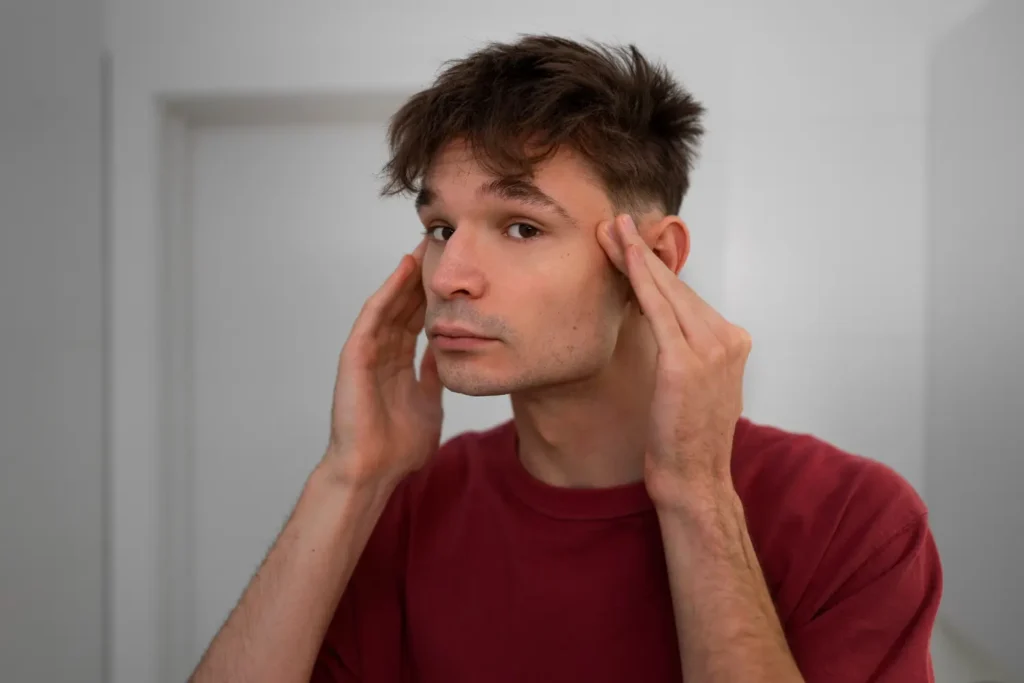
Smiling man touching his smooth cheek at home during recovery after PDO thread lift treatment

Preparation And Recovery: The 60/40 Standard

Formation treats the procedure as 60 percent of the result and the aftercare as 40 percent. That ratio changes the schedule rather than the sales pitch. Health and diet get assessed before anything is placed. Nutrition, supplements and peptides get dialed in immediately before and after, so the body builds as much structure as it can during the window when the threads are still holding tissue in position.

Inflammation control carries more weight here than patients expect, because the collagen response is the half of the result that survives the thread. Patients are followed for a full year rather than discharged at two weeks, and the providers handling lymphatic work and nutrition have been vetted personally rather than pulled from a referral list. The reasoning behind that schedule is the same reasoning that decides whether a procedure gets offered at all.

The instrument is identical at every practice that stocks it. The thinking around it is not.

What Lake Magdalene Patients Should Plan For

Formation sits at 1315 South Howard Avenue in South Tampa, about 12 miles south of Lake Magdalene. North Dale Mabry Highway runs straight down the whole way, and I-275 is the faster option when Dale Mabry’s lights are stacked. Figure 25 to 35 minutes either way, and longer between four and six on a weekday.

Here is what changes the day. A thread lift runs on local anesthesia alone, so you can drive yourself home the same afternoon. The subtract route uses an oral sedative alongside local, which means someone else drives. Roughly 79 percent of Lake Magdalene commuters get to work by car and about 1 percent use public transit, so arranging a ride down Dale Mabry is a real planning step rather than a formality. Ask which route your anatomy points to before you schedule, not the morning of.

The bigger local factor is age. Lake Magdalene’s median age sat at 44.5 at the 2020 census, with 21.6 percent of residents 65 or older, across a population that grew from 28,509 in 2010 to 30,742. Set that against the elasticity window of roughly skin ages 25 to 55 and the picture is specific: this neighborhood sits in the back half of the window, not the front. More people here will fail the skin check than in a younger part of Hillsborough County, and the read matters more because of it.

The published data points the same direction. A meta-analysis of 26 studies in Aesthetic Plastic Surgery found skin dimpling in about 16 percent of patients over 50, significantly higher than in younger patients, alongside pooled rates of swelling near 35 percent and infection near 2 percent across all ages. The same analysis found absorbable threads carried lower rates of numbness and thread extrusion than nonabsorbable ones, which is a point in PDO’s favor and one that rarely appears next to the risk numbers.

Two ways to start. The in-office consultation with Dr. Grandhige carries a fee, runs as a full surgical assessment, and that fee can be applied toward any procedure or product at the practice. Formation also offers a complimentary virtual evaluation with patient coordinator Hanna, who reviews your goals and outlines a plan before you commit to the drive. Lake Magdalene patients often use the virtual evaluation first for exactly that reason. You can contact the practice to set up either one.

Frequently Asked Questions About PDO Thread Lifts

The mechanical lift softens as the threads absorb over roughly six to nine months. The collagen laid down along each thread track outlasts the suture. Most patients see the combined result hold in the 12 to 18 month range.

Possibly, and the pull-and-release test tells you more than your birthday does. The usable window runs to roughly skin age 55, and skin age and calendar age diverge widely. Published data also shows dimpling is more common after 50, so a careful read matters more in this decade than in the one before it.

Local anesthesia numbs the entry points. Most patients describe pressure and tugging while the threads are set, then tightness for a few days afterward. Sleeping on your back with your head raised shortens that phase noticeably.

Yes, if you are having a thread lift. It runs on local anesthesia only. If the read sends you to the subtract route instead, that uses an oral sedative and you will need someone to drive you back up Dale Mabry.

That is the mechanical lift holding tissue in its new position before the surrounding tissue relaxes around each suture. It settles over the following weeks. Firm massage in that window is the fastest way to disturb it.

Repeated sessions can. The 2025 case series found fibrosis and fused tissue planes in patients who had two or more thread lifts before surgery, which made those operations slower and less predictable. One well-placed session is a different situation from four stacked over four years.

Threads reposition skin that is already loose. FaceTite tightens skin that has lost recoil. Neck liposuction removes fat that is blurring the jawline. They solve three different problems, and the four-layer read is how Formation decides which one you actually have.

Ask how many threads they plan to place and why that number. Ask what they would do if the read says you are not a lift candidate. And when you look at before and afters, look hardest at the cases where the "before" resembles you, not the ones with the most dramatic change.

Man examining his facial contours and cheekbones as potential treatment areas for PDO thread lift enhancement

Where This Leaves You

A PDO thread lift answers one problem well: skin that still has recoil but no longer sits where it used to. It answers fat, muscle banding and a set-back jaw badly. No website can settle which of those you have, which is why the read comes before the plan and why some patients leave Formation without a procedure on the calendar.

For Lake Magdalene specifically, three questions decide the outcome. Which layer is actually loose. Whether your skin is still inside the window or past the back edge of it. And how a session now fits against anything surgical you might want in ten years. Start with the virtual evaluation, get the read, then decide.

6 months post high-definition liposuction with moderate definition.The goal wasn’t just less fat. It was a leaner, more athletic contour with visible definition through the abdomen and torso, without pushing the result to the highest level of definition.High-definition liposuction strategically sculpts around the underlying anatomy and can be customized based on a patient’s anatomy, muscle structure, and the degree of definition they want to achieve.For this patient, moderate definition created the balance Dr. Gopal was looking for.Results vary by patient and depend on individual anatomy, skin quality, and treatment plan.Considering HD liposuction? Schedule a consultation with Dr. Gopal Grandhige at Formation Tampa. Link in bio.#HDLiposuction #Liposuction #BodyContouring #MaleLiposuction #tampa

10 1
Your lipo results at 2 weeks are not your final results.And sometimes, what you see during those early weeks can be unsettling.Swelling can temporarily make the treated area look larger. The tissue may feel firm, tight or lumpy. The definition you were expecting may not be visible yet.That doesn’t necessarily mean something went wrong. It simply means your body is still healing.After liposuction, recovery happens in stages, from the initial inflammation and swelling to tissue repair, skin contraction and the gradual emergence of the new contour.Significant changes often become more apparent around the 3–6 month mark, with continued refinement as the tissues heal and mature.That’s why comparing yourself a few weeks after surgery to someone’s polished before-and-after photo can create a very unrealistic expectation. Those two photos may represent months of healing in between.The operation creates the contour. The final result reveals itself over time.If you’re considering HD liposuction, schedule a consultation with Dr. Gopal to understand the procedure, recovery, and what to realistically expect from your results (link in bio).#tampa #liposuction #hdliposuction

73 1
Some surgical decisions are much harder to correct than they are to avoid.That’s what Dr. Gopal means when he says, “I wish more patients knew that you pay more to undo a cheaper procedure.”With liposuction and body contouring, removing fat is only one part of the process. Your surgeon has to understand your anatomy, know how much fat to remove and where to preserve it, create smooth transitions between areas, and consider how the final contour fits the rest of your body.But the procedure doesn’t end when you leave the operating room. Recovery and aftercare matter too. The right guidance around compression, lymphatic massage, incision and drainage care, activity and nutrition can help manage swelling and support your body as it heals.When something doesn’t go as planned, correcting dents, irregularities, poor proportions or an unnatural contour can be more complicated than doing the procedure properly the first time. And sometimes, there’s less to work with the second time around.So when you’re comparing surgeons, don’t compare price alone. Look at their training, experience, surgical approach, before-and-after results, and what their care includes before and after surgery.Because a cheaper procedure can become a very expensive one when you have to do it twice.#tampa #HDLiposuction #lipo

13 0
Lipo recovery can be a lot.There can be swelling, drainage, compression garments, limited activity, and a period where your body may look worse before it starts looking better. And when the final result can take months to fully reveal itself, recovery can take an emotional toll too.That’s why Dr. Gopal views a successful surgical experience as three equally important parts: pre-op care, the operation itself, and post-op care.At Formation, that process starts four weeks before surgery. Patients are prepared physically for the procedure and mentally for what they may experience during recovery.That support continues after surgery with a private nurse during the initial recovery period, supplies and education for at-home care, nutritious meals, and in-home lymphatic massage to help manage postoperative swelling and fluid.None of those pieces are considered extras. They’re part of the surgical experience.Because the goal isn’t just to perform the procedure. It’s to make sure you know what to expect, you’re prepared for it, and you’re properly cared for through the recovery that follows.Considering liposuction or body contouring in Tampa? Schedule a consultation with Dr. Gopal Grandhige at Formation Tampa.#tampa #hdLiposuction

68 4
Many surgeons abandon this lipo technique because it’s so physically demanding.The approach to HD liposuction Dr. Gopal uses requires an extraordinary level of detail and precision. Rather than simply etching lines, every contour and transition is shaped around the patient’s underlying anatomy, a process that can take several hours.Dr. Gopal trained in this technique in Barcelona with one of the world’s leaders in HD liposuction and now teaches it to other physicians. It’s a demanding approach, but that level of precision is what allows for definition that looks natural to the individual.Considering HD liposuction in Tampa? Schedule a consultation at Formation Tampa (link in bio).

61 7
“Glad I took my time researching.”That line matters.Choosing to have plastic surgery isn’t just about deciding you want a change. It’s about deciding who you trust to understand the result you’re looking for, especially when the goal isn’t simply removing fat, but creating a shape that still looks natural to you.For our lovely patient, that meant a tighter stomach and waist, feeling more comfortable in fitted clothing, and most importantly, getting the result she wanted “without looking fake.”That’s the goal of thoughtful body contouring: not to make you look like someone else, but to create a result that works with your body and your goals.Dr. Gopal Grandhige specializes in liposuction and body contouring in Tampa, creating treatment plans around each patient’s anatomy, proportions, and goals.Considering liposuction? DM us or Schedule a consultation at Formation to learn what approach may be right for you (link in bio).

6 0
More definition doesn’t automatically mean a better liposuction result.The goal of body contouring is to create definition that makes sense for your anatomy, not to create the most sculpted abdomen possible simply because we can.Low-, medium-, and high-definition liposuction can create very different looks, from subtle contouring to a more athletic or highly sculpted appearance. The right level depends on your existing muscle definition, proportions, surrounding areas of the body, and the result you want to achieve.For Dr. Gopal Grandhige, a board-certified surgeon specializing in body contouring and high-definition liposuction in Tampa, the goal is balance: the abdomen, chest, back, arms and shoulders should look like they belong to the same body.The result should feel cohesive, proportional, and natural to your anatomy.Considering liposuction? DM us or schedule a consultation at Formation to discuss the level of definition that makes sense for your body and your goals (link in bio).

34 2
