




loader image

Neck Liposuction In Clearwater, FL

Neck liposuction removes the fat pad under your chin and along your jawline, and on the right patient it sharpens the jaw more than almost any other procedure of its size. It runs in the office at Formation under local anesthetic with an oral sedative. Most patients are back at work and social activity inside a week.

The harder question is whether fat is what’s actually softening your jawline. Four separate structures can blur that line and only one of them answers to a cannula. Clearwater patients reach the office in about 35 minutes over the Courtney Campbell.

Woman posing black and white nudity back view

The Four-Layer Neck Read

Every neck that comes through Formation gets read in four layers before anything is scheduled. Most necks show aging in more than one layer at once, which is exactly why a single-procedure answer so often disappoints at month six. Each layer has its own solution, and liposuction is the answer to precisely one of them.

Layer One, The Fat Under Your Skin

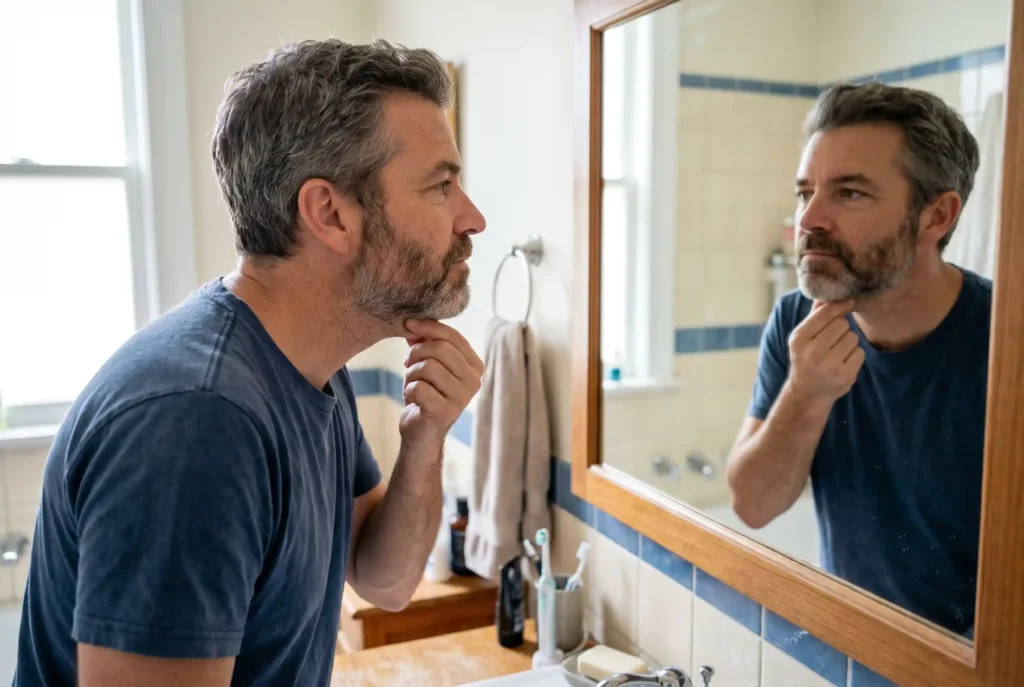
This is the subcutaneous fat sitting between your skin and the platysma muscle. You can gather it between two fingers. It pinches, it rolls, and a cannula passed through a small incision under the chin reaches it cleanly. This is the layer neck liposuction treats, and when it’s the dominant problem the result is a change people notice without working out why.

Fat that sits deeper, beneath the muscle, is a different plane. A cannula passed through a stab incision doesn’t get there. Addressing it means an open approach, and Formation refers those patients to surgeons who do that work well rather than stretching a smaller operation to cover it.

Layer Two, The Platysma And Its Bands

The platysma is the thin sheet of muscle across the front of your neck. Clench your jaw in a mirror. If two vertical cords stand up, those are platysmal bands, and they’re muscle, not fat. Taking the fat out from around them can make them read more clearly rather than less.

Where bands are the driver, the layer-two answer is MyEllevate, a permanent suspension suture, paired with platysmaplasty. Formation is building a dedicated page on that procedure. In the meantime it comes up directly in consultation, because the distinction between a band and a fat pad decides which operation you actually need.

Layer Three, Skin And The Fibroseptal Network

Skin quality decides whether a new contour looks clean or hollow. Pinch the skin along your jawline, hold it two seconds, let go. Skin that snaps back will redrape over the fat you remove. Skin that settles slowly needs tightening at the same visit.

That’s where an energy device earns its place. Renuvion, a helium plasma and radiofrequency device, and FaceTite, a radiofrequency-assisted contouring device, both work from underneath the skin and reach the fibroseptal network, the connective tissue foundation between skin and muscle. Lasers and microneedling work from the top down and can’t get to that foundation. Skin age roughly 25 to 55 tends to respond well.

Layer Four, Chin Projection And Jaw Angle

Some necks look full because the chin sits back, not because anything needs removing. A weak chin shortens the distance between jaw and neck and reads as fullness on camera no matter how lean you are. Removing fat there does nothing useful.

The answer is structural, and it’s additive. Radiesse, a calcium hydroxylapatite, and Juvederm, a hyaluronic acid, both build projection at the chin and along the jaw angle. Formation covers this in more detail on the jawline fillers page. Get layer four wrong and a technically clean liposuction result still looks unfinished.

The Formation Add-Or-Subtract Rule

The patient population walking into neck consultations changed over the last two years, and most pages on this procedure haven’t caught up.

A large share of people now asking about their neck got there through rapid weight loss on a GLP-1 medication. They dropped a significant amount of weight, and the neck that emerged looked older and emptier than the one they started with. The instinct is to read that as leftover fat. Often it isn’t.

The Formation Add-Or-Subtract Rule is the screen Dr. Grandhige applies. Subtract when three things hold at once: there’s a pinchable pad under the chin, skin recoils when released, and your weight has been steady within a few pounds for at least three months. Miss any one of those and subtracting volume makes the neck thinner and worse, not better.

When the fullness turns out to be loose skin over an emptied compartment, the answer runs the other way. Tighten what’s there, restore projection at the frame, and leave the remaining fat alone. If your weight is still moving on a medication, the honest answer is to wait until it stops. Operating on a moving target gives you a result that shifts underneath you. Dr. Grandhige would rather say that in a consultation than have you discover it at month six, and neck and jawline contouring covers what the non-subtractive routes look like.

What Prior Injectables And Devices Change

Bring this up before anyone quotes you a plan. If you’ve already had injectable deoxycholic acid such as Kybella, or a cooling or heating device aimed at the same fat pad, that history changes the surgical field.

Treatments that work by destroying fat in place leave scarring behind. Tissue planes that normally separate cleanly become adherent, and the fat that remains sits in an irregular distribution rather than an even layer. A cannula moving through that tissue behaves differently, the operation takes longer, and the finished contour is harder to get perfectly smooth.

None of this rules you out. It does change what a realistic result looks like and how long the procedure takes, and a surgeon who doesn’t ask about it before planning is planning with incomplete information. Formation asks at the first visit.

How The Procedure Runs At Formation

This is an office procedure, not a hospital one. You take an oral sedative, the area is numbed with local anesthetic, and the work happens through very small incisions under the chin and behind the ears.

Fat comes out in controlled passes. Dr. Grandhige deliberately preserves a thin subcutaneous layer rather than stripping it, because over-resection here is what produces the hollow, skeletonized neck that ages badly and looks operated on. Restraint at this step is most of the difference between a result that holds up at five years and one that doesn’t.

Renuvion or FaceTite is then used beneath the skin to tighten it over the new contour. Both are 510(k)-cleared. No general anesthesia, no hospital admission, and you go home the same afternoon with someone else driving.

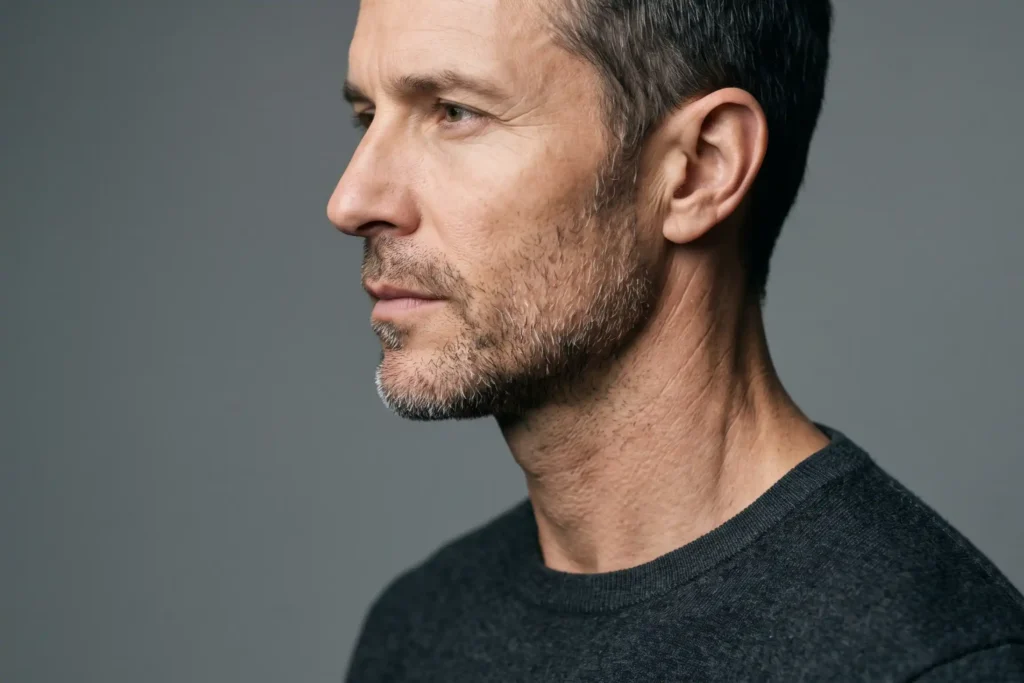
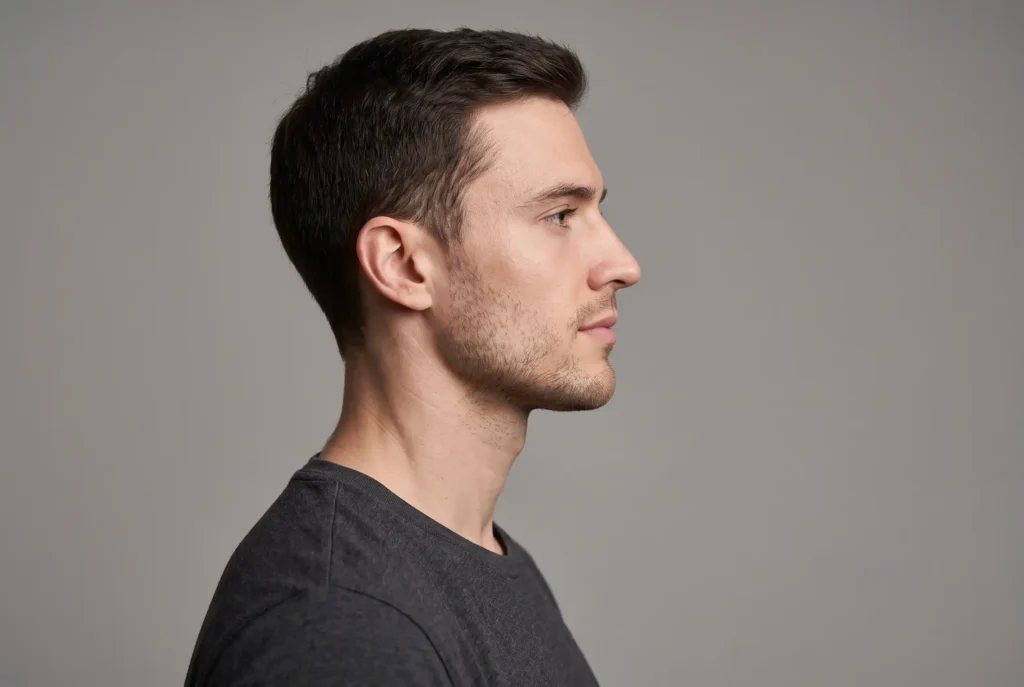
Defined male jawline and neck in profile showing lasting neck liposuction results

Why A Neck Case Stays In The Office

Florida regulates office surgery by fat volume, not by body part, and a neck case sits well inside the lightest tier.

Under the Board of Medicine’s standard of care, Level I office surgery covers procedures performed under local anesthesia with minimal pre-operative sedation, and permits liposuction below 4,000 cubic centimeters of supernatant fat. Any office removing more than 1,000 cubic centimeters must register with the Florida Department of Health, pass a preregistration inspection, and be inspected annually unless it holds national accreditation. You can read the requirements on the Florida Board of Medicine office surgery registration page.

A submental and jawline case is nowhere near those numbers. That’s the reason it’s comfortable awake, and the reason a full torso case is not.

The rules are tightening. House Bill 1175 took effect on July 1, 2026 and created a new section of the Florida Statutes directing the Florida Building Commission and the State Fire Marshal to publish safety design standards specific to office surgery suites by January 1, 2027. If you’re comparing offices on either side of the bay this year, asking how a practice is preparing for those standards is a fair question to put on the table.

The Preparation Window Before And After

Formation treats the weeks on either side of the procedure as part of the procedure.

Your health and diet get assessed before anything is scheduled. Protein intake, inflammation, sleep and existing medications all get looked at, and nutrition, supplements and peptides are adjusted in the window immediately before and after so your body builds the most structure it can while it heals. Dr. Grandhige also personally vets the lymphatic, nutrition and coaching providers patients are sent to, rather than handing over a list.

The device used to tighten your skin is the same device sold to every practice that buys one. The thinking around it is not. That’s where the difference in results actually lives.

Defined jawline showing the goal of neck liposuction vs CoolSculpting

Recovery And The 60/40 Standard

Dr. Grandhige treats surgery as 60 percent of the result and aftercare as 40 percent. That isn’t a line about attentiveness. It’s a claim that a clean operation can be undone by poor compression and uncontrolled inflammation in the first month.

The First Week

Mild swelling, bruising and tightness. You wear a chin compression garment. Most patients are back at work and social activity at one week, with the garment on 12 to 24 hours a day. Training resumes at one week.

Weeks Two To Four

Swelling keeps improving and the liposuction result becomes readable. Lymphatic treatment starts at your first post-operative visit and continues through this window. This is the part that separates a clean recovery from a lumpy one, and it’s the reason Formation owns the aftercare rather than outsourcing it.

Month Three

Skin tightening becomes visible and the jawline shows real improvement. This is usually when other people start noticing that something changed without being able to name it.

Months Six To Nine

The final result. Tightening is slow and it does not finish at three months. Anyone giving you a final answer at six weeks is describing a marketing timeline, not a biological one.

Man checking chin fat to consider neck liposuction candidacy

Crossing The Bay From Clearwater

Formation is at 1315 South Howard Avenue in Tampa. From Clearwater that’s about 25 miles over the Courtney Campbell Causeway, a little over half an hour outside rush hour, with the Howard Frankland as the fallback when the causeway backs up.

The cross-bay drive matters more for this procedure than most, for one specific reason. The oral sedative means you are not driving afterward. Arrange a driver for the return trip before you book the date. You’ll also be back across the bay for lymphatic visits during weeks two through four, so build those trips into your calendar rather than discovering them afterward.

For patients who’d rather not make that drive twice in the first days, Formation holds relationships with hotels near the office, and Dr. Grandhige visits patients in their room so they don’t have to come in during the early window.

Two more Clearwater-specific things worth timing around. Storm season overlaps with the exact stretch when you want an uninterrupted first post-operative week, and coastal Pinellas sits in the evacuation zones called first. And the incisions under your chin and behind your ears need to stay out of direct sun while they mature, which in a beach town takes actual planning. Many patients who start with the neck come back later for HD liposuction on the torso, and the same travel logic applies.

Formation offers a complimentary virtual evaluation with patient coordinator Hanna, who reviews your goals and outlines a plan before you decide whether to make the drive. The in-office consultation with Dr. Grandhige carries a fee and is a full surgical assessment, and that fee can be applied toward any procedure or product at the practice.

Who Performs The Procedure

Dr. Gopal Grandhige is a board-certified general surgeon who specializes in aesthetic surgery. He attended medical school at the University of Michigan and matched into a six-year combined plastic surgery residency at Yale before moving into a full general surgery residency, followed by fellowship training in burn surgery, critical care, and minimally invasive metabolic and foregut surgery. He has been operating for over 15 years and his certification is verifiable through the American Board of Surgery.

That background is unusual in aesthetics, and it shapes how he plans. Burn and critical care training is training in how tissue heals under stress, which is the entire question in a neck.

Dr. Ahmad Saad, a board-certified plastic surgeon, is also on the Formation team. Surgical cases run in Quad A accredited facilities with the same anesthesia provider and the same operating room staff every time, and the physician assistant who assists on every case is employed directly by Dr. Grandhige. Formation limits surgical volume on purpose, which is what makes the year-long follow-up protocol real rather than aspirational.

What The National Numbers Show

In 2024, ASPS member surgeons performed 24,000 submental and chin liposuction procedures, a one percent increase over the prior year. Neck lifts came in at 22,445, up two percent. Liposuction overall stayed the most common cosmetic surgical procedure in the country at 349,728 cases. The full dataset sits in the ASPS 2024 Procedural Statistics Report.

Two things stand out. Submental liposuction and neck lift volumes are nearly identical, which tells you how often the choice between them comes down to anatomy rather than patient preference. That’s the Four-Layer Neck Read in national data.

And demand held steady through a period when GLP-1 medications were widely expected to flatten interest in targeted fat removal. It didn’t happen, and the reason fits what surgeons see in consultation. Weight loss changes how much fat you carry. It doesn’t change the shape of the compartment under your chin, and it frequently exposes a laxity problem that was hidden underneath.

Results And How Long They Hold

The fat cells removed don’t come back. With a stable weight the result is permanent. Removing excess fat in this area can reset the aging clock and slow the appearance of future laxity, though aging continues on its own schedule regardless.

What patients report is rarely about the neck itself. One Formation patient in his forties had spent his whole life avoiding photographs because of how his neck looked, and afterward he started getting in them. Another said colleagues asked whether he’d been sleeping better. Nobody guessed surgery. You can see outcomes in the Formation neck and jawline gallery.

Frequently Asked Questions About Neck Liposuction

It's a short office procedure. You're numbed with local anesthetic after an oral sedative, and you go home the same afternoon. Plan the whole visit rather than the operating time, and arrange your driver in advance.

No. Neck liposuction at Formation runs under local anesthetic with an oral sedative, which is what keeps it in the office rather than a surgical facility. Larger body cases are different and are performed under general anesthesia in a Quad A accredited facility.

Liposuction removes fat, not skin. Where skin recoil is borderline, Renuvion or FaceTite is used under the skin at the same visit to tighten it over the new contour. Where laxity is the dominant problem, fat removal alone will make it look worse and a different procedure is the right answer.

Possibly, but only once your weight has held steady for at least three months. If you still have a pinchable pad and skin that recoils, liposuction can sharpen the line. If the fat is largely gone and the issue is loose skin, removing more is the wrong move.

The incisions are very small and sit under the chin and behind the ears, where they're hidden by shadow and hairline. Keep them out of direct sun while they mature, which takes planning if you spend time on the water.

Most patients return to work and social activity at one week, with the chin garment on 12 to 24 hours a day. Training also resumes at one week. Expect visible bruising before then, so time it around anything you'd rather not be photographed at.

Fat removal is readable at two to four weeks. Skin tightening becomes visible around three months. The final result lands between six and nine months. Anything faster than that is a marketing timeline.

Yes, and you should say so at the first visit. Those treatments leave scarring that makes tissue planes stick together and distributes remaining fat unevenly. It doesn't rule you out, but it changes the operation and what a realistic finished contour looks like.

The Short Version

Neck liposuction works extremely well on one specific problem: a pinchable fat pad under the chin, in a neck with reasonable skin recoil, no standing muscle bands, and a weight that has stopped moving. On that patient it delivers a change out of all proportion to the size of the procedure.

On the wrong patient it delivers a neck that’s thinner and worse.

Sorting out which one you are takes an exam, not a photograph and not a website. Start with the complimentary virtual evaluation if you’d rather not cross the bay before you know where you stand. If fat turns out not to be the problem, you’ll hear that, and Formation also treats the same question from the Tampa side for patients closer in. Dr. Grandhige says no when the read says no, which is the reason to come.

Our first four-legged patient. 🐾Dr. Gopal takes his liposuction and body contouring very seriously.Even when his patients have four legs.From loose skin and neck liposuction to a jawline that deserves its own before-and-after reveal, this might be his most dramatic transformation yet.And yes, he even got the patient’s permission to share the results. 😂A little Halloween fun from Dr. Gopal and his two very patient pups! 🎃🐶No dogs underwent surgery. Just two willing participants and one very committed surgeon.#SurgeonLife #tampa #necklipo

99 25
What weight loss can’t fix.After losing over 100 pounds, this patient had achieved significant weight loss, but was left with excess skin around his abdomen and back that weight loss alone couldn’t address.During an 8-hour surgery, Dr. Gopal performed a circumferential body lift, a procedure that removes excess skin around the entire midsection to improve body contour.In this video, Dr. Gopal walks through the procedure, explaining how he removed approximately 3 pounds of skin from the back and estimated another 4–5 pounds would be removed from the abdomen.He’s also using a small amount of fat collected during the procedure to add volume to the upper chest, improving its contour without performing a separate chest lift.For patients who have experienced major weight loss, body contouring can help address the excess skin that remains after the weight is gone.Considering surgery after weight loss? Schedule a consultation with Dr. Gopal at Formation in Tampa to explore your options.Actual patient footage. Individual results vary.#BodyContouring #BodyLift #ExcessSkinRemoval

46 0
Your fat is liquid gold.The fat you don’t want might be exactly what another part of your body needs.During liposuction, the fat we remove doesn’t always have to be discarded. In fact, Dr. Gopal refers to it as “liquid gold.”Why? Because that fat can sometimes be transferred to another area of the body to add volume, enhance natural contours, and create a more balanced shape.For women, that might mean adding volume to the breasts, hips, or buttocks. For men, fat transfer can help enhance the chest or shoulders.And because we’re using your own fat, we can potentially improve two areas during the same surgery.Of course, fat transfer isn’t right for everyone. It’s something Dr. Gopal discusses with patients beforehand and incorporates into the surgical plan when appropriate.Considering liposuction in Tampa? Schedule a consultation with Dr. Gopal at Formation to explore your body contouring options.#TampaLiposuction #FatTransfer #BodyContouring

27 0
A flatter stomach without a tummy tuck? 👀Pregnancy, and sometimes increased pressure from fat deep inside the abdomen, can cause the abdominal muscles to separate down the middle. This is called diastasis recti, and it can make your belly stick out even if you’re otherwise lean.Traditionally, repairing that separation often meant undergoing a tummy tuck. But what if you don’t have much loose skin to remove?For the right patient, Dr. Gopal can use robotic-assisted surgery to bring those separated muscles back together through three small incisions, without the long scar associated with a traditional tummy tuck.That’s exactly what he did for the patient in these before-and-after photos. No tummy tuck. No additional procedures.**But this approach isn’t for everyone.** If you have significant loose skin or excess fat, a different treatment may be more appropriate. That’s why understanding what’s causing your belly to protrude matters before deciding on surgery.Curious whether you’re a candidate? DM us or schedule a consultation with Dr. Gopal at Formation Tampa. Link in bio.Actual patient results. Individual results vary.#DiastasisRecti #MuscleSeparation #DiastasisRectiRepair #RoboticSurgery #Tampa

18 0
Why does fluid sometimes collect after surgery?After certain surgical procedures, fluid can accumulate beneath the skin, forming what’s called a seroma.In this video, Dr. Gopal demonstrates how he drains a seroma in a patient recovering from diastasis recti repair.This is one of the reasons postoperative follow-up matters. It allows Dr. Gopal to monitor healing, identify any issues, and address them when necessary.Considering surgery? DM us to schedule a consultation with Dr. Gopal at Formation Tampa.#DiastasisRecti #Seroma #TampaSurgeon #AbdominalMuscleRepair

35 2
The fat is gone. But what takes its place?When fat is removed during liposuction, it leaves behind space beneath the skin. As the body heals, fluid can sometimes collect in that space, creating what’s called a seroma.And here’s why that matters.If fluid continues to collect, it can potentially affect the final contour.That’s why Dr. Gopal pays close attention to fluid buildup during recovery. His approach is to identify seromas early and address them quickly.Considering liposuction in Tampa? Schedule a consultation with Dr. Gopal at Formation to learn more.#Liposuction #Seroma #BodyContouring

56 5
From medical weight loss to body contouring, her transformation was approached as a journey, not just a single procedure.This patient started with a personalized medical weight loss program at Formation, working with Dr. Gopal to achieve significant weight loss. Once she reached her goal, Dr. Gopal performed a tummy tuck to remove excess abdominal skin and refine her contour.Considering medical weight loss or a tummy tuck? Schedule a consultation with Dr. Gopal at Formation Tampa. Link in bio.Actual patient results. Individual results vary.

9 2
Not every patient who wants surgery is ready for it.One patient came to Dr. Gopal wanting a tummy tuck. Over the next 18 months, she returned multiple times, having lost more weight each time. And each time, the answer was still no.Not because she couldn’t have the surgery, but because she wasn’t where she wanted to be yet.Instead of rushing into surgery, the focus was on helping her reach a healthier, more sustainable weight through nutritional counseling, lifestyle support, and medical weight management.By the time she had lost 80 pounds, she was ready, both physically and mentally.For Dr. Gopal, being a good surgeon isn’t just about knowing how to perform a procedure. It’s also about knowing when not to perform one.Sometimes the best result starts long before the operating room.Considering a tummy tuck? DM us to schedule a consultation with Dr. Gopal at Formation Tampa.#Tampa #TummyTuck #BodyContouring

71 5
