

Written By: Jeffrey Atlas, PA-C, Health Content Writer
Medically Reviewed By: Dr. Gopal Grandhige, MD, FACS, Board-Certified Surgeon
Last Reviewed: July 28, 2026
Most of the time, it isn’t your body. It’s the treatment. I’ve looked at plenty of scalps where someone ran three or four rounds of PRP, saw nothing, and walked away sure they were a lost cause. They almost never were. The usual culprits are weak plasma, too few sessions, hair loss that’s already too far gone, or PRP used alone when it needed help. Real non-response is rare. Let’s find the actual reason yours stalled, and what changes the outcome.
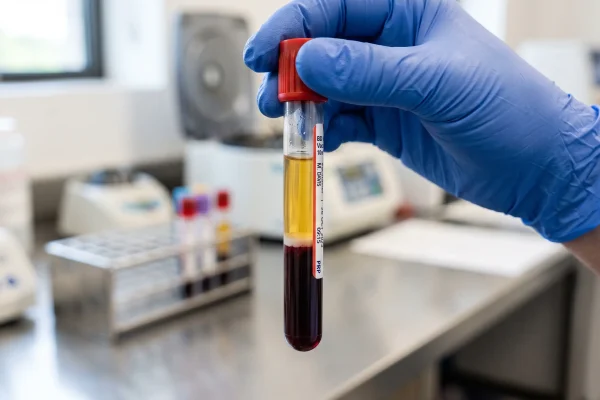
PRP, short for platelet-rich plasma, uses growth factors spun from a small draw of your own blood to wake up weak hair follicles. It stalls for a short list of reasons. Plasma that’s too thin, a rushed schedule, follicles that are already gone, an untreated health problem, or PRP working solo. Fix those, and most people respond.
The single most common reason PRP fails is weak plasma. Not every clinic’s PRP is the same, and the gap between a strong prep and a weak one is wide.
Research points to a clear threshold. To wake up follicles, plasma needs to hit about four to five times your baseline platelet count. A lot of setups, especially the basic tube-and-spin kind, land at only two to three times. That’s not a rounding error. It’s the difference between a signal your follicles hear and one they ignore. If you don’t know what concentration your last clinic reached, that’s your first question for the next one. Understanding PRP for hair loss starts with knowing the plasma was strong enough to do anything at all.
Concentration isn’t the whole story. Coverage matters too. A tiny volume of plasma spread over a thinning crown leaves most follicles untouched. So does skipping activation, the step that tells platelets to release their growth factors. Some clinics skip it to save time, and the platelets sit there inert. Newer reviews from 2025 suggest activated plasma outperforms the non-activated kind on both results and safety. If your plasma was weak, thin, or never activated, no schedule would have saved it.
One or two rounds almost never shows anything. PRP is a repeat game, and quitting early is one of the most common reasons people think it failed.
The studies that show PRP working use three initial sessions, spaced four to six weeks apart. That spacing isn’t arbitrary. It takes repeated nudges to push follicles from resting into active growth. After that, most people need a touch-up around six months, then maintenance every six to twelve months. Skip the maintenance and follicles drift back to where they started as the same hormonal pressure resumes. If you’re wondering how many sessions you really need, plan for a series, not a single visit.
Months, not weeks. This is where a lot of people bail. Less shedding can show up around four to six weeks, but real changes in thickness and density take three to six months. Clinical reviews of PRP for pattern hair loss find the biggest gains cluster around the six-month mark. Judging your result at week eight is like weighing yourself halfway through a workout program. You’re measuring the wrong day.
PRP revives follicles you still have. It can’t build new ones. If an area has been slick and shiny for years, the follicles there are gone, and no amount of plasma brings them back.
This is the part clinics don’t love saying out loud. Once a follicle has been dormant long enough, roughly five to ten years, the stem cells and oil glands around it break down. That’s a one-way door. PRP does its best work on visible thinning, fine baby-like hairs, and recent loss where follicles are shrinking but still alive. If you’ve been asking whether PRP can regrow completely bald areas, the honest answer is usually no. Early treatment beats late treatment every time, which is why I push people to start when they first notice the part widening, not five years later.
Sometimes the plasma is fine and the schedule is right, but something in your body is fighting back. PRP can’t out-muscle an untreated medical issue.
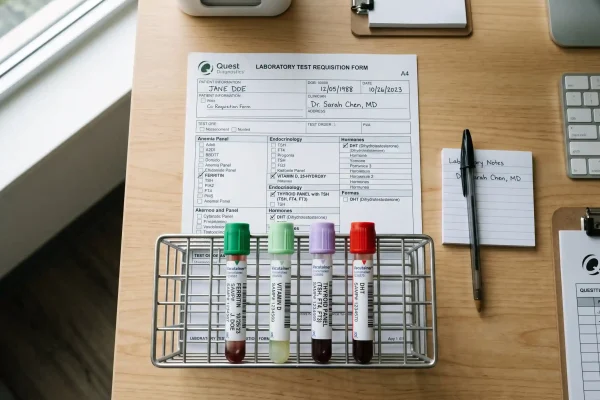
A sluggish thyroid, PCOS, low iron, low vitamin D, or not enough protein can all flatten your response. Growth factors can only do so much if the raw materials aren’t there. Before a fresh round, I’d want ferritin, vitamin D, a thyroid panel, and DHT checked. These are cheap tests that catch fixable problems, and correcting them often turns a non-responder into a responder. Whether someone is a good candidate usually comes down to what those labs show.
Some drugs cause hair loss on their own. Beta blockers, blood thinners, and chemo agents are common ones. PRP can’t win a tug of war against a medication that’s actively pushing hair out. If a new prescription lined up with your shedding, that conversation belongs with the doctor who prescribed it, before you spend another dollar on plasma.
PRP works best as part of a stack, not a solo act. Used alone against pattern hair loss, it’s often not enough, because it doesn’t touch the hormone driving the loss in the first place. Most hair restoration specialists treat it as one tool in a wider plan rather than a cure.
The logic I lean on is simple. Your body compensates through more pathways than any single treatment can cover. Push on one, and it quietly routes around you with another. So we go after hair loss from a few angles at once. PRP feeds the follicle. A DHT blocker like finasteride or spironolactone eases the hormonal pressure. Topical or oral minoxidil improves blood flow and stretches the growth phase. Miss one leg of that stool and the whole thing wobbles. When it fits the goal, our peptide therapy and other regenerative tools can sit alongside PRP, always with human-grade compounds from licensed pharmacies. Formation does not touch research-grade material. It’s illegal to prescribe, administer, or dispense, and it has no place near your scalp.
Think of it like the build-and-renew rhythm the body already runs on. PRP and growth factors push the building side, tissue repair and new blood supply. But building only sticks when the renewal side, sleep, recovery, clean nutrition, holds up its end. The treatment fine-tunes the work. Your habits do the work. On a cellular level, PRP nudges two of the hallmarks of aging, stem cell exhaustion, by waking dormant follicle stem cells, and altered intercellular communication, by restoring the growth-factor signals follicles rely on.
Your daily habits can quietly cancel out a good treatment. This is the lever most people ignore, and it’s free.
Smoking narrows the blood vessels that carry growth factors to the scalp, so the plasma never fully arrives. Chronic stress keeps cortisol high, which speeds up shedding. And short sleep, under six hours a night, cuts the growth hormone your body uses to repair tissue overnight. None of these are small. Fix the plasma but keep the pack-a-day habit, and you’ve handicapped your own result.
Tight ponytails, high heat, and harsh chemical treatments inflame the scalp and work against everything PRP is trying to do. Gentle care during a treatment window isn’t fussy, it’s protective. How you care for your scalp in the days after a session shapes how much of that plasma actually pays off.
Even good plasma fails under a sloppy protocol. These are the errors I see most, and each one has a clean fix.
Sometimes PRP is working and the expectation is the problem. It thickens and holds. It doesn’t transplant.
At its best, PRP thickens existing strands by roughly 15 to 25 percent, calms shedding, and improves texture. It won’t cure pattern baldness or fill a bare scalp. A 20 percent jump in strand diameter reads as fuller hair in the mirror, even when day to day it feels like nothing’s changing. A 2025 review found around 75 to 80 percent of eligible patients get a real improvement. Not everyone. As one dermatologist put it in 2025, no hair therapy works for every single patient, which holds true for every treatment in medicine.
Your eyes are terrible at spotting slow change on your own head. That’s why we use standardized photos and scalp imaging instead of memory. There are real ways to tell if PRP is working, such as less shedding, new baby hairs along the hairline, thicker strands, and a calmer scalp. Track those on camera, month over month, and progress you’d otherwise miss becomes obvious.
If you’ve fixed the plasma, run the full schedule, checked your labs, and added backup, and still nothing, then it’s time to change the plan. That’s a real decision point, not a failure.
The first move is almost always to upgrade the protocol, not scrap PRP. Stronger plasma, full coverage, activation, and a proper stack convert a lot of so-called non-responders. Many people labeled failures simply got a weak version somewhere else.
There’s a line PRP can’t cross. If large areas are fully bald and have been for years, a regenerative approach won’t rebuild them, and surgical restoration is the only route to true follicle replacement. PRP still earns its place after a transplant, where it helps grafts survive and keeps the surrounding hair healthy. Knowing when to switch lanes saves you time and money you’d otherwise pour into the wrong fix.
When someone comes to us after a disappointing round elsewhere, we don’t just repeat it louder. We find out why it flopped.
That starts with labs and scalp imaging to see what’s actually happening at the follicle, then a hard look at the prior protocol. What concentration did the plasma hit? Was it activated? How many sessions, and what coverage? A large share of PRP failures I review turn out to be substandard prep, not stubborn biology. From there we rebuild the plan with stronger plasma, the right medical backup, and lifestyle changes that fit.
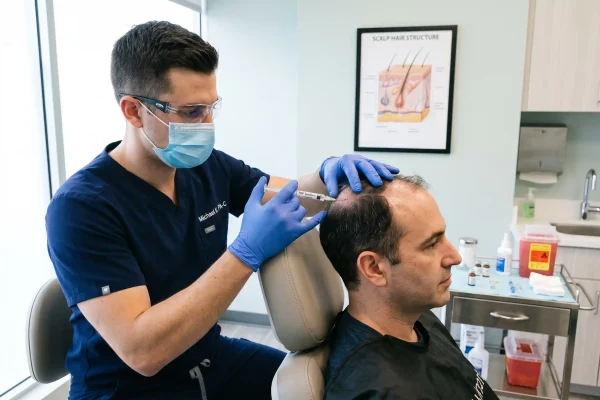
A few things about how we run it here in Tampa. Dr. Gopal Grandhige spearheads the clinic. He’s a board-certified general surgeon who specializes in aesthetic surgery, and he isn’t a plastic surgeon. The injections aren’t done by the owner. Jeff Atlas, PA-C, handles those, and he came up through orthopaedics, so precise, hands-on injection work is second nature to him. Formation holds SSRP and ISSCA certifications, the bodies that set standards for peptides, exosomes, and stem cells, and we use only human-grade compounds from licensed pharmacies. Non-surgical procedures keep rising year over year in national data, and regenerative options like PRP are a growing slice of that. Done right, PRP has a real place. Done carelessly, it just wastes your money.
Nine times out of ten, PRP isn’t failing because your body rejected it. It’s failing because the plasma was weak, the schedule was cut short, the loss was too advanced, or it went in without backup. Every one of those is fixable except the last stage of baldness. So before you write PRP off, get honest answers about your prep, your protocol, and your labs. Why PRP is not working for your hair is usually a question with a solvable answer, and finding it beats starting over from zero.
Usually the cause is fixable, not biological. The most common reasons are weak plasma, too few sessions, hair loss that's already too advanced, or PRP used without backup therapy. Plasma needs about four to five times your baseline platelet count to wake up follicles, and many basic systems only reach two to three times, which is often the real problem.
Plan for three initial sessions spaced four to six weeks apart, then judge your result at the three to six month mark, not before. Less shedding may appear around four to six weeks, but density changes take months. Judging PRP at week eight is too early to draw any conclusion.
Often, yes. Many so-called PRP failures simply got a weak version somewhere else, with plasma below the four to five times concentration follicles respond to. Moving to stronger, activated plasma with full scalp coverage and a proper protocol frequently produces results after an earlier disappointment.
No. PRP revives follicles you still have; it can't create new ones. Once an area has been slick and shiny for roughly five to ten years, the follicles are gone and PRP won't bring them back. It works best on visible thinning and recent loss where follicles are shrinking but still alive.
Yes. Combination therapy beats PRP alone against pattern hair loss because it hits several pathways at once. A DHT blocker eases hormonal pressure while minoxidil improves blood flow and PRP feeds the follicle. Around 75 to 80 percent of eligible patients see a real improvement when the full stack is used.
If results take time, that's normal, since the biggest gains cluster around six months. If you've corrected the plasma quality, completed the full schedule, and cleared your labs and still see nothing, the next step is a protocol upgrade or, for fully bald areas, a conversation about surgical restoration.
Genuine biological non-response exists, but it's rare. Most apparent non-responders had a correctable issue, such as weak plasma, an incomplete schedule, or an untreated thyroid, iron, or hormone problem. Only a small share stay non-responsive after all of those are addressed.
The last one got 11/10.
Some of the biggest factors affecting liposuction results have nothing to do with what happens in the operating room.
Dr. Gopal rates 13 factors that can influence the final result, from working out before surgery and maintaining a stable weight to compression garments, skin elasticity, and lymphatic massage.
A few of his ratings might surprise you.
For example, he rates skin elasticity a 10/10 because even after the fat is removed, the skin still needs to contract and settle over the new contour.
And lymphatic massage? He gives it an 11/10 because of the role it plays in his recovery protocol, helping manage swelling and supporting how the skin settles over the newly sculpted areas.
The takeaway: great liposuction results depend on more than the surgery itself.
Patient preparation, anatomy, recovery, and long-term weight maintenance all play a role.
Considering liposuction or high-definition liposuction in Tampa?
Schedule a consultation with Dr. Gopal Grandhige at Formation Tampa. Link in bio.
#Liposuction #HDLiposuction #LiposuctionRecovery #LipoAftercare #tampa
The last one got 11/10.
Some of the biggest factors affecting liposuction results have nothing to do with what happens in the operating room.
Dr. Gopal rates 13 factors that can influence the final result, from working out before surgery and maintaining a stable weight to compression garments, skin elasticity, and lymphatic massage.
A few of his ratings might surprise you.
For example, he rates skin elasticity a 10/10 because even after the fat is removed, the skin still needs to contract and settle over the new contour.
And lymphatic massage? He gives it an 11/10 because of the role it plays in his recovery protocol, helping manage swelling and supporting how the skin settles over the newly sculpted areas.
The takeaway: great liposuction results depend on more than the surgery itself.
Patient preparation, anatomy, recovery, and long-term weight maintenance all play a role.
Considering liposuction or high-definition liposuction in Tampa?
Schedule a consultation with Dr. Gopal Grandhige at Formation Tampa. Link in bio.
#Liposuction #HDLiposuction #LiposuctionRecovery #LipoAftercare #tampa
Six to seven hours.
That’s how long an HD liposuction procedure can take with Dr. Gopal’s approach.
He’s not simply removing fat. He’s evaluating every square inch, considering the underlying anatomy, and shaping how each contour transitions into the next.
It’s detailed, physically demanding work.
So when Dr. Gopal says, “Someone’s gotta sweat for the fat to come off,” he means it.
Considering HD liposuction in Tampa? Schedule a consultation (link in bio).
#HDLiposuction #HighDefinitionLiposuction
Six to seven hours.
That’s how long an HD liposuction procedure can take with Dr. Gopal’s approach.
He’s not simply removing fat. He’s evaluating every square inch, considering the underlying anatomy, and shaping how each contour transitions into the next.
It’s detailed, physically demanding work.
So when Dr. Gopal says, “Someone’s gotta sweat for the fat to come off,” he means it.
Considering HD liposuction in Tampa? Schedule a consultation (link in bio).
#HDLiposuction #HighDefinitionLiposuction
Will neck lipo give you the jawline you want?
It depends…
Someone can have fullness under the chin and assume the answer is neck liposuction. But what looks like “fat” from the outside can actually come from several different structures.
Some fat sits directly beneath the skin and can respond very well to liposuction.
But fullness can also come from deeper fat beneath the platysma, the salivary glands under the jaw, muscles under the chin, or even the natural projection of the chin and jaw itself.
That distinction can completely change what neck liposuction can realistically accomplish.
This is why evaluating the anatomy matters before deciding on a procedure.
For the right anatomy, neck liposuction can create a significant change in the neck and jawline.
But when deeper structures are contributing to the fullness, liposuction alone may not create the contour someone is expecting.
A good neck lipo consultation should figure that out first.
Schedule a consultation with **Dr. Gopal Grandhige at Formation Tampa.** Link in bio.
#NeckLipo #NeckLiposuction #DoubleChin #JawlineContouring #NeckContouring
Will neck lipo give you the jawline you want?
It depends…
Someone can have fullness under the chin and assume the answer is neck liposuction. But what looks like “fat” from the outside can actually come from several different structures.
Some fat sits directly beneath the skin and can respond very well to liposuction.
But fullness can also come from deeper fat beneath the platysma, the salivary glands under the jaw, muscles under the chin, or even the natural projection of the chin and jaw itself.
That distinction can completely change what neck liposuction can realistically accomplish.
This is why evaluating the anatomy matters before deciding on a procedure.
For the right anatomy, neck liposuction can create a significant change in the neck and jawline.
But when deeper structures are contributing to the fullness, liposuction alone may not create the contour someone is expecting.
A good neck lipo consultation should figure that out first.
Schedule a consultation with **Dr. Gopal Grandhige at Formation Tampa.** Link in bio.
#NeckLipo #NeckLiposuction #DoubleChin #JawlineContouring #NeckContouring
Want more definition than workouts gave you?
Traditional liposuction focuses primarily on removing fat. HD liposuction goes further. It requires understanding the underlying muscle anatomy, where to remove fat, where to preserve it, and how each contour works together to create natural-looking definition.
That’s the art of it. The goal isn’t to give every patient the same abs or the same body. It’s to work with the anatomy that’s already there and determine how much definition will look right for that individual.
Dr. Gopal Grandhige specializes in high-definition liposuction and advanced body contouring, using nearly two decades of surgical experience to create results that look sculpted, athletic, and intentional.
Considering HD liposuction in Tampa?
Schedule a consultation with Dr. Gopal at Formation Tampa. Link in bio.
#HDLiposuction #HighDefinitionLiposuction #Liposuction #BodyContouring #Tampa
Want more definition than workouts gave you?
Traditional liposuction focuses primarily on removing fat. HD liposuction goes further. It requires understanding the underlying muscle anatomy, where to remove fat, where to preserve it, and how each contour works together to create natural-looking definition.
That’s the art of it. The goal isn’t to give every patient the same abs or the same body. It’s to work with the anatomy that’s already there and determine how much definition will look right for that individual.
Dr. Gopal Grandhige specializes in high-definition liposuction and advanced body contouring, using nearly two decades of surgical experience to create results that look sculpted, athletic, and intentional.
Considering HD liposuction in Tampa?
Schedule a consultation with Dr. Gopal at Formation Tampa. Link in bio.
#HDLiposuction #HighDefinitionLiposuction #Liposuction #BodyContouring #Tampa
Defined abs with HD liposuction.
Unlike traditional liposuction, where the primary goal is removing excess fat, HD liposuction is about strategically removing fat to reveal and enhance the underlying muscle structure.
Those markings you see before surgery help Dr. Gopal map out the patient’s anatomy and plan where to remove fat and where to preserve it to create more visible definition.
The second clip was taken immediately after surgery, so this is not the final result. Swelling and bruising will change significantly as the body heals and the final contour develops over the months that follow.
Considering high-definition liposuction? Schedule a consultation with Dr. Gopal Grandhige at Formation Tampa. Link in bio.
#HDLiposuction #HighDefinitionLiposuction #Liposuction #BodyContouring #MaleLiposuction
Defined abs with HD liposuction.
Unlike traditional liposuction, where the primary goal is removing excess fat, HD liposuction is about strategically removing fat to reveal and enhance the underlying muscle structure.
Those markings you see before surgery help Dr. Gopal map out the patient’s anatomy and plan where to remove fat and where to preserve it to create more visible definition.
The second clip was taken immediately after surgery, so this is not the final result. Swelling and bruising will change significantly as the body heals and the final contour develops over the months that follow.
Considering high-definition liposuction? Schedule a consultation with Dr. Gopal Grandhige at Formation Tampa. Link in bio.
#HDLiposuction #HighDefinitionLiposuction #Liposuction #BodyContouring #MaleLiposuction
Skin quality changes everything.
Neck liposuction can create a more defined jawline and neck contour by removing unwanted fat, but the result also depends heavily on skin quality and elasticity.
When skin has good elasticity, neck lipo alone may be enough for the skin to contract around the new contour. With some skin laxity, Dr. Gopal may combine liposuction with a skin-tightening treatment such as Renuvion or FaceTite. With significant laxity, a neck lift may be the more appropriate option.
That’s why evaluating the skin is an important part of determining the right approach before neck liposuction.
Considering neck liposuction in Tampa? Schedule a consultation with Dr. Gopal Grandhige at Formation Tampa.
#NeckLiposuction #NeckLipo #JawlineContouring #Tampa
Skin quality changes everything.
Neck liposuction can create a more defined jawline and neck contour by removing unwanted fat, but the result also depends heavily on skin quality and elasticity.
When skin has good elasticity, neck lipo alone may be enough for the skin to contract around the new contour. With some skin laxity, Dr. Gopal may combine liposuction with a skin-tightening treatment such as Renuvion or FaceTite. With significant laxity, a neck lift may be the more appropriate option.
That’s why evaluating the skin is an important part of determining the right approach before neck liposuction.
Considering neck liposuction in Tampa? Schedule a consultation with Dr. Gopal Grandhige at Formation Tampa.
#NeckLiposuction #NeckLipo #JawlineContouring #Tampa
Liposuction can change more than the body.
I’ve watched patients become more confident, make changes in their careers, show up differently in their relationships, and start making different choices for themselves.
That’s when I know I’ve done my job well.
Because high-definition liposuction isn’t only about creating a leaner, more defined physique. Sometimes the physical transformation becomes the catalyst for changes that reach far beyond the operating room.
Dr. Gopal Grandhige
Considering HD liposuction in Tampa? Schedule a consultation with Dr. Gopal Grandhige at Formation Tampa.
#BodyContouring #HDLiposuction #tampa #Liposuction
Liposuction can change more than the body.
I’ve watched patients become more confident, make changes in their careers, show up differently in their relationships, and start making different choices for themselves.
That’s when I know I’ve done my job well.
Because high-definition liposuction isn’t only about creating a leaner, more defined physique. Sometimes the physical transformation becomes the catalyst for changes that reach far beyond the operating room.
Dr. Gopal Grandhige
Considering HD liposuction in Tampa? Schedule a consultation with Dr. Gopal Grandhige at Formation Tampa.
#BodyContouring #HDLiposuction #tampa #Liposuction
Male liposuction requires a different approach.
The contours that create a more feminine shape aren’t necessarily the same ones that create a strong, athletic male physique.
With male high-definition liposuction, Dr. Gopal considers how the chest, abdomen, waist, ribs and back work together—and how the underlying muscle anatomy should guide where definition and shadow are created.
That’s also why the chest matters. A highly defined abdomen and back paired with a rounder, less-defined chest can make the overall result feel out of proportion.
The goal is a cohesive, athletic contour that works with the patient’s natural anatomy.
Considering male HD liposuction? Schedule a consultation with Dr. Gopal Grandhige at Formation Tampa.
Male liposuction requires a different approach.
The contours that create a more feminine shape aren’t necessarily the same ones that create a strong, athletic male physique.
With male high-definition liposuction, Dr. Gopal considers how the chest, abdomen, waist, ribs and back work together—and how the underlying muscle anatomy should guide where definition and shadow are created.
That’s also why the chest matters. A highly defined abdomen and back paired with a rounder, less-defined chest can make the overall result feel out of proportion.
The goal is a cohesive, athletic contour that works with the patient’s natural anatomy.
Considering male HD liposuction? Schedule a consultation with Dr. Gopal Grandhige at Formation Tampa.
Choosing a liposuction surgeon isn’t just about looking at before-and-afters.
Liposuction isn’t simply about removing fat. Decisions around how much to remove, which areas to treat, skin quality, post-op care and recovery can all influence the approach to your result.
How a surgeon answers these questions can tell you a lot about how they think, plan and care for their patients.
Save these 6 questions for your next consultation.
Considering liposuction? DM us or schedule a consultation with Dr. Gopal Grandhige at Formation Tampa.
#tampa #hdliposuction #liposuction #bodycountouring
Choosing a liposuction surgeon isn’t just about looking at before-and-afters.
Liposuction isn’t simply about removing fat. Decisions around how much to remove, which areas to treat, skin quality, post-op care and recovery can all influence the approach to your result.
How a surgeon answers these questions can tell you a lot about how they think, plan and care for their patients.
Save these 6 questions for your next consultation.
Considering liposuction? DM us or schedule a consultation with Dr. Gopal Grandhige at Formation Tampa.
#tampa #hdliposuction #liposuction #bodycountouring
6 months post high-definition liposuction with moderate definition.
The goal wasn’t just less fat. It was a leaner, more athletic contour with visible definition through the abdomen and torso, without pushing the result to the highest level of definition.
High-definition liposuction strategically sculpts around the underlying anatomy and can be customized based on a patient’s anatomy, muscle structure, and the degree of definition they want to achieve.
For this patient, moderate definition created the balance Dr. Gopal was looking for.
Results vary by patient and depend on individual anatomy, skin quality, and treatment plan.
Considering HD liposuction? Schedule a consultation with Dr. Gopal Grandhige at Formation Tampa. Link in bio.
#HDLiposuction #Liposuction #BodyContouring #MaleLiposuction #tampa

6 months post high-definition liposuction with moderate definition.
The goal wasn’t just less fat. It was a leaner, more athletic contour with visible definition through the abdomen and torso, without pushing the result to the highest level of definition.
High-definition liposuction strategically sculpts around the underlying anatomy and can be customized based on a patient’s anatomy, muscle structure, and the degree of definition they want to achieve.
For this patient, moderate definition created the balance Dr. Gopal was looking for.
Results vary by patient and depend on individual anatomy, skin quality, and treatment plan.
Considering HD liposuction? Schedule a consultation with Dr. Gopal Grandhige at Formation Tampa. Link in bio.
#HDLiposuction #Liposuction #BodyContouring #MaleLiposuction #tampa

Peptides optimize the effort you are putting in. Get a FREE 15-minute Virtual Protocol Review + our Regenerative Treatment Newsletter.
We’ll show you exactly how we evaluate candidacy — plus, we cover the cost of your baseline labs with all in-person consults ($100).