


Written By: Jeffrey Atlas, PA-C, Health Content Writer
Medically Reviewed By: Dr. Gopal Grandhige, MD, FACS, Board-Certified Surgeon
Last Reviewed: September 17, 2026
Most tummy tuck problems I see aren’t surgical. They’re behavioral, and they show up in the first three weeks.
What not to do after a tummy tuck comes down to seven habits. Don’t lift, bend, or strain your repaired abdominal wall. Don’t loosen your compression garment. Don’t cut protein while you’re cutting salt. Don’t touch nicotine in any form. Don’t lie still all day. Don’t return to the gym on a timeline you found online. And don’t buy new clothes yet.
I’ve run recovery for tummy tuck patients in Tampa for years. The surgery is about 60 percent of your result. Post-op care is the other 40, and patients control almost all of it.
This isn’t a candidacy guide and it isn’t a technique comparison. It’s what to avoid once you’re home.
Avoid anything that pulls on the abdominal wall repair, anything that lets fluid pool under the skin flap, and anything that starves the tissue of what it needs to close. That means no lifting over about 10 pounds, no bending at the waist, no going without compression, no nicotine, and no unsupervised return to exercise for six weeks.
Tummy tucks aren’t rare procedures. ASPS members performed 171,064 tummy tucks in 2024, up 1 percent over 2023. The volume is high enough that the recovery mistakes are well documented. Most patients still make them anyway.
Because that’s when the skin flap is deciding whether to stick down or float. A tummy tuck lifts skin and fat off the abdominal fascia and creates a large empty space underneath. Your body has to seal that space with scar tissue. Fluid that collects there instead is called a seroma, and it’s the most common complication of the operation by a wide margin.
Published seroma rates run anywhere from 5 to 43 percent depending on technique and patient. That’s an enormous spread. It tells you how much of the outcome sits outside the operating room.
Strain reopens the space. So does skipping compression. Once fluid pools, the flap stops adhering, the contour goes soft and irregular, and swelling takes longer to settle than it should. We drain seromas in the office when they form. I’d rather they didn’t.
These get lumped together in every recovery list, which annoys me, because they fail for different reasons and on different timelines.
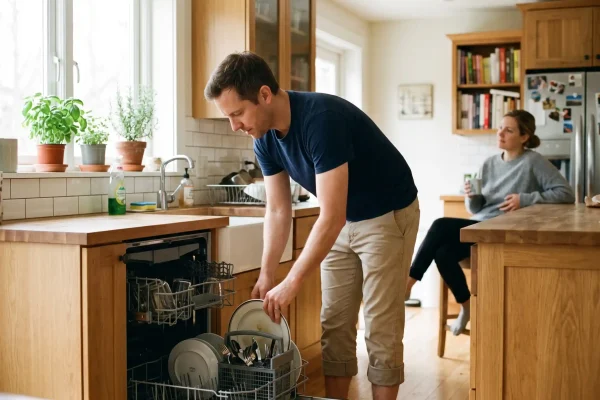
Vacuuming and mopping load the abdominal wall through your arms and trunk at the same time. That’s direct tension on the plication sutures holding your rectus muscles together. Cooking is a bending problem, not a lifting problem. Reaching into a low oven or a bottom cabinet flexes you forward at exactly the angle the incision can’t tolerate. Lifting a toddler is both at once, plus it’s unpredictable, because kids move.
Get real help for 10 to 14 days. Not a friend who checks in. Someone in the house. We send a nurse home with patients for the first 24 hours and most people are surprised how much they still need after that.
Plan on 10 to 14 days before returning to work if your job is desk-based. Longer if it isn’t.
Compression does two jobs. It presses the skin flap against the fascia so scar tissue can form, and it limits how much fluid accumulates in between. Loosening the garment because it feels tight defeats both.
Patients ask me constantly whether they can take it off at night. In the first stretch, no. Wear the garment continuously apart from showering. After the first few weeks you get more room to negotiate.
The garment isn’t cosmetic and it isn’t there to make you look thinner while you heal. It’s a mechanical part of the operation that happens to be removable.
The salt advice is everywhere and it’s fine as far as it goes. Sodium pulls water into your tissues, your tissues are already swollen, so heavy salt makes you puffier and more uncomfortable for a few days.
But the salt fixation has crowded out the thing that matters more. Low protein intake is a named risk factor for seroma formation, listed right alongside high BMI and wide surgical undermining in the StatPearls abdominoplasty review. Your body is building collagen to seal a space the size of your hand. It can’t do that on toast and soup.
Actually, let me put that more plainly. Cutting salt reduces how bloated you feel. Getting enough protein changes whether your tissue closes properly. Those aren’t the same tier of problem, and most recovery guides treat them as if the first one is the whole conversation.
Our concierge dietitian works with patients on this before surgery, not after. By the time you’re home and nauseated on pain medication, hitting a protein target is hard.
Not until you’re off prescription pain medication and can turn to check a blind spot without guarding. For most patients that’s around two weeks.
Two separate problems here. The medication one is legal and obvious. The other is mechanical. Your core is the thing that rotates your torso, and it’s been cut and repaired, so twisting to reverse out of a parking space either hurts or doesn’t happen. A driver who can’t turn their body is a hazard.
Sitting still for long stretches is its own issue, which I’ll get to. Short local trips first. If pain is still limiting you at three weeks, tell us rather than pushing through it.
Most surgeons ask patients to wait two to three weeks, and longer if drains are still in. I want patients in Tampa for the early post-op visits regardless.
Flying stacks two problems this article has already covered. You’re immobile in a seat for hours, which is the condition that raises clot risk, and pressure changes make swelling feel worse than it is. Neither one is alarming alone. Together, in week two after abdominal surgery, they aren’t worth the convenience.
We treat a lot of out-of-state patients. Miami, Orlando, Naples, Atlanta. The ones who recover best stay near the practice for the first stretch instead of flying home on day four. We keep hotel relationships nearby for exactly this, and I visit patients in their rooms during the early days so they don’t have to come to the office at all.
If you’re weighing where to have surgery, work out the recovery logistics before you book the flight. A flight that pulls you away from post-op care during week one is a bad trade.
Stomach sleepers have the hardest adjustment. Face-down puts your full body weight on a fresh incision and a repaired muscle wall.
Sleep on your back with your knees slightly bent and your upper body raised. A recliner works better than a bed for the first week or two, and most patients end up preferring it. Flat on your back with straight legs pulls the incision open at the top of its range, which is the opposite of what you want. The best sleeping position shifts as swelling drops, so this isn’t a fixed six-week rule.
Numbness or a burning patch along the outer thigh is also common early on. That’s the lateral femoral cutaneous nerve, irritated during dissection, and it shows up in roughly 1.4 to 1.9 percent of cases. It usually fades. Sleeping in a twisted position to escape it makes it worse.
Set this up before surgery. Nobody arranges a wedge pillow well at 11pm on day one.
Nicotine constricts the small vessels feeding your skin flap. That flap is already running on a reduced blood supply because the surgery divided most of its usual sources. Add vasoconstriction and tissue starts dying.
Skin necrosis after abdominoplasty runs around 1.6 percent overall, and it clusters at the lower midline where the flaps meet. Smoking, obesity, diabetes, and hypertension are the named risk factors. The standard guidance is to stop nicotine at least four weeks before surgery and stay off it four weeks after. Some surgeons run a cotinine test on the morning of the operation to confirm.
Vapes and pouches count. So do patches, which surprises people. It’s the nicotine, not the smoke. Preparing properly for surgery means this stops well before your date.
No, and this is the piece of outdated advice that bothers me most. Patients still arrive believing that lying still protects the repair. It does the opposite.
Immobility after abdominal surgery raises your clot risk. In an analysis of more than 55,000 abdominoplasty patients published in the Aesthetic Surgery Journal, confirmed pulmonary embolism ran 0.19 percent and deep vein thrombosis 0.18 percent. Low numbers, and they’re low partly because surgeons push early walking hard.
Walk the day of surgery. Short, slow, flat, hunched forward if that’s what’s comfortable. Every few hours. What you’re avoiding is strain, not movement, and patients conflate the two constantly.
Here’s the distinction I give people. Walking to the kitchen is movement. Carrying anything back is strain.
Six weeks is the number for tummy tuck patients, and it’s not negotiable the way liposuction timelines are. Lipo patients are often back in the gym at one to two weeks. A tummy tuck involves a muscle repair, and muscle repairs need time under no load.
The order matters more than the date:
Crunches and planks pull straight on the plication, which is why they come last no matter how good you feel at week seven.
Patients who rush this are the ones who need revisions. That’s the whole mechanism behind a bulge returning after a good repair. Some patients benefit from structured physical therapy to rebuild core function in the right order rather than guessing.
You’re not looking at your result. You’re looking at swelling.
Final contour keeps refining for six to twelve months, and scars keep fading well past the point most patients expect. Buying clothes at week four means buying for a body that’s still changing shape.
Wait until month three at minimum. Six if you can stand it.
Call for a fever over 101 degrees, spreading redness at the incision, yellow or green drainage, a foul smell, bleeding that soaks through dressings, pain that suddenly worsens instead of easing, one calf swollen more than the other, or any shortness of breath.
The numbers conflict here, and you should know why. That Aesthetic Surgery Journal analysis reported a 2.1 percent overall complication rate. StatPearls puts the range at 10 to 20 percent. Both are correct. The journal study counted only major complications requiring hospital admission, an emergency visit, or a reoperation within 45 days. StatPearls counts everything, including the minor seromas and small wound issues we handle in clinic. Know which number you’re reading.
Hematoma and infection were the two largest contributors to major complications in that database, at 0.7 and 0.6 percent. Both are things you can sometimes catch early. ASPS keeps a useful patient safety resource on what to watch for.
Don’t wait for a scheduled visit. Call.
Risk isn’t distributed evenly, and that’s the thing almost nobody tells patients. In that same 55,000-patient analysis, men carried two to three times the complication risk of women after conventional, mini, and extended abdominoplasty. Diabetes raised the odds by roughly 80 percent. A BMI over 40 raised them about 70 percent.
The GLP-1 wave is reshaping who walks through the door. ASPS counted over 800,000 aesthetic patients on weight-loss medications in 2024, with 39 percent considering surgery. Massive weight loss patients sit in a higher complication band, up to 30 to 50 percent by some published figures.
If any of that describes you, the restrictions in this article aren’t suggestions. Dr. Ahmad Saad and I are honest with patients about this in consultation, sometimes to the point of recommending they wait and address something else first.
Knowing what not to do after a tummy tuck is most of the work. The operation is one day. Your part runs six weeks, and it decides how the other 40 percent turns out.
Don't lift more than about 10 pounds, don't bend at the waist, don't drive while on prescription pain medication, and don't remove your compression garment except to shower. Do walk short distances every few hours starting the day of surgery. Immobility raises clot risk, and published rates for pulmonary embolism and deep vein thrombosis after abdominoplasty sit near 0.19 and 0.18 percent partly because surgeons push early walking.
Six weeks for resistance training, with clearance from your surgeon first. Walking starts day one. Light cardio like a stationary bike comes back around week three. Direct core work is last, often closer to twelve weeks, because crunches and planks pull straight on the muscle repair.
Cutting salt reduces how bloated and uncomfortable you feel for a few days. Low protein intake is a documented risk factor for seroma formation, listed alongside high BMI and wide surgical undermining. Seroma rates after abdominoplasty range from 5 to 43 percent, so protein affects whether your tissue closes properly, not just how you feel.
Most surgeons ask patients to wait two to three weeks, and longer if drains are still in place. Sitting immobile for hours is the same condition that raises clot risk during bed rest. Patients traveling from out of state generally do better staying near the practice for the first stretch than flying home in the first week.
Not in the early weeks. Sleep on your back with your knees slightly bent and your upper body raised, which reduces tension on the incision. A recliner is easier than a bed for the first week or two. Stomach sleeping is out entirely until your surgeon clears it.
Yes, and so do nicotine patches. Nicotine constricts the small vessels feeding the skin flap, and that flap already has a reduced blood supply after surgery. Skin necrosis after abdominoplasty runs around 1.6 percent, with smoking as a named risk factor. Standard guidance is four weeks off nicotine before surgery and four weeks after.
Call for a fever over 101 degrees, spreading redness, yellow or green drainage, a foul smell from the wound, bleeding that soaks through dressings, pain that suddenly worsens, one calf swollen more than the other, or shortness of breath. Hematoma and infection were the two largest contributors to major complications in a study of over 55,000 patients.
The next step after losing 100 pounds.
After significant weight loss, the skin doesn’t always shrink back to match the body’s new shape. And no amount of exercise can remove that excess skin.
In this surgery, Dr. Gopal performs a 360° circumferential body lift to remove excess skin and reshape the patient’s waistline, abdomen, and lower back.
The approach involves lifting the skin on the back and pulling it downward on the front to create a smoother, flatter contour while positioning the incision low enough to be concealed by underwear.
This patient lost over 100 pounds. During surgery, Dr. Gopal explains how approximately 3 pounds of skin were removed from the back, with another 5 pounds planned for removal from the front.
It’s not just about removing skin. It’s about reshaping the body after a significant weight-loss journey.
📍 Dr. Gopal Grandhige | Formation, South Tampa
Interested in body contouring after major weight loss? Schedule a consultation to explore your options.
#BodyLift #CircumferentialBodyLift #ExcessSkinRemoval #WeightLoss #BodyContouring
There’s lean. Then there’s sculpted.
High-definition liposuction goes beyond traditional fat removal. It’s about strategically sculpting around the underlying muscles to create more visible definition in the chest, abdomen, and waist.
For this patient, the goal was a leaner, more defined, athletic appearance without an exaggerated look.
Dr. Gopal Grandhige specializes in male HD liposuction, customizing each procedure to the patient’s anatomy, muscle structure, and desired level of definition.
The result? A more sculpted physique that complements his natural build.
Interested in HD liposuction? Schedule a consultation with Dr. Gopal at Formation Tampa. Link in bio.
Actual patient photos. Individual results vary.
#HDLiposuction #MaleLiposuction #HighDefinitionLiposuction #BodySculpting #Tampa
“That responsibility means everything to me.”
When a patient chooses a plastic surgeon, they’re placing an extraordinary amount of trust in someone else’s hands.
And that responsibility goes far beyond what happens in the operating room.
For Dr. Gopal, it means taking the time to understand each patient’s goals, carefully planning their procedure, making thoughtful decisions throughout surgery, and being there for them during recovery.
Every detail matters because there’s a real person behind every procedure, with hopes, concerns, and expectations.
And that person deserves to feel cared for every step of the way.
#Tampa #CosmeticSurgery #PatientCare #bodycountouring #hdliposuction
Every body needs a different plan.
An HD liposuction consultation with Dr. Gopal is much more than discussing which areas to treat.
He takes the time to evaluate each patient’s anatomy, explain what he’s seeing, and walk through exactly how he would approach the procedure.
Where should fat be removed? Where should it be preserved? How can the waist be sculpted while maintaining natural curves? And when might additional skin tightening be needed?
These are just some of the decisions Dr. Gopal walks patients through, explaining not only what he recommends, but why.
This Reel is a small glimpse into a consultation that typically involves a much more detailed conversation, with time for patients to ask questions and understand their options.
📍 Formation | South Tampa
Considering high-definition liposuction? Schedule a consultation with Dr. Gopal to discuss your goals and explore what’s possible.
#HDLipo #HighDefinitionLiposuction #BodyContouring #Tampa
There’s lean. Then there’s sculpted.
For some men, even years of consistent training and cutting cycles don’t produce the abdominal definition they’re working toward.
Here’s what one patient shared in his Google review of Formation:
⭐️⭐️⭐️⭐️⭐️
“Waited a few months to write this because I wanted to make sure the results held up.
The HD technique did what years of cutting cycles couldn’t. Abs actually show now, even relaxed, even in bad lighting. If you’ve chased a six pack for years you know what that means. Recovery was more involved than I expected and the bruising was wild for a bit. But the result looks like me, just leaner and more defined. Doesn’t look surgical, which was my biggest fear going in. Would recommend, but only if you’re already putting in the work.”
Dr. Gopal Grandhige specializes in male high-definition liposuction, an advanced body-contouring technique that goes beyond traditional fat removal.
By strategically removing fat around the underlying muscles, HD liposuction can enhance natural muscle definition and create a leaner, more sculpted, athletic appearance.
The goal isn’t to create artificial abs. It’s to reveal and enhance the muscle contours already there, with the level of definition customized to each patient’s anatomy and goals.
📍 Formation, South Tampa
Interested in male HD liposuction? Schedule a consultation with Dr. Gopal to explore your options.
Google patient review.
#HDLiposuction #MaleLiposuction #BodyContouring #Tampa
Crunches can only do so much.
You can spend hours strengthening your abdominal muscles, but that doesn’t guarantee visible definition.
A layer of fat sits between the muscles and the skin, and crunches can’t specifically target that fat.
For many people, exercise and reducing overall body fat can help reveal their abs. But even people who are already lean and fit can have stubborn fat that hides their natural muscle definition.
That’s where high-definition liposuction may help.
Dr. Gopal uses HD lipo to selectively remove fat around the natural contours of the abdominal muscles, helping reveal the definition that’s already there.
📍 Formation | South Tampa
Interested in HD lipo? Schedule a consultation to learn more.
#HDLipo #HighDefinitionLiposuction #AbdominalSculpting #BodyContouring
Which one had surgery 1 or 2? 👀
High-definition liposuction goes beyond traditional fat removal. Instead of simply reducing fat evenly, the surgeon strategically removes fat around the underlying muscles to make their natural contours more visible.
But here’s what makes it interesting: HD lipo doesn’t create the same six-pack on everyone. Each person’s anatomy, muscle development, and desired level of definition influence the final result.
Now take another look at these two patients.
Which one do you think had HD liposuction, 1 or 2?
Drop your guess below, then check the pinned comment for the answer!
#HDLiposuction #MaleLiposuction #BodyContouring #Tampa
There’s a story behind every decision.
Cosmetic surgery is a personal decision. Yet people who choose it often find themselves having to explain or defend that choice to others.
Some want to restore changes after pregnancy or weight loss. Others have worked hard to get in shape but still have areas they’d like to improve. And some simply want to feel more comfortable with their appearance.
The reasons are different for everyone. And they don’t have to make sense to anyone else.
At Formation, Dr. Gopal believes the decision to pursue cosmetic surgery should be guided by a patient’s personal goals, realistic expectations, and what’s medically appropriate for them.
Because ultimately, the person making that decision is the one who will live with it.
#Tampa #CosmeticSurgery #BodyContouring #Liposuction
Our first four-legged patient. 🐾
Dr. Gopal takes his liposuction and body contouring very seriously.
Even when his patients have four legs.
From loose skin and neck liposuction to a jawline that deserves its own before-and-after reveal, this might be his most dramatic transformation yet.
And yes, he even got the patient’s permission to share the results. 😂
A little Halloween fun from Dr. Gopal and his two very patient pups! 🎃🐶
No dogs underwent surgery. Just two willing participants and one very committed surgeon.
#SurgeonLife #tampa #necklipo
What weight loss can’t fix.
After losing over 100 pounds, this patient had achieved significant weight loss, but was left with excess skin around his abdomen and back that weight loss alone couldn’t address.
During an 8-hour surgery, Dr. Gopal performed a circumferential body lift, a procedure that removes excess skin around the entire midsection to improve body contour.
In this video, Dr. Gopal walks through the procedure, explaining how he removed approximately 3 pounds of skin from the back and estimated another 4–5 pounds would be removed from the abdomen.
He’s also using a small amount of fat collected during the procedure to add volume to the upper chest, improving its contour without performing a separate chest lift.
For patients who have experienced major weight loss, body contouring can help address the excess skin that remains after the weight is gone.
Considering surgery after weight loss? Schedule a consultation with Dr. Gopal at Formation in Tampa to explore your options.
Actual patient footage. Individual results vary.
#BodyContouring #BodyLift #ExcessSkinRemoval

What weight loss can’t fix.
After losing over 100 pounds, this patient had achieved significant weight loss, but was left with excess skin around his abdomen and back that weight loss alone couldn’t address.
During an 8-hour surgery, Dr. Gopal performed a circumferential body lift, a procedure that removes excess skin around the entire midsection to improve body contour.
In this video, Dr. Gopal walks through the procedure, explaining how he removed approximately 3 pounds of skin from the back and estimated another 4–5 pounds would be removed from the abdomen.
He’s also using a small amount of fat collected during the procedure to add volume to the upper chest, improving its contour without performing a separate chest lift.
For patients who have experienced major weight loss, body contouring can help address the excess skin that remains after the weight is gone.
Considering surgery after weight loss? Schedule a consultation with Dr. Gopal at Formation in Tampa to explore your options.
Actual patient footage. Individual results vary.
#BodyContouring #BodyLift #ExcessSkinRemoval