

Written By: Jeffrey Atlas, PA-C, Health Content Writer
Medically Reviewed By: Dr. Gopal Grandhige, MD, FACS, Board-Certified Surgeon
Last Reviewed: September 11, 2026
Some people shouldn’t take peptide injections at all. Active cancer, a recent cancer history, pregnancy, breastfeeding, or being under 18 are hard stops. Not “maybe with close monitoring.” No. Past that short list, the picture gets more interesting, and that’s where most articles on the subject fall apart.
The industry keeps republishing the same six-item contraindication list, copied clinic to clinic, and nobody questions it. Here’s what almost none of them say out loud. The diagnosis on your chart is rarely the thing that hurts people. Where the vial came from usually is.
Who should not take peptide injections? People with active or recent cancer, women who are pregnant or breastfeeding, anyone under 18, and patients with advanced kidney or liver disease, uncontrolled blood sugar, unstable heart disease, or an active autoimmune flare. Everyone else needs individual screening, baseline labs, and a licensed prescriber before starting anything.
This piece won’t cover dosing or stacking protocols. Those belong in an exam room with your labs in front of you.
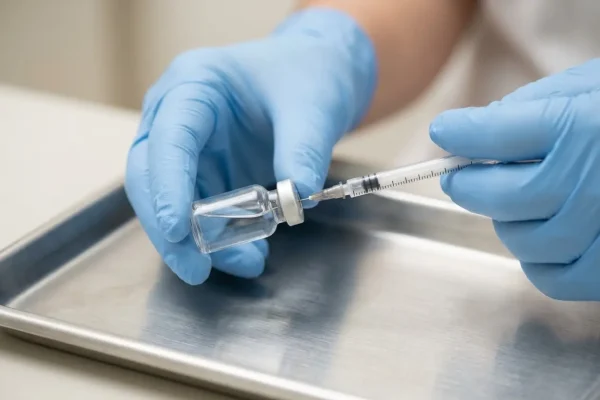
Peptides are short chains of amino acids your body already makes by the thousand. They act as signals that say build this, repair that, release this hormone. An injection adds a signal your body recognizes, at a dose you’d never reach through diet.
Peptides don’t do the work. Your training does the work. Your protein intake and your sleep do the work. Peptides make that effort land better, and that distinction shapes everything else on this page.
The category splits in two, and the split is where confusion lives. On one side you have FDA-approved peptide drugs like insulin and the GLP-1 medications semaglutide and tirzepatide. Large trials, known side effect profiles, labeled contraindications. On the other side sit compounded peptides used for recovery, sleep, and healthy aging, where the human evidence base is much thinner. Understanding how peptide therapy works at that level is step one in figuring out whether you’re a candidate.
Seven groups should either avoid peptide injections completely or move forward only with specialist clearance. The first three are absolute. The last four are conditional, and that difference gets flattened in almost every article you’ll read.
Anyone with active cancer, or a malignancy treated within roughly the last five years, should not start growth-promoting or vessel-promoting peptides. The concern is mechanistic. Compounds that raise IGF-1 or push new vessel formation act on pathways a tumor uses. Human causation hasn’t been proven, and it doesn’t need to be. The downside is too severe to gamble on. Older cancer history is a different conversation, and it starts with your oncologist. Anyone considering growth hormone peptides with cancer in the chart needs oncology sign-off first.
Almost no injectable peptide has been studied in pregnancy. That’s not a hedge, it’s the state of the literature. FDA labeling advises stopping semaglutide about two months before you try to conceive, and roughly one month for tirzepatide, because of how long each drug lingers. Compounded peptides have no washout guidance at all, so full avoidance is the only defensible position.
Skip it. Growing bodies already run their growth and repair signaling at full volume. Adding an external signal to a system that isn’t finished developing has no evidence behind it and real theoretical risk. This keeps coming up as teenage boys find peptides on social media.
Your kidneys and liver clear these compounds. Stage 3 chronic kidney disease or worse means clearance slows and dosing math stops being predictable. Most popular peptides have never been tested in patients with reduced renal function, and their effects are largely unstudied in people even with normal kidneys. If a clinic offers a protocol without asking about kidney function, walk out.
Growth hormone secretagogues can blunt insulin sensitivity. In someone with well-managed type 2 diabetes and an A1c under 7, that’s a monitoring problem. In someone with an A1c near 10 who hasn’t seen a doctor in two years, it’s a reason to fix the blood sugar first.
Some peptides shift fluid balance or vascular tone. The FDA flagged ibutamoren mesylate after a hip-fracture recovery trial stopped early over a congestive heart failure signal. Heart failure, poorly controlled hypertension, or a clotting history means cardiac clearance comes before the first injection.
Peptides talk to the immune system. During an active lupus or rheumatoid arthritis flare, adding another immune signal is a bad trade. Between flares, with a rheumatologist looped in, it can be reasonable. Risk climbs fast when patients start stacking several peptides without anyone tracking the interactions.
Most people asking this question don’t fall cleanly into either camp, and the binary framing fails them. Well-controlled hypertension isn’t heart failure. Hashimoto’s in remission isn’t an active flare. A grandmother with breast cancer isn’t a personal cancer history.
Actually, that framing isn’t quite right either. Candidacy isn’t a yes or no verdict. It’s a question of what has to be true before you start. Sometimes that’s an oncology note. Sometimes it’s three months of blood sugar work. Sometimes it’s a metabolic panel and a follow-up in six weeks.
With FDA-approved peptides, the guidance is specific. A personal or family history of medullary thyroid carcinoma or MEN 2 rules out GLP-1 medications outright. Compare that to newer compounded peptides, where physicians have said publicly there are no clear candidacy guidelines to work from. In April 2026, one sports medicine physician told the American Medical Association that the strongest human recovery data he could point to came from a single trial of roughly 10 to 12 people.
That’s the honest state of the field, and it’s why screening matters more here than with a drug carrying 20 years of trial data.
I’ve watched this play out enough times to be blunt. A healthy 34-year-old injecting research-grade compounds bought off a checkout page is in more danger than a well-managed autoimmune patient under physician care. The molecule usually isn’t the problem. The supply chain is.
Peptides sold online carry a “research use only” or “not for human consumption” label. That label isn’t a formality. Those products carry no purity testing, no potency verification, and no sterility guarantee. Contamination, mislabeling, and dose variability are documented and ongoing. It is illegal to administer, prescribe, purchase, or dispense research-grade molecules, and Formation does not offer them under any circumstance. Every compound here is human-grade, sourced from a licensed compounding pharmacy.
The regulatory picture keeps shifting, which makes sourcing harder for patients, not easier. As of the FDA’s April 2026 update, growth hormone releasing peptide-2, GHRP-6, ipamorelin acetate, and ibutamoren mesylate all sit in Category 2, flagged for safety risks tied to immunogenicity, impurities, and characterization problems. In late July 2026, an FDA advisory committee voted by a narrow margin to recommend six compounds for the 503A bulks list and rejected a seventh. Those votes are non-binding, and formal rulemaking still has to happen, possibly not before 2027.
Formation holds SSRP certification and ISSCA certification, the organizations that certify protocols for peptides, exosomes, and stem cells. That’s a sourcing and oversight standard, not a marketing badge.
Longevity isn’t a maximizing game. It’s a seesaw.
One side is building. Protein, resistance training, growth hormone, IGF-1, testosterone, mTOR activation, repair. The other side is renewal. Fasting, caloric restriction, autophagy, AMPK activation, clearing out senescent cells. Health lives in the oscillation between them, not at either extreme. Nature already runs this way through day and night, feeding and fasting, effort and recovery.
Most of the damage I see comes from people camped permanently on one side. Always eating, never fasting. Always training, never recovering. Peptides get sold as a way to push harder on the building side forever, and that’s the wrong use.
Match the lifestyle to the pathway you’re pushing. Running a growth hormone secretagogue without protecting sleep wastes most of the effect, since the pulse follows sleep architecture. Running a repair peptide while training through pain works against itself. The same logic applies to peptides used for recovery after surgery, where sleep, protein, and lymphatic work carry more of the result than the injection does.
One more thing about pathways. The body compensates. Push one route hard enough and it routes around you through another, which is why single-pathway protocols underdeliver. Moderate pressure on several pathways at once beats hammering one and watching the body neutralize it.
Hallmarks addressed: mitochondrial dysfunction, deregulated nutrient-sensing, chronic inflammation, altered intercellular communication, telomere attrition, and stem cell exhaustion.
Growth hormone secretagogues work on deregulated nutrient-sensing and altered intercellular communication. They restore a pulsatile signal that flattens with age, which changes how tissues coordinate repair. Mitochondrial peptides target mitochondrial dysfunction and metabolic flexibility, improving how cells make energy under stress. Repair-oriented peptides act mostly on chronic inflammation, the low-grade background burn that degrades tissue over decades. Telomere attrition comes up most often around epitalon-class peptides, where human data stays thin and the honest answer is that we don’t know yet.
None of this replaces the lifestyle inputs driving the same hallmarks. Zone 2 cardio moves mitochondrial function. Sleep moves inflammation. Resistance training moves stem cell activity in muscle. The injection sharpens what those inputs already do, nothing more.
Screening starts with history and labs, not a product recommendation. Dr. Gopal Grandhige, a board-certified general surgeon, spearheads the clinic, which runs as a regenerative medicine practice in Tampa separate from the surgical side.
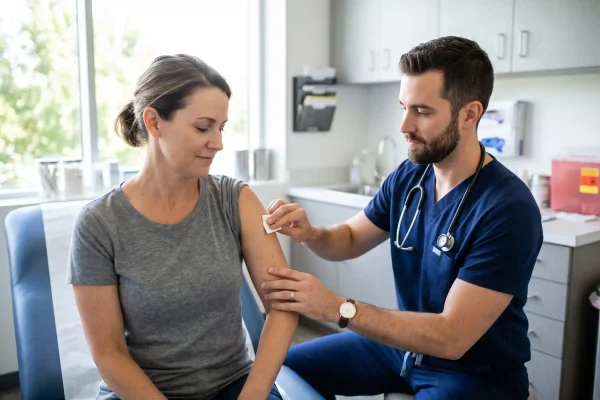
Your injections aren’t done by the owner. Jeff Atlas, PA-C handles them. He came to us from orthopaedics, and that background shows up in how he thinks about tissue healing and injection precision. A concierge dietitian on staff reviews nutrition first, because the lifestyle side has to be in place for the peptide side to mean anything.
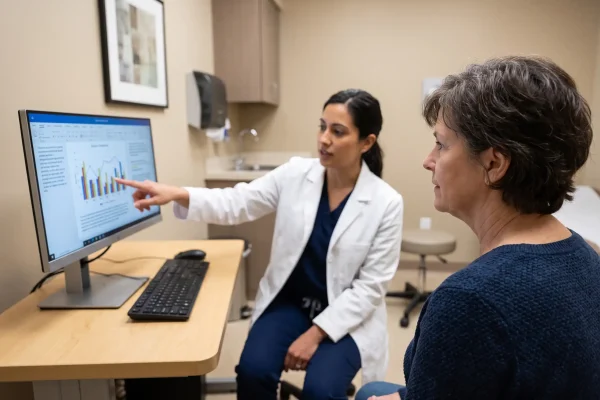
Baseline work usually includes a metabolic panel, CBC, glucose and A1c, thyroid function, and IGF-1 where a growth hormone agent is on the table. Cancer history gets asked about directly, family history included. If the workup says wait, we say wait. A clinic that never turns anyone away isn’t screening. It’s selling. Anyone wanting the longer take on whether peptides are safe can start there before booking.
Deciding who should not take peptide injections is a two-part question, and most people only ask the first half. Part one is your medical history. Part two is whether the compound came from a licensed pharmacy with a prescriber attached, or from a website.
Get the labs. Disclose the family history. Ask where the pharmacy is registered and whether they’ll show you lot testing. Any clinic that can answer both halves of who should not take peptide injections is worth your time. Vague answers tell you what you need to know.
People with active cancer or a malignancy treated within roughly the last five years, women who are pregnant or breastfeeding, and anyone under 18 should avoid peptide injections entirely. Advanced kidney or liver disease, uncontrolled blood sugar, unstable heart disease, and active autoimmune flares call for specialist clearance rather than an outright no. Everyone else needs individual screening and baseline labs before starting.
Most clinicians treat cancer within the last five years as a contraindication for growth-promoting and vessel-promoting peptides, because those compounds act on IGF-1 and new vessel formation pathways. An older history is usually workable, but it starts with written oncology clearance. The evidence here is mechanistic rather than proven in humans, which is exactly why the caution stays conservative.
FDA labeling advises stopping semaglutide about two months before conception and roughly one month for tirzepatide, based on how long each drug clears the body. Compounded peptides have no washout guidance at all, so the standard advice is full avoidance until after pregnancy and breastfeeding are finished.
In late July 2026, an FDA advisory committee voted by a narrow margin to recommend six peptide compounds for the 503A bulks list and rejected a seventh. Those votes are non-binding. Formal FDA rulemaking still has to happen before compounding status changes, so the situation remains unsettled as of August 2026.
There's no proven increase in cancer risk for people with no cancer history. The contraindication is strongest for active or recent disease, where IGF-1 signaling could theoretically accelerate existing cells. Long-term human surveillance data on growth hormone secretagogues is limited, which is why baseline screening and repeat labs matter.
A reasonable baseline includes a comprehensive metabolic panel, CBC, fasting glucose and A1c, thyroid function, and IGF-1 when a growth hormone agent is being considered. Personal and family cancer history should be documented directly. Any clinic that skips this step and moves straight to a product recommendation is selling rather than screening.
No. Peptides sold online are labeled "research use only" or "not for human consumption" and carry no purity, potency, or sterility testing. Contamination, mislabeling, and dose variability are documented problems. It is illegal to administer, prescribe, purchase, or dispense research-grade molecules for human use, and Formation does not offer them.
The next step after losing 100 pounds.
After significant weight loss, the skin doesn’t always shrink back to match the body’s new shape. And no amount of exercise can remove that excess skin.
In this surgery, Dr. Gopal performs a 360° circumferential body lift to remove excess skin and reshape the patient’s waistline, abdomen, and lower back.
The approach involves lifting the skin on the back and pulling it downward on the front to create a smoother, flatter contour while positioning the incision low enough to be concealed by underwear.
This patient lost over 100 pounds. During surgery, Dr. Gopal explains how approximately 3 pounds of skin were removed from the back, with another 5 pounds planned for removal from the front.
It’s not just about removing skin. It’s about reshaping the body after a significant weight-loss journey.
📍 Dr. Gopal Grandhige | Formation, South Tampa
Interested in body contouring after major weight loss? Schedule a consultation to explore your options.
#BodyLift #CircumferentialBodyLift #ExcessSkinRemoval #WeightLoss #BodyContouring
There’s lean. Then there’s sculpted.
High-definition liposuction goes beyond traditional fat removal. It’s about strategically sculpting around the underlying muscles to create more visible definition in the chest, abdomen, and waist.
For this patient, the goal was a leaner, more defined, athletic appearance without an exaggerated look.
Dr. Gopal Grandhige specializes in male HD liposuction, customizing each procedure to the patient’s anatomy, muscle structure, and desired level of definition.
The result? A more sculpted physique that complements his natural build.
Interested in HD liposuction? Schedule a consultation with Dr. Gopal at Formation Tampa. Link in bio.
Actual patient photos. Individual results vary.
#HDLiposuction #MaleLiposuction #HighDefinitionLiposuction #BodySculpting #Tampa
“That responsibility means everything to me.”
When a patient chooses a plastic surgeon, they’re placing an extraordinary amount of trust in someone else’s hands.
And that responsibility goes far beyond what happens in the operating room.
For Dr. Gopal, it means taking the time to understand each patient’s goals, carefully planning their procedure, making thoughtful decisions throughout surgery, and being there for them during recovery.
Every detail matters because there’s a real person behind every procedure, with hopes, concerns, and expectations.
And that person deserves to feel cared for every step of the way.
#Tampa #CosmeticSurgery #PatientCare #bodycountouring #hdliposuction
Every body needs a different plan.
An HD liposuction consultation with Dr. Gopal is much more than discussing which areas to treat.
He takes the time to evaluate each patient’s anatomy, explain what he’s seeing, and walk through exactly how he would approach the procedure.
Where should fat be removed? Where should it be preserved? How can the waist be sculpted while maintaining natural curves? And when might additional skin tightening be needed?
These are just some of the decisions Dr. Gopal walks patients through, explaining not only what he recommends, but why.
This Reel is a small glimpse into a consultation that typically involves a much more detailed conversation, with time for patients to ask questions and understand their options.
📍 Formation | South Tampa
Considering high-definition liposuction? Schedule a consultation with Dr. Gopal to discuss your goals and explore what’s possible.
#HDLipo #HighDefinitionLiposuction #BodyContouring #Tampa
There’s lean. Then there’s sculpted.
For some men, even years of consistent training and cutting cycles don’t produce the abdominal definition they’re working toward.
Here’s what one patient shared in his Google review of Formation:
⭐️⭐️⭐️⭐️⭐️
“Waited a few months to write this because I wanted to make sure the results held up.
The HD technique did what years of cutting cycles couldn’t. Abs actually show now, even relaxed, even in bad lighting. If you’ve chased a six pack for years you know what that means. Recovery was more involved than I expected and the bruising was wild for a bit. But the result looks like me, just leaner and more defined. Doesn’t look surgical, which was my biggest fear going in. Would recommend, but only if you’re already putting in the work.”
Dr. Gopal Grandhige specializes in male high-definition liposuction, an advanced body-contouring technique that goes beyond traditional fat removal.
By strategically removing fat around the underlying muscles, HD liposuction can enhance natural muscle definition and create a leaner, more sculpted, athletic appearance.
The goal isn’t to create artificial abs. It’s to reveal and enhance the muscle contours already there, with the level of definition customized to each patient’s anatomy and goals.
📍 Formation, South Tampa
Interested in male HD liposuction? Schedule a consultation with Dr. Gopal to explore your options.
Google patient review.
#HDLiposuction #MaleLiposuction #BodyContouring #Tampa
Crunches can only do so much.
You can spend hours strengthening your abdominal muscles, but that doesn’t guarantee visible definition.
A layer of fat sits between the muscles and the skin, and crunches can’t specifically target that fat.
For many people, exercise and reducing overall body fat can help reveal their abs. But even people who are already lean and fit can have stubborn fat that hides their natural muscle definition.
That’s where high-definition liposuction may help.
Dr. Gopal uses HD lipo to selectively remove fat around the natural contours of the abdominal muscles, helping reveal the definition that’s already there.
📍 Formation | South Tampa
Interested in HD lipo? Schedule a consultation to learn more.
#HDLipo #HighDefinitionLiposuction #AbdominalSculpting #BodyContouring
Which one had surgery 1 or 2? 👀
High-definition liposuction goes beyond traditional fat removal. Instead of simply reducing fat evenly, the surgeon strategically removes fat around the underlying muscles to make their natural contours more visible.
But here’s what makes it interesting: HD lipo doesn’t create the same six-pack on everyone. Each person’s anatomy, muscle development, and desired level of definition influence the final result.
Now take another look at these two patients.
Which one do you think had HD liposuction, 1 or 2?
Drop your guess below, then check the pinned comment for the answer!
#HDLiposuction #MaleLiposuction #BodyContouring #Tampa
There’s a story behind every decision.
Cosmetic surgery is a personal decision. Yet people who choose it often find themselves having to explain or defend that choice to others.
Some want to restore changes after pregnancy or weight loss. Others have worked hard to get in shape but still have areas they’d like to improve. And some simply want to feel more comfortable with their appearance.
The reasons are different for everyone. And they don’t have to make sense to anyone else.
At Formation, Dr. Gopal believes the decision to pursue cosmetic surgery should be guided by a patient’s personal goals, realistic expectations, and what’s medically appropriate for them.
Because ultimately, the person making that decision is the one who will live with it.
#Tampa #CosmeticSurgery #BodyContouring #Liposuction
Our first four-legged patient. 🐾
Dr. Gopal takes his liposuction and body contouring very seriously.
Even when his patients have four legs.
From loose skin and neck liposuction to a jawline that deserves its own before-and-after reveal, this might be his most dramatic transformation yet.
And yes, he even got the patient’s permission to share the results. 😂
A little Halloween fun from Dr. Gopal and his two very patient pups! 🎃🐶
No dogs underwent surgery. Just two willing participants and one very committed surgeon.
#SurgeonLife #tampa #necklipo
What weight loss can’t fix.
After losing over 100 pounds, this patient had achieved significant weight loss, but was left with excess skin around his abdomen and back that weight loss alone couldn’t address.
During an 8-hour surgery, Dr. Gopal performed a circumferential body lift, a procedure that removes excess skin around the entire midsection to improve body contour.
In this video, Dr. Gopal walks through the procedure, explaining how he removed approximately 3 pounds of skin from the back and estimated another 4–5 pounds would be removed from the abdomen.
He’s also using a small amount of fat collected during the procedure to add volume to the upper chest, improving its contour without performing a separate chest lift.
For patients who have experienced major weight loss, body contouring can help address the excess skin that remains after the weight is gone.
Considering surgery after weight loss? Schedule a consultation with Dr. Gopal at Formation in Tampa to explore your options.
Actual patient footage. Individual results vary.
#BodyContouring #BodyLift #ExcessSkinRemoval

What weight loss can’t fix.
After losing over 100 pounds, this patient had achieved significant weight loss, but was left with excess skin around his abdomen and back that weight loss alone couldn’t address.
During an 8-hour surgery, Dr. Gopal performed a circumferential body lift, a procedure that removes excess skin around the entire midsection to improve body contour.
In this video, Dr. Gopal walks through the procedure, explaining how he removed approximately 3 pounds of skin from the back and estimated another 4–5 pounds would be removed from the abdomen.
He’s also using a small amount of fat collected during the procedure to add volume to the upper chest, improving its contour without performing a separate chest lift.
For patients who have experienced major weight loss, body contouring can help address the excess skin that remains after the weight is gone.
Considering surgery after weight loss? Schedule a consultation with Dr. Gopal at Formation in Tampa to explore your options.
Actual patient footage. Individual results vary.
#BodyContouring #BodyLift #ExcessSkinRemoval

Peptides optimize the effort you are putting in. Get a FREE 15-minute Virtual Protocol Review + our Regenerative Treatment Newsletter.
We’ll show you exactly how we evaluate candidacy — plus, we cover the cost of your baseline labs with all in-person consults ($100).