
Written By: Jeffrey Atlas, PA-C, Health Content Writer
Medically Reviewed By: Dr. Gopal Grandhige, MD, FACS, Board-Certified Surgeon
Last Reviewed: August 22, 2026
Short answer: for most people the incision seals within 48 to 72 hours, and after that a cover is about protection and comfort, not holding the wound shut. But “sealed” and “safe to leave bare” are not the same milestone, and the gap between them is where people get into trouble. I’ve closed a lot of tummy tuck incisions at Formation in Tampa, and the question of when you can stop covering your tummy tuck incision comes up at nearly every follow-up. Here is how I answer it in the room.
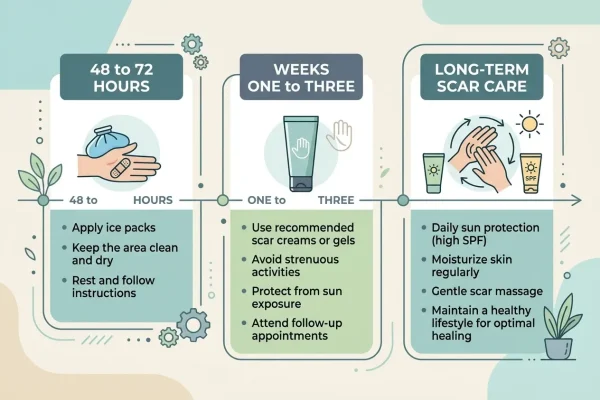
Most tummy tuck incisions seal closed within 48 to 72 hours. After that, a light cover is optional and mostly guards the line from clothing friction and drainage. Surgical tape strips or skin glue often stay on for one to three weeks and fall off on their own. Your surgeon sets the exact timeline for you.
The covering timeline breaks into three simple phases.
The wound sealing and you being cleared to go bare are two different things. In the first day or two your surgeon gives you specific instructions on dressings, drains, and what to look for. Follow those over anything you read online, including this article. Every abdomen closes a little differently, and your surgeon saw yours on the table.
Healing runs in overlapping stages, and the covering rules track those stages. Knowing which stage you’re in tells you exactly what the cover is for and when it stops earning its place.
This is the only window where the cover does real work. The edges are knitting together and the line can still weep a little pinkish fluid, which is normal. Trying to stand up straight too soon pulls on the fresh closure, so most of my patients walk slightly bent for the first few days. Keep the dressing dry and in place, and resist the urge to peek under it every hour. Every time you lift it, you introduce a little more risk for no real payoff.
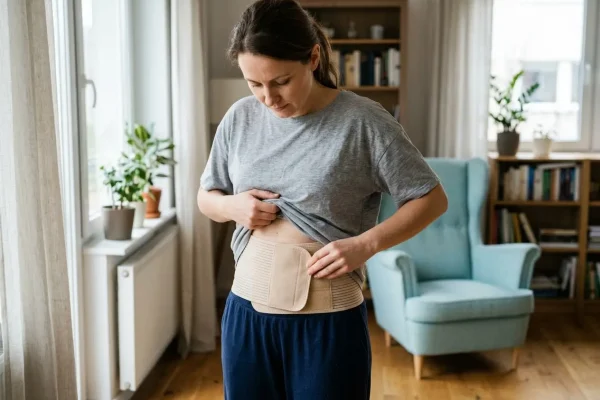
By week one the surface is usually closed. Swelling tends to peak now and can make the line look angry even when it’s healing fine. The compression garment stays on for roughly six weeks, and that garment does more for your comfort and contour than any dressing does. Movement matters more than bed rest at this point. Short, frequent walks keep blood moving and lower your clot risk. Some patients rebuilding core strength after muscle repair benefit from physical therapy once they’re cleared for it, though most people recover fine with gradual daily activity.
The dressing is not holding your incision shut. The sutures under your skin are doing that. Most patients get this backward.
They treat the bandage like it’s structural, worried that taking it off will let the incision open internally. It won’t. The deep sutures and the skin glue or tape strips are doing the closing. The outer gauze catches drainage and stops your waistband from rubbing a raw line. Once there’s no fluid coming out and no friction risk, the gauze has done its job and can come off. Keeping it on longer out of fear does not add a single day of healing.
If the gauze does soak through in the first couple of days, swap it for a clean, dry piece rather than taping fresh gauze over a wet layer. A damp dressing pressed against the skin invites the same irritation and breakdown you’re trying to dodge in the first place. Wash your hands before you touch anything near the line.
Drains are a separate story from the surface cover. If you have them, they pull fluid from the space under the tissue flap and usually come out within the first one to two weeks. Some of my cases use no drains at all, closed instead with progressive tension sutures that quilt the tissue down and cut the fluid risk. One more thing patients ask about here is how to tell a normal ooze from a problem. A little clear or pink fluid on the gauze in the first days is expected. Fluid that turns cloudy, smells off, or suddenly jumps in volume is not, and that is your cue to call rather than pile on more gauze.
Sometimes yes, and it has nothing to do with the wound being unsafe. Two real reasons to keep a light cover past 72 hours are that the line is still weeping or your clothing rubs it raw.
Fresh drainage after you thought things had settled is worth a photo and a phone call, because new fluid or a small opening can point to a popped stitch beneath the surface. Short of that, a soft dressing tucked under a waistband is just comfort, and there’s nothing wrong with wanting comfort while you heal.
I’ll push back on the forums here. A lot of online advice says to pile on tape for weeks to “protect” the scar. Tape can help take tension off a healing line, true, but layering it on because you feel anxious does nothing for the scar and can soften and break down the skin around it. More covering is not more healing. That habit costs people good skin, and I see the irritation it causes far more often than I see a wound that actually needed the extra layers.
Once the incision is fully closed with no scabbing, usually one to three weeks out, you stop covering and start treating the scar. This is the real work of a good-looking result, and it lasts far longer than the covering phase did.
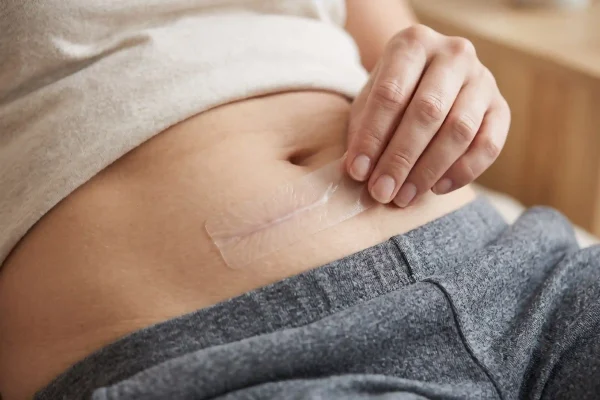
Silicone is the one scar treatment with solid evidence behind it. Sheets or gel, worn consistently, flatten and fade a scar faster than the vitamin E, cocoa butter, and drugstore oils people swear by. Start only after the skin has sealed. Timing matters more than the exact product you pick, and a plain silicone gel used every day for months beats a pricey one you forget about by week three. The ends of the incision, where dog ears can bunch up, need the same attention as the middle, since those spots tend to stay raised the longest.
This is where living in Tampa actually changes the plan. A fresh scar burns and darkens fast under our sun. Keep the line covered or put sunscreen on it every day for a full year, even the part hidden under a swimsuit, because a single bad burn can lock in a dark scar for good. Scars keep maturing for 12 to 18 months, moving from raised and pink to flat and pale, so patience beats fussing.
Once the line is fully closed, a few minutes of gentle massage along it each day helps soften the tissue and keeps it flat. Use light pressure with a plain lotion, skip anything harsh or fragranced, and stop right away if a spot reopens or stings. This is a marathon, not a sprint, and the people who get the flattest scars are the ones who stay consistent for the whole year rather than going hard for two weeks and quitting.
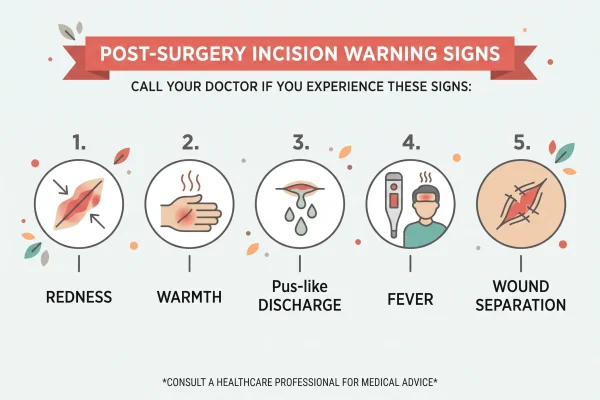
Some incision changes are normal. A few mean you call the clinic today, not next week. Learn the difference before you need it.
Real complications are uncommon but not rare. The overall complication rate after a tummy tuck runs about 10% to 20%, and climbs higher in patients who’ve had major weight loss. Infection shows up in roughly 3% to 14% of cases, and seroma, a fluid pocket under the skin, in anywhere from 5% to 43%. A seroma often feels like a soft, sloshy pocket low on the belly that grows instead of shrinking, and it is the single most common reason my patients come back early. Those numbers are exactly why you don’t ignore new changes just to avoid feeling like a bother.
Call if you see spreading redness, warmth, pus, a bad smell, a fever, or the edges pulling apart. Sudden separation or a widening gap along the incision needs a surgeon, not a fresh bandage. Trust your gut here. In my experience patients usually know when something is off well before the swelling or the numbers confirm it.
So, when can you stop covering your tummy tuck incision? The honest answer is around 48 to 72 hours for the wound itself, one to three weeks for the tape or glue, and then a full year of protecting the scar. The cover was never the thing holding you together. Your closure was. Watch for the warning signs, keep the scar out of the Tampa sun, and check with your surgeon at Formation before you second-guess your own timeline. Get those pieces right and the line you’re worried about now fades into something you barely notice.
Most incisions seal within 48 to 72 hours, and after that the cover mainly protects against clothing friction and drainage. Tape strips or skin glue often stay on for one to three weeks and fall off on their own. Your surgeon confirms the exact point based on how your line looks at follow-up.
The surface usually closes within one to three weeks, but full healing runs much longer. The scar keeps maturing for 12 to 18 months, fading from raised and pink to flat and pale. Consistent scar care during that first year makes the biggest difference in how the final line looks.
Most surgeons clear you to shower once the incision has sealed, often around 48 to 72 hours, and many prefer you keep dressings off in the water and pat the line dry afterward. Avoid soaking in a bath, pool, or hot tub until you're fully cleared, since submerging the line raises the infection risk.
Silicone sheets or gel are the scar treatment with the strongest evidence behind them, and they flatten and fade a scar better than vitamin E or oils. Start only after the incision is fully closed with no scabbing, usually one to three weeks out. Worn consistently, silicone works best over several months.
It can if the garment is too tight or bunches over the line, which is a common complaint in the first few weeks. A soft barrier layer between the garment and the incision usually fixes it. Most patients wear compression for about six weeks to control swelling and support the repair.
Watch for spreading redness, warmth, pus, a bad smell, fever, or the edges pulling apart. Infection affects roughly 3% to 14% of tummy tuck patients and a seroma fluid pocket 5% to 43%, so new or worsening changes deserve a same-day call rather than a wait-and-see. Trust your instinct if something feels off.
No. Drains and the surface cover are separate. Drains pull fluid from under the tissue and usually come out within one to two weeks, while covering the incision follows the sealing timeline. Some tummy tuck closures use progressive tension sutures instead of drains to lower the fluid risk.
Six to seven hours.
That’s how long an HD liposuction procedure can take with Dr. Gopal’s approach.
He’s not simply removing fat. He’s evaluating every square inch, considering the underlying anatomy, and shaping how each contour transitions into the next.
It’s detailed, physically demanding work.
So when Dr. Gopal says, “Someone’s gotta sweat for the fat to come off,” he means it.
Considering HD liposuction in Tampa? Schedule a consultation (link in bio).
#HDLiposuction #HighDefinitionLiposuction
Six to seven hours.
That’s how long an HD liposuction procedure can take with Dr. Gopal’s approach.
He’s not simply removing fat. He’s evaluating every square inch, considering the underlying anatomy, and shaping how each contour transitions into the next.
It’s detailed, physically demanding work.
So when Dr. Gopal says, “Someone’s gotta sweat for the fat to come off,” he means it.
Considering HD liposuction in Tampa? Schedule a consultation (link in bio).
#HDLiposuction #HighDefinitionLiposuction
Will neck lipo give you the jawline you want?
It depends…
Someone can have fullness under the chin and assume the answer is neck liposuction. But what looks like “fat” from the outside can actually come from several different structures.
Some fat sits directly beneath the skin and can respond very well to liposuction.
But fullness can also come from deeper fat beneath the platysma, the salivary glands under the jaw, muscles under the chin, or even the natural projection of the chin and jaw itself.
That distinction can completely change what neck liposuction can realistically accomplish.
This is why evaluating the anatomy matters before deciding on a procedure.
For the right anatomy, neck liposuction can create a significant change in the neck and jawline.
But when deeper structures are contributing to the fullness, liposuction alone may not create the contour someone is expecting.
A good neck lipo consultation should figure that out first.
Schedule a consultation with **Dr. Gopal Grandhige at Formation Tampa.** Link in bio.
#NeckLipo #NeckLiposuction #DoubleChin #JawlineContouring #NeckContouring
Will neck lipo give you the jawline you want?
It depends…
Someone can have fullness under the chin and assume the answer is neck liposuction. But what looks like “fat” from the outside can actually come from several different structures.
Some fat sits directly beneath the skin and can respond very well to liposuction.
But fullness can also come from deeper fat beneath the platysma, the salivary glands under the jaw, muscles under the chin, or even the natural projection of the chin and jaw itself.
That distinction can completely change what neck liposuction can realistically accomplish.
This is why evaluating the anatomy matters before deciding on a procedure.
For the right anatomy, neck liposuction can create a significant change in the neck and jawline.
But when deeper structures are contributing to the fullness, liposuction alone may not create the contour someone is expecting.
A good neck lipo consultation should figure that out first.
Schedule a consultation with **Dr. Gopal Grandhige at Formation Tampa.** Link in bio.
#NeckLipo #NeckLiposuction #DoubleChin #JawlineContouring #NeckContouring
Want more definition than workouts gave you?
Traditional liposuction focuses primarily on removing fat. HD liposuction goes further. It requires understanding the underlying muscle anatomy, where to remove fat, where to preserve it, and how each contour works together to create natural-looking definition.
That’s the art of it. The goal isn’t to give every patient the same abs or the same body. It’s to work with the anatomy that’s already there and determine how much definition will look right for that individual.
Dr. Gopal Grandhige specializes in high-definition liposuction and advanced body contouring, using nearly two decades of surgical experience to create results that look sculpted, athletic, and intentional.
Considering HD liposuction in Tampa?
Schedule a consultation with Dr. Gopal at Formation Tampa. Link in bio.
#HDLiposuction #HighDefinitionLiposuction #Liposuction #BodyContouring #Tampa
Want more definition than workouts gave you?
Traditional liposuction focuses primarily on removing fat. HD liposuction goes further. It requires understanding the underlying muscle anatomy, where to remove fat, where to preserve it, and how each contour works together to create natural-looking definition.
That’s the art of it. The goal isn’t to give every patient the same abs or the same body. It’s to work with the anatomy that’s already there and determine how much definition will look right for that individual.
Dr. Gopal Grandhige specializes in high-definition liposuction and advanced body contouring, using nearly two decades of surgical experience to create results that look sculpted, athletic, and intentional.
Considering HD liposuction in Tampa?
Schedule a consultation with Dr. Gopal at Formation Tampa. Link in bio.
#HDLiposuction #HighDefinitionLiposuction #Liposuction #BodyContouring #Tampa
Defined abs with HD liposuction.
Unlike traditional liposuction, where the primary goal is removing excess fat, HD liposuction is about strategically removing fat to reveal and enhance the underlying muscle structure.
Those markings you see before surgery help Dr. Gopal map out the patient’s anatomy and plan where to remove fat and where to preserve it to create more visible definition.
The second clip was taken immediately after surgery, so this is not the final result. Swelling and bruising will change significantly as the body heals and the final contour develops over the months that follow.
Considering high-definition liposuction? Schedule a consultation with Dr. Gopal Grandhige at Formation Tampa. Link in bio.
#HDLiposuction #HighDefinitionLiposuction #Liposuction #BodyContouring #MaleLiposuction
Defined abs with HD liposuction.
Unlike traditional liposuction, where the primary goal is removing excess fat, HD liposuction is about strategically removing fat to reveal and enhance the underlying muscle structure.
Those markings you see before surgery help Dr. Gopal map out the patient’s anatomy and plan where to remove fat and where to preserve it to create more visible definition.
The second clip was taken immediately after surgery, so this is not the final result. Swelling and bruising will change significantly as the body heals and the final contour develops over the months that follow.
Considering high-definition liposuction? Schedule a consultation with Dr. Gopal Grandhige at Formation Tampa. Link in bio.
#HDLiposuction #HighDefinitionLiposuction #Liposuction #BodyContouring #MaleLiposuction
Skin quality changes everything.
Neck liposuction can create a more defined jawline and neck contour by removing unwanted fat, but the result also depends heavily on skin quality and elasticity.
When skin has good elasticity, neck lipo alone may be enough for the skin to contract around the new contour. With some skin laxity, Dr. Gopal may combine liposuction with a skin-tightening treatment such as Renuvion or FaceTite. With significant laxity, a neck lift may be the more appropriate option.
That’s why evaluating the skin is an important part of determining the right approach before neck liposuction.
Considering neck liposuction in Tampa? Schedule a consultation with Dr. Gopal Grandhige at Formation Tampa.
#NeckLiposuction #NeckLipo #JawlineContouring #Tampa
Skin quality changes everything.
Neck liposuction can create a more defined jawline and neck contour by removing unwanted fat, but the result also depends heavily on skin quality and elasticity.
When skin has good elasticity, neck lipo alone may be enough for the skin to contract around the new contour. With some skin laxity, Dr. Gopal may combine liposuction with a skin-tightening treatment such as Renuvion or FaceTite. With significant laxity, a neck lift may be the more appropriate option.
That’s why evaluating the skin is an important part of determining the right approach before neck liposuction.
Considering neck liposuction in Tampa? Schedule a consultation with Dr. Gopal Grandhige at Formation Tampa.
#NeckLiposuction #NeckLipo #JawlineContouring #Tampa
Liposuction can change more than the body.
I’ve watched patients become more confident, make changes in their careers, show up differently in their relationships, and start making different choices for themselves.
That’s when I know I’ve done my job well.
Because high-definition liposuction isn’t only about creating a leaner, more defined physique. Sometimes the physical transformation becomes the catalyst for changes that reach far beyond the operating room.
Dr. Gopal Grandhige
Considering HD liposuction in Tampa? Schedule a consultation with Dr. Gopal Grandhige at Formation Tampa.
#BodyContouring #HDLiposuction #tampa #Liposuction
Liposuction can change more than the body.
I’ve watched patients become more confident, make changes in their careers, show up differently in their relationships, and start making different choices for themselves.
That’s when I know I’ve done my job well.
Because high-definition liposuction isn’t only about creating a leaner, more defined physique. Sometimes the physical transformation becomes the catalyst for changes that reach far beyond the operating room.
Dr. Gopal Grandhige
Considering HD liposuction in Tampa? Schedule a consultation with Dr. Gopal Grandhige at Formation Tampa.
#BodyContouring #HDLiposuction #tampa #Liposuction
Male liposuction requires a different approach.
The contours that create a more feminine shape aren’t necessarily the same ones that create a strong, athletic male physique.
With male high-definition liposuction, Dr. Gopal considers how the chest, abdomen, waist, ribs and back work together—and how the underlying muscle anatomy should guide where definition and shadow are created.
That’s also why the chest matters. A highly defined abdomen and back paired with a rounder, less-defined chest can make the overall result feel out of proportion.
The goal is a cohesive, athletic contour that works with the patient’s natural anatomy.
Considering male HD liposuction? Schedule a consultation with Dr. Gopal Grandhige at Formation Tampa.
Male liposuction requires a different approach.
The contours that create a more feminine shape aren’t necessarily the same ones that create a strong, athletic male physique.
With male high-definition liposuction, Dr. Gopal considers how the chest, abdomen, waist, ribs and back work together—and how the underlying muscle anatomy should guide where definition and shadow are created.
That’s also why the chest matters. A highly defined abdomen and back paired with a rounder, less-defined chest can make the overall result feel out of proportion.
The goal is a cohesive, athletic contour that works with the patient’s natural anatomy.
Considering male HD liposuction? Schedule a consultation with Dr. Gopal Grandhige at Formation Tampa.
Choosing a liposuction surgeon isn’t just about looking at before-and-afters.
Liposuction isn’t simply about removing fat. Decisions around how much to remove, which areas to treat, skin quality, post-op care and recovery can all influence the approach to your result.
How a surgeon answers these questions can tell you a lot about how they think, plan and care for their patients.
Save these 6 questions for your next consultation.
Considering liposuction? DM us or schedule a consultation with Dr. Gopal Grandhige at Formation Tampa.
#tampa #hdliposuction #liposuction #bodycountouring
Choosing a liposuction surgeon isn’t just about looking at before-and-afters.
Liposuction isn’t simply about removing fat. Decisions around how much to remove, which areas to treat, skin quality, post-op care and recovery can all influence the approach to your result.
How a surgeon answers these questions can tell you a lot about how they think, plan and care for their patients.
Save these 6 questions for your next consultation.
Considering liposuction? DM us or schedule a consultation with Dr. Gopal Grandhige at Formation Tampa.
#tampa #hdliposuction #liposuction #bodycountouring
6 months post high-definition liposuction with moderate definition.
The goal wasn’t just less fat. It was a leaner, more athletic contour with visible definition through the abdomen and torso, without pushing the result to the highest level of definition.
High-definition liposuction strategically sculpts around the underlying anatomy and can be customized based on a patient’s anatomy, muscle structure, and the degree of definition they want to achieve.
For this patient, moderate definition created the balance Dr. Gopal was looking for.
Results vary by patient and depend on individual anatomy, skin quality, and treatment plan.
Considering HD liposuction? Schedule a consultation with Dr. Gopal Grandhige at Formation Tampa. Link in bio.
#HDLiposuction #Liposuction #BodyContouring #MaleLiposuction #tampa
6 months post high-definition liposuction with moderate definition.
The goal wasn’t just less fat. It was a leaner, more athletic contour with visible definition through the abdomen and torso, without pushing the result to the highest level of definition.
High-definition liposuction strategically sculpts around the underlying anatomy and can be customized based on a patient’s anatomy, muscle structure, and the degree of definition they want to achieve.
For this patient, moderate definition created the balance Dr. Gopal was looking for.
Results vary by patient and depend on individual anatomy, skin quality, and treatment plan.
Considering HD liposuction? Schedule a consultation with Dr. Gopal Grandhige at Formation Tampa. Link in bio.
#HDLiposuction #Liposuction #BodyContouring #MaleLiposuction #tampa
Your lipo results at 2 weeks are not your final results.
And sometimes, what you see during those early weeks can be unsettling.
Swelling can temporarily make the treated area look larger. The tissue may feel firm, tight or lumpy. The definition you were expecting may not be visible yet.
That doesn’t necessarily mean something went wrong. It simply means your body is still healing.
After liposuction, recovery happens in stages, from the initial inflammation and swelling to tissue repair, skin contraction and the gradual emergence of the new contour.
Significant changes often become more apparent around the 3–6 month mark, with continued refinement as the tissues heal and mature.
That’s why comparing yourself a few weeks after surgery to someone’s polished before-and-after photo can create a very unrealistic expectation. Those two photos may represent months of healing in between.
The operation creates the contour. The final result reveals itself over time.
If you’re considering HD liposuction, schedule a consultation with Dr. Gopal to understand the procedure, recovery, and what to realistically expect from your results (link in bio).
#tampa #liposuction #hdliposuction

Your lipo results at 2 weeks are not your final results.
And sometimes, what you see during those early weeks can be unsettling.
Swelling can temporarily make the treated area look larger. The tissue may feel firm, tight or lumpy. The definition you were expecting may not be visible yet.
That doesn’t necessarily mean something went wrong. It simply means your body is still healing.
After liposuction, recovery happens in stages, from the initial inflammation and swelling to tissue repair, skin contraction and the gradual emergence of the new contour.
Significant changes often become more apparent around the 3–6 month mark, with continued refinement as the tissues heal and mature.
That’s why comparing yourself a few weeks after surgery to someone’s polished before-and-after photo can create a very unrealistic expectation. Those two photos may represent months of healing in between.
The operation creates the contour. The final result reveals itself over time.
If you’re considering HD liposuction, schedule a consultation with Dr. Gopal to understand the procedure, recovery, and what to realistically expect from your results (link in bio).
#tampa #liposuction #hdliposuction