
Written By: Jeffrey Atlas, PA-C, Health Content Writer
Medically Reviewed By: Dr. Gopal Grandhige, MD, FACS, Board-Certified Surgeon
Last Reviewed: June 3, 2026
GLP-1 medications do something no diet ever could for most people. They shut down cravings, drop the scale 15–25%, and change the way your body stores energy. But they don’t pick and choose where the fat leaves. And that’s where liposuction after weight loss shots becomes the logical next move.
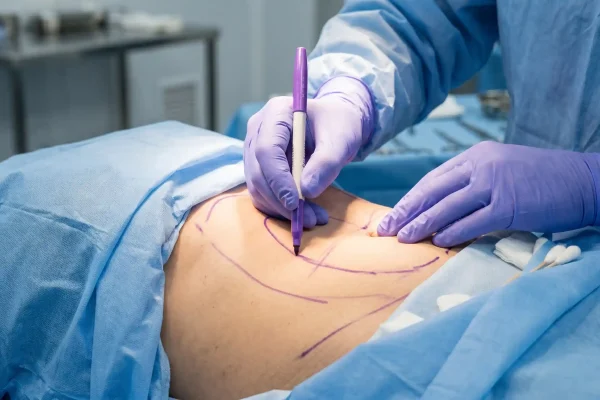
Liposuction after weight loss shots is a surgical procedure that removes stubborn pockets of subcutaneous fat that GLP-1 medications leave behind. It targets specific areas (abdomen, flanks, thighs, upper arms) to reshape your body’s contour after the scale has already done its job. It’s not a weight loss tool. It’s a finishing tool.
I’ve watched this play out with dozens of patients at Formation in Tampa. They lose 40, 60, sometimes 80 pounds on semaglutide or tirzepatide, look in the mirror, and see a version of their body that’s smaller but still doesn’t match what they expected. The belly pouch is still there. The love handles survived. That’s not a medication failure. That’s just how subcutaneous fat works.
According to the ASPS 2024 Procedural Statistics Report, surgeons performed 349,728 liposuction procedures in 2024, making it the number one cosmetic surgical procedure in America for the second straight year. And a growing share of those patients are post-GLP-1. The demand isn’t slowing down.
This article won’t cover non-surgical fat reduction methods in depth (they have a role, but it’s limited compared to surgical sculpting). We’re focused on who should get lipo after weight loss shots, when to schedule it, what the risks look like, and how to protect your results long-term.
Weight loss and body contouring are two separate goals with two separate timelines. Mixing them up is the most common mistake patients make.
Weight loss reduces total body mass. GLP-1 drugs, bariatric surgery, diet, exercise. They all pull from the same pool. Your body decides where fat leaves first, and you don’t get a vote. These medications also reduce some muscle mass along with fat, which is a detail most patients don’t hear about until after they’ve lost the weight.
Body contouring is targeted fat removal from specific areas. Liposuction doesn’t move the scale much. A typical case might remove 2–5 liters of fat. But the visual difference is dramatic because it’s coming from exactly the right spots.
The contrarian take most clinics won’t give you: the GLP-1 boom has actually made liposuction more popular, not less. ASPS data shows procedure volumes ticked up 1% in 2024 even as millions of patients started weight loss injections. Why? Because the drugs handle the big-picture weight loss, but they create a new problem. Patients end up thinner overall with disproportionate fat deposits that become more visible, not less, after the scale drops.
A person who drops 60 pounds on semaglutide might end up with a flat chest, thinner face, and the same lower belly pouch they started with. That’s not what they signed up for. And that gap between expectation and reality is exactly what body contouring is designed to fix.
The overlap between these two goals matters too. Some patients see real health improvements from body contouring beyond just appearance. But if you’re still actively losing weight, neither will give you the results you want.
GLP-1 receptor agonists (semaglutide, tirzepatide, and their branded versions) reduce appetite at the brain level. They’re effective. But they create a specific set of cosmetic side effects that patients don’t always anticipate.
Rapid fat loss from these drugs often leaves loose skin, deflated tissue, and visible fat pockets in areas the medication doesn’t reach well. Surgeons have started calling this cluster of effects “Ozempic body,” and it typically shows up in the lower abdomen, inner thighs, upper arms, and under the chin. The face gets it too. “Ozempic face” refers to volume loss and sagging that makes patients look gaunt or aged.
Liposuction directly addresses the fat-pocket side of this equation. For the skin and volume issues, other procedures come into play (more on that later). But for patients whose primary complaint is “I lost the weight and my belly still looks the same,” lipo is the most direct answer.
A 2025 study published in the Aesthetic Surgery Journal by researchers at Johns Hopkins found that GLP-1 patients had comparable or fewer complications than post-bariatric surgery patients undergoing aesthetic procedures. That’s a meaningful data point for anyone worried about safety.
The best candidates have three things going for them: stable weight, decent skin quality, and expectations grounded in reality.
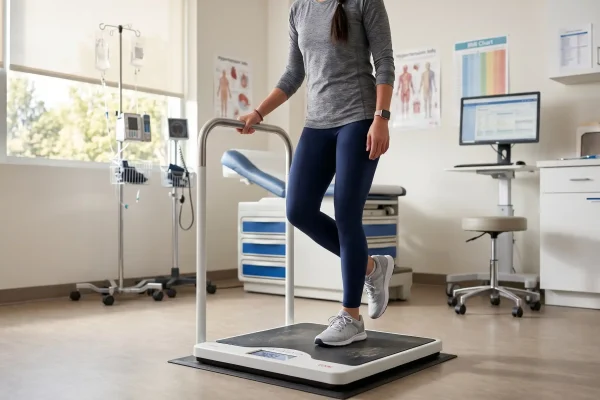
Stable weight means the scale hasn’t moved more than 5–10 pounds in either direction for at least three to six months. If you’re still dropping, your surgeon is working with a moving target. And if you’ve recently regained, the underlying metabolism isn’t stable enough for a permanent sculpting procedure.
Good candidates typically show localized, resistant subcutaneous fat in specific zones. Think a lower abdominal apron that won’t flatten, or inner thigh fullness that diet and exercise can’t touch after a 15–25% body weight loss. Patients still dealing with overall obesity or metabolic instability may need to stabilize before pursuing body procedures.
Dr. Grandhige evaluates every patient at Formation with a full workup: labs, medication history, body composition, and a physical exam to map fat distribution and skin quality. The goal is to know exactly what lipo can fix and what it can’t before anyone goes under.
This is the question I see patients rush past, and it’s the one that matters most.
Wait at least three to six months after your weight has stabilized. Not three to six months after your last injection. Three to six months after the scale stops moving. There’s a difference. Some patients plateau quickly. Others drift downward for months after discontinuing medication.
A simple checklist we use at Formation before scheduling:
One note on the anesthesia side: the old advice to stop GLP-1 medications weeks before surgery has been revised. A 2024 multi-society statement supported by the American Society of Anesthesiologists now says most patients can continue their medication with adjusted fasting protocols. Your surgical team will work out the specifics.
Skin elasticity is the single biggest variable that separates a good lipo result from a disappointing one. And GLP-1 patients tend to have worse skin elasticity than the general liposuction population because rapid weight loss stretches and thins the skin faster than it can recover.
If your skin snaps back when pinched, you’re likely a good candidate for lipo alone. If it sags, wrinkles, or hangs, you may need a combined procedure (lipo plus a tuck or lift) to get the result you’re imagining.
Massive weight loss patients frequently have stretch marks, tissue laxity, and skin redundancy that change the surgical plan entirely. Priority goes to patients with preserved elasticity. For everyone else, an honest conversation about combination procedures beats a lipo-only result that falls short.
Liposuction removes subcutaneous fat through small incisions using suction, laser, or ultrasound-assisted techniques. The differences between these techniques come down to how the fat is loosened before removal. Each has trade-offs in precision, skin tightening effect, and recovery time.
The most common post-GLP-1 treatment areas are the abdomen, flanks, inner and outer thighs, upper arms, and the submental (under-chin) region. Procedure steps run in a predictable order: anesthesia, small incisions, fat disruption and extraction, contour checks, then closure.
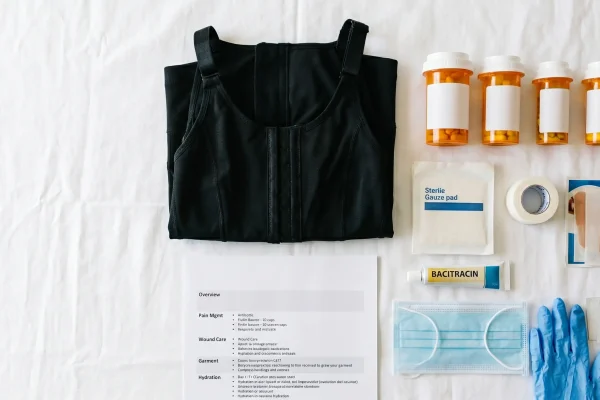
Swelling peaks in the first week and starts to drop by week three or four as your body clears the disrupted fat cells. Some visible change happens immediately, but full results take 8–12 weeks to show. Compression garments go on right after surgery and typically stay on full-time for two to three weeks, then part-time for a few more.
Think contour change, not scale change. Most patients return to their normal routine within about three weeks. Stubborn lumps or nodules under the skin can persist for up to six weeks. That’s normal.
The 88% “Worth It” rating on RealSelf (based on thousands of patient reviews through 2025) tells you that most people are happy with their outcome. But that remaining 12% usually comes down to unrealistic expectations going in or poor timing.
Lipo permanently removes fat cells from treated areas. Those cells don’t regenerate. But the fat cells you still have in untreated areas can grow if your weight rebounds. Maintenance is non-negotiable. Diet, exercise, and (for some patients) continued GLP-1 medication are all part of the equation.
Every surgical procedure carries risk. But post-GLP-1 liposuction patients face a few specific concerns that standard lipo candidates don’t.
Seroma formation is more common after major weight loss because the space under lax skin fills with fluid more easily. Large dead space and disrupted lymphatics increase the odds. Treatment ranges from simple aspiration to drain placement, and most cases resolve without further surgery.
Delayed wound healing shows up more often in patients with nutritional gaps. One study noted wound healing delays in roughly 18.5% of GLP-1 patients compared to 7.5% in controls. Protein, iron, and vitamin D deficiency are the usual culprits. This is fixable with pre-op testing and supplementation, but only if someone actually checks.
Contour irregularities (lumps, dents, asymmetry) happen when the surgeon is working with uneven tissue quality or redundant skin. One published series reported a 3.7% incidence of contour deformity requiring revision. Uneven fat distribution is a known risk that increases when tissue has been through rapid weight cycling.
Hyperpigmentation over treated areas occurred in up to 18.7% of patients in one published series. It typically fades with sun avoidance and topical treatment, but dark skin tones are at higher risk.
The less common but serious risks (fat embolism, necrotizing fasciitis, hypothermia during long procedures) apply to all liposuction patients but deserve extra caution in post-weight-loss cases because of the larger treatment areas, longer operative times, and potentially compromised nutritional status.
The takeaway: get your labs checked. Eat enough protein. Know the warning signs of infection. And make sure your surgeon has experience with post-GLP-1 bodies specifically. The tissue behaves differently, and experience matters.
Recovery isn’t the same for everyone, but it follows a predictable arc. Most patients are looking at four to six weeks before they feel fully normal. The first week is the hardest.
Days 1–7: Swelling, bruising, and soreness peak. Most patients describe it as feeling like an intense workout soreness that doesn’t let up. Walk short distances indoors every few hours to reduce blood clot risk. Compression garments stay on day and night. Pain is managed with prescribed medication initially, then over-the-counter options. Keep incisions clean and dry.
Weeks 2–3: Swelling starts to recede. Bruising fades. Most people can return to desk work and light daily activities. Compression garments shift to part-time wear. Some treatment areas are more uncomfortable than others during this phase, and that’s normal.
Weeks 4–6: Light exercise resumes. No heavy lifting or intense cardio until your surgeon clears you. Contour improvements become visible as swelling drops. Residual firmness or small nodules under the skin are still resolving.
Months 2–3: The majority of swelling is gone. This is when most patients see their real results for the first time. Final refinement continues gradually for up to six months in some cases.
A few recovery rules that matter:
Emotional recovery is real. Swelling can actually make you look worse before you look better. Patients who know this ahead of time handle it much better than those who expect overnight transformation. If you lost 50 pounds on GLP-1 and then had lipo, your body has been through a lot of change in a short window. Give it time.
The patients who keep their results are the ones who treat lipo as one piece of a larger plan, not a standalone fix.
Weight stabilization before liposuction isn’t just a timing question. It’s a safety question. Rapid weight swings change tissue density, skin retraction, and fat distribution in ways that make surgical planning unreliable.
Get a pre-operative nutritional screen. Low iron, low vitamin D, or low protein won’t just slow your healing. They’ll increase infection risk and bruising. Aim for 1.2 grams of protein per kilogram of body weight daily and recheck labs four to six weeks before your scheduled procedure.
For patients managing blood sugar on medications like tirzepatide, stable glucose readings in the weeks before surgery reduce complication rates. Work with your endocrinologist or primary care doctor to dial in your numbers. Dr. Grandhige’s team at Formation coordinates with referring physicians to make sure nothing slips through the cracks.
Smoking cessation at least four weeks before surgery is a baseline requirement, not a suggestion.
Compression garments aren’t optional. They reduce swelling, support tissue re-draping, and help your skin conform to its new contour. Wear them exactly as instructed.
Return to movement in stages. Light walking within 24–48 hours. Low-impact activity at two weeks. Full exercise only after your surgeon gives the green light, usually around four to six weeks.
Monitor your weight and eating patterns after surgery. The research on GLP-1 weight regain is sobering. Studies suggest that as much as two-thirds of lost weight can return within a year of stopping medication. Liposuction removes fat cells permanently from treated areas, but if your overall weight climbs, untreated areas will expand. A weekly weigh-in and a basic food log go a long way toward catching a trend before it becomes a problem.
Stay connected to your surgical team. Understanding how often surgical complications actually occur puts post-op monitoring in perspective and keeps you from either panicking over normal healing or ignoring a real warning sign. Periodic body composition checks and metabolic testing help you spot changes in fat distribution, lean mass, and insulin resistance before they undo your results.
Liposuction handles fat. It doesn’t handle loose skin, muscle separation, or volume loss. Knowing that boundary upfront prevents a lot of disappointment.
Tummy tucks (abdominoplasty) remove excess skin and tighten the abdominal wall, something liposuction simply can’t do. For patients who have lost significant weight, a tummy tuck often fills the gap between what lipo achieves and what the patient actually wants. Lower body lifts address skin from the torso and back. Thigh lifts contour the inner and outer legs. Tummy tucks are also the most effective answer for persistent lower abdominal fullness that lipo alone won’t resolve.
These procedures have longer recovery periods than liposuction. Drains, lifting restrictions, and staged surgeries are common. At Formation, Dr. Saad works with patients who need these more involved surgical procedures, and the team builds a phased plan that spreads risk across multiple sessions when appropriate.
Think about scars. Think about healing time. And think about whether one surgery or two will get you where you want to be.
For mild skin laxity, non-surgical tightening options like PDO threads or radiofrequency devices can firm tissue without incisions. Results are more subtle and develop over weeks to months, but they work well for patients who want refinement without downtime.
Fat grafting takes fat removed during liposuction and reinjects it where you’ve lost volume (face, buttocks, breasts). Pairing lipo with fat transfer gives you sculpting and volumizing in a single session. Some patients need more than one round to get the look they’re after.
For severe sagging after major weight loss, reconstructive surgery may be the only real option. Surgeons remove large skin folds, re-drape tissue, and reposition anatomy. These operations aim for function as much as form, reducing rashes, hygiene issues, and physical restrictions caused by excess skin. Patients dealing with profile concerns may also benefit from neck contouring as part of their overall plan.
Pre-operative nutrition, smoking cessation, and realistic expectations about scarring are all part of the conversation.
Most post-GLP-1 patients don’t need everything done at once. Staged surgeries (lipo first, then a tuck or lift later) reduce risk, shorten individual recovery periods, and let your body heal properly between procedures.
And a point that doesn’t get enough attention: liposuction provides more permanent, localized fat reduction than GLP-1 drugs alone. The fat cells lipo removes don’t come back. The weight GLP-1 medications take off frequently does. Research suggests that roughly 40% of lost weight returns within a year of stopping the medication. That makes a strong case for combining medical weight loss with surgical body contouring for patients who want lasting change.
Muscle loss from GLP-1 use is another under-discussed factor. Strength training during and after your weight loss phase protects lean mass and supports better long-term contour. Don’t skip it.
Liposuction after weight loss shots works. But it works best when the timing is right, the expectations are grounded, and the surgeon knows what post-GLP-1 tissue looks like from the inside. If you’ve hit a plateau and stubborn fat pockets are all that stand between you and the body you’ve been working toward, a conversation with Dr. Grandhige’s team at Formation in Tampa is the right next step.
Yes. Most patients who have used GLP-1 medications like semaglutide or tirzepatide can safely undergo liposuction. The prerequisite is weight stability for at least three to six months plus medical clearance from both your prescribing physician and your surgeon. According to ASPS data, liposuction was the most performed cosmetic surgical procedure in 2024, with 349,728 cases nationwide.
Wait until your weight has been stable for three to six months. That timeline starts after the scale stops moving, not after your last injection. Some patients plateau quickly while others continue losing for months. A 2024 multi-society statement supported by the American Society of Anesthesiologists also shifted the guidance on whether to stop GLP-1 drugs before surgery, so discuss medication timing directly with your anesthesia team.
They do. GLP-1 medications reduce fat broadly, but subcutaneous pockets in the abdomen, flanks, and thighs often persist. The drugs also reduce facial and buttock volume in ways patients don't expect ("Ozempic face" and "Ozempic body"). This can shift the target areas for lipo and may mean additional procedures like fat grafting.
Post-GLP-1 patients face higher rates of seroma (fluid collection under the skin), delayed wound healing (reported at 18.5% in one study vs. 7.5% in controls), and contour irregularity. Nutritional deficiencies from rapid weight loss are the primary driver. Pre-op lab work checking protein, iron, and vitamin D levels significantly reduces these risks.
No. Liposuction permanently removes fat cells from treated areas, but untreated areas can still expand if your weight increases. Research indicates roughly 40% of GLP-1 weight loss returns within a year of discontinuation. Maintaining results requires ongoing diet, exercise, and (for some) continued medication.
Most patients return to desk work within one to two weeks and resume full physical activity by four to six weeks. Swelling and bruising peak in the first week and largely resolve by months two to three. Compression garments are worn full-time for two to three weeks, then part-time. An 88% satisfaction rate on RealSelf reflects that the large majority of patients consider the recovery worth it.
Combine weight stability, targeted surgical contouring, and consistent follow-up. Get your labs checked before surgery. Maintain protein intake and exercise during recovery. Monitor your weight weekly afterward. Schedule periodic check-ins with both your weight-loss prescriber and your surgeon. At Formation in Tampa, Dr. Grandhige builds long-term plans that account for metabolic health, skin quality, and staged procedures when needed.
Let’s talk filler placements! 👀
From standard touch-ups to total profile balancing, dermal filler is incredibly versatile. Check out the reel to see all the areas we can treat to enhance your natural beauty.
The secret to great filler? A customized plan. 🎨
👇 Take the next step:
DM us “CONSULT” or click the link in our bio to book your one-on-one consultation today. Let’s see what filler can do for you!
Let’s talk filler placements! 👀
From standard touch-ups to total profile balancing, dermal filler is incredibly versatile. Check out the reel to see all the areas we can treat to enhance your natural beauty.
The secret to great filler? A customized plan. 🎨
👇 Take the next step:
DM us “CONSULT” or click the link in our bio to book your one-on-one consultation today. Let’s see what filler can do for you!
...
The power of a profile transformation. 🔥
For this patient, we combined PDO Lifting Threads and advanced chin/jawline filler to completely redefine his lower face. By strategically lifting the mid-to-lower face and sculpting the jaw, we didn’t just enhance one feature—we elevated his entire facial appearance.
An incredible, natural-looking result that brings balance and confidence from every angle.
Note: Minor bunching or puckering is completely normal immediately following a PDO thread lift. The slight bunching visible in the after photo will fully subside on its own over the next 2-4 weeks as the threads settle.
#JawlineContouring #PDOThreads #FacialSculpting #JawlineFiller #mensaesthetics
The power of a profile transformation. 🔥
For this patient, we combined PDO Lifting Threads and advanced chin/jawline filler to completely redefine his lower face. By strategically lifting the mid-to-lower face and sculpting the jaw, we didn’t just enhance one feature—we elevated his entire facial appearance.
An incredible, natural-looking result that brings balance and confidence from every angle.
Note: Minor bunching or puckering is completely normal immediately following a PDO thread lift. The slight bunching visible in the after photo will fully subside on its own over the next 2-4 weeks as the threads settle.
#JawlineContouring #PDOThreads #FacialSculpting #JawlineFiller #mensaesthetics
...
Last week, we partnered with @epicutis for an exclusive evening of luxury, connection, and next-level skin. From complimentary skin analysis scans to good company and great vibes — this is what elevated beauty looks like. Thank you to everyone who joined us. 🥂
#Epicutis #Tampa
#LuxurySkicare #Emage #skingoals
Last week, we partnered with @epicutis for an exclusive evening of luxury, connection, and next-level skin. From complimentary skin analysis scans to good company and great vibes — this is what elevated beauty looks like. Thank you to everyone who joined us. 🥂
#Epicutis #Tampa
#LuxurySkicare #Emage #skingoals
...
Check out this incredible before and after of our gorgeous patient 6 months following her Female HD Liposculpture! ⏳
While these results are already stunning, here is a little insider secret: she’s not even at her final result yet! Healing from high-definition liposculpture is a journey. Over the next few months, residual swelling will continue to subside, and any temporary skin texture changes or minor discoloration will fully resolve. As the tissues settle, her skin will keep tightening to reveal even more crisp, beautifully defined athletic contours.
We love seeing our patients blossom through their recovery. Patience pays off, and her body will only continue to lean out and lock in over the coming months!
What do you think of her 6-month transformation? Drop a 👇 in the comments!
#BodyContouring #HDLipo #SkinTightening #PostOpHealing
Check out this incredible before and after of our gorgeous patient 6 months following her Female HD Liposculpture! ⏳
While these results are already stunning, here is a little insider secret: she’s not even at her final result yet! Healing from high-definition liposculpture is a journey. Over the next few months, residual swelling will continue to subside, and any temporary skin texture changes or minor discoloration will fully resolve. As the tissues settle, her skin will keep tightening to reveal even more crisp, beautifully defined athletic contours.
We love seeing our patients blossom through their recovery. Patience pays off, and her body will only continue to lean out and lock in over the coming months!
What do you think of her 6-month transformation? Drop a 👇 in the comments!
#BodyContouring #HDLipo #SkinTightening #PostOpHealing
...
PRP (Platelet-Rich Plasma) scalp injections use your own growth factors to reawaken dormant follicles, thicken existing strands, and naturally stimulate regrowth — no surgery, no downtime.
If you’ve been watching your part widen or your ponytail thin, this is your sign. 👇
📍Formation | Tampa
📞 Book your free consultation via the link in bio.
#PRPHairTreatment #HairRestoration #PRPScalpInjections #HairLossSolution #HairGrowth
PRP (Platelet-Rich Plasma) scalp injections use your own growth factors to reawaken dormant follicles, thicken existing strands, and naturally stimulate regrowth — no surgery, no downtime.
If you’ve been watching your part widen or your ponytail thin, this is your sign. 👇
📍Formation | Tampa
📞 Book your free consultation via the link in bio.
#PRPHairTreatment #HairRestoration #PRPScalpInjections #HairLossSolution #HairGrowth
...
Did you know that you can snatch your jaw with Botox?
Use the link in our bio to schedule a consultation so we can discuss all of the ways injectables can benefit YOU
#nefertitilift #botox #tampa
Did you know that you can snatch your jaw with Botox?
Use the link in our bio to schedule a consultation so we can discuss all of the ways injectables can benefit YOU
#nefertitilift #botox #tampa
...
This patient’s transformation showcases the power of combining procedures:
High-Definition Liposculpture + Renuvion® skin tightening with fat transfer to the chest.
HD Lipo goes beyond traditional liposuction to sculpt and define the underlying muscle anatomy, while Renuvion uses helium plasma energy to tighten the skin from the inside out. The fat transfer to the chest adds natural volume and projection for a truly athletic contour.
The work is done. The confidence is his. 💪
📍 Formation Tampa
📲 Book your consultation via the link in bio.
#HDLipo #HighDefinitionLiposuction #Renuvion #BodySculpting #FatTransfer MaleBodyContouring
This patient’s transformation showcases the power of combining procedures:
High-Definition Liposculpture + Renuvion® skin tightening with fat transfer to the chest.
HD Lipo goes beyond traditional liposuction to sculpt and define the underlying muscle anatomy, while Renuvion uses helium plasma energy to tighten the skin from the inside out. The fat transfer to the chest adds natural volume and projection for a truly athletic contour.
The work is done. The confidence is his. 💪
📍 Formation Tampa
📲 Book your consultation via the link in bio.
#HDLipo #HighDefinitionLiposuction #Renuvion #BodySculpting #FatTransfer MaleBodyContouring
...
Six months post extended abdominoplasty, and we are loving these seamless, natural results. By focusing on feminine contours and a refined waistline, we achieved a silhouette that looks as good as it feels.
Proof that surgery can—and should—look effortless.
#NaturalResults #Abdominoplasty #BodyTransformation #Tampa #tummytuck
Six months post extended abdominoplasty, and we are loving these seamless, natural results. By focusing on feminine contours and a refined waistline, we achieved a silhouette that looks as good as it feels.
Proof that surgery can—and should—look effortless.
#NaturalResults #Abdominoplasty #BodyTransformation #Tampa #tummytuck
...
Lift, tighten, and refresh — without going under the knife. ✨ PDO thread lifts are one of the most effective non-surgical treatments for restoring structure to the face. They stimulate collagen production, improve skin texture, and deliver natural-looking results that keep getting better over time. Ready to turn back the clock? Drop your questions below 👇
#PDOThreads #ThreadLift #NonSurgicalLift #CollagenBoost #antiaging
Lift, tighten, and refresh — without going under the knife. ✨ PDO thread lifts are one of the most effective non-surgical treatments for restoring structure to the face. They stimulate collagen production, improve skin texture, and deliver natural-looking results that keep getting better over time. Ready to turn back the clock? Drop your questions below 👇
#PDOThreads #ThreadLift #NonSurgicalLift #CollagenBoost #antiaging
...
A journey that began with dedication, completed with precision. ✨
This patient worked tirelessly to lose weight, only to be left with the final hurdle: skin laxity that diet and exercise couldn`t touch. A circumferential lift was performed to remove the excess tissue "belt" around the entire midsection.
Today, at 12 months post-op, the transformation is complete. It’s not just about a flatter silhouette; it’s about a body that finally matches the strength and hard work they put in. The confidence? Unstoppable. 🏔️
#BodyLift #PostWeightLoss #CircumferentialLift #SkinRemoval #BodyContouring #OneYearPostOp #TransformationTuesday #MyJourney #TampaBay
A journey that began with dedication, completed with precision. ✨
This patient worked tirelessly to lose weight, only to be left with the final hurdle: skin laxity that diet and exercise couldn`t touch. A circumferential lift was performed to remove the excess tissue "belt" around the entire midsection.
Today, at 12 months post-op, the transformation is complete. It’s not just about a flatter silhouette; it’s about a body that finally matches the strength and hard work they put in. The confidence? Unstoppable. 🏔️
#BodyLift #PostWeightLoss #CircumferentialLift #SkinRemoval #BodyContouring #OneYearPostOp #TransformationTuesday #MyJourney #TampaBay
...