



Written By: Jeffrey Atlas, PA-C, Health Content Writer
Medically Reviewed By: Dr. Gopal Grandhige, MD, FACS, Board-Certified Surgeon
Last Reviewed: June 12, 2026
The honest answer most clinics skip: ten years after a FaceTite, you don’t really have FaceTite results anymore. You have the face you’d have aged into anyway, starting from a tighter point than if you’d done nothing. The tightening fades well before the decade mark. Most people hold visible improvement for three to five years, a little longer with good upkeep. So the real question buried inside what happens 10 years after a FaceTite isn’t whether the effect lasts that long. It’s how big a head start the treatment bought you, and what you did with it.
I’ll be plain about the data, because this is where the marketing gets slippery.
Ten years after a FaceTite, the original skin-tightening effect has usually faded, since no FaceTite result is permanent and your skin keeps aging on its normal schedule. No peer-reviewed study has tracked patients a full decade out. The documented improvement runs about three to five years, with new collagen leaving the skin on a younger baseline than where it started.
That short paragraph is the whole article in miniature. Everything below explains why, and what to do about it.
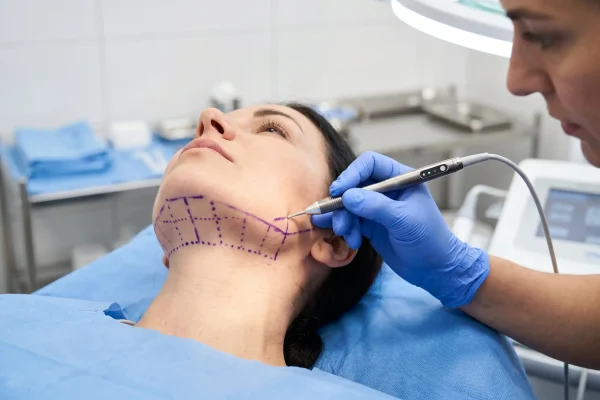
FaceTite firms loose skin and melts small fat pockets on the lower face and neck without a surgical lift. It runs on radiofrequency energy, which is just controlled heat. A thin probe goes under the skin, a second piece stays on the surface, and the energy heats the tissue between them to around 70 degrees Celsius. That heat does two jobs. It shrinks fat, and it triggers your body to build fresh collagen for months afterward.
People call it a “middle ground” treatment, and that label is fair. It does more than creams or surface-level devices, less than a knife. We perform FaceTite at Formation through tiny entry points instead of incisions, so the scarring is minimal and recovery beats surgery.
The brochures gloss over one thing. FaceTite delivers roughly 30 to 50 percent of what a surgical facelift achieves. That’s not a knock. It’s the right tool for the right face. But if a provider sells it as a facelift you can do on a lunch break, walk out.
The heat sets off two changes, and both matter for how things look a decade later.
First, fat reduction. Stubborn deposits under the chin, along the jawline, and in the lower cheeks get broken down. Those fat cells don’t regrow the way they were, which is why the slimmer, sharper look tends to stick around even as skin loosens. Plenty of patients book FaceTite for the same reason they’d consider neck liposuction: they want the under-chin area cleaned up for good.
Second, skin tightening. The collagen your body builds in the months after treatment is the engine behind the firming. It’s also the part that fades, because collagen breaks down over time like everything else in your skin.
That collagen distinction is the key to the ten-year question. The fat change is durable. The tightening is borrowed time.
FaceTite is not an instant change, and that’s a good thing. A slow build means a natural look instead of an obvious “what did she do” reveal.
Roughly how it plays out:
A full surgical lift, by comparison, holds 8 to 15 years. The two timelines aren’t in the same league, which tracks with broader national procedure data showing minimally invasive treatments climbing while surgical facelifts hold a steadier, smaller niche. Pretending the timelines match sets patients up to feel cheated.
By year ten, the skin tightening from your FaceTite has faded, and your face reflects normal aging from a firmer starting point rather than any active “result.” That’s the truthful version, and I’d rather tell you now than have you feel misled later.
The reason there’s no clean number is simple: FaceTite landed in clinics around the 2010s, and the device cleared for soft-tissue contraction with tightening noted for about a year in its labeling. The longer figures you read, three to five years and up, come from surgeon and patient reports, not decade-long trials. A 2024 study followed 80 patients treated with the device alongside neck liposuction and buccal fat removal and reported solid contouring across an eight-year stretch, though even that doesn’t reach the ten-year mark.
So picture two people, same age, same genes. One did FaceTite at 45. At 55, both have aged ten years. The treated one usually still reads a little tighter through the jaw and neck, mostly thanks to the fat that never came back. The difference is real but quiet. Anyone promising you’ll look 45 forever is selling a fantasy.
Two people can get the identical treatment and look completely different five years out. The variables below are why.
Younger skin with intact elastin holds tightening longer and heals faster. That doesn’t mean older patients shouldn’t bother. It means they should plan for upkeep and set expectations accordingly. If your skin is mild to moderately loose, you’re a strong candidate. If it’s heavily sagging, FaceTite will underwhelm you, and a surgical option will serve you better.
This is the cluster people underrate, and it’s the one you actually control. Daily sunscreen is the single biggest lever for keeping results, because UV light breaks down both old and freshly built collagen. Smoking is brutal here. Smokers often see relapse two to three years earlier than non-smokers. And big weight swings stretch or deflate the treated tissue, undoing some of the contraction. Skip the SPF, smoke a pack a day, and your “five-year result” can be gone in two.
Placement changes longevity. The under-chin and jawline hold the longest because they move less. The cheeks and the area around the mouth, which flex all day with talking and smiling, loosen sooner. If your main concern is a soft jaw, you picked a spot that ages well, which is why neck and jawline contouring tends to be the most satisfying long-term use of the device.
Operator skill outranks the machine, too. When federal regulators flagged burns and scarring tied to radiofrequency devices in undertrained hands, they made the case better than any clinic could. Provider choice isn’t optional.
FaceTite doesn’t stop aging. It resets your starting line. Instead of aging from where you are today, your skin ages from a slightly younger version of itself.
That reframe matters more than any number. Patients who expect a freeze button end up disappointed at year four. Patients who expect a head start end up thrilled at year four and pragmatic about year eight. Same exact result, different satisfaction, all because of how it was explained up front.
Around 73 percent of FaceTite patients rate it “worth it” in RealSelf reviews. The ones in that group almost always understood the assignment going in. The unhappy minority usually didn’t, or were sold a result their skin was never going to give.
Most people consider a touch-up around the five-year mark, sometimes sooner for younger faces with active collagen turnover. The signals are obvious once you know them: the jawline softening again, mild sagging creeping back, or simply enough years passing that you want a refresh.
A smaller maintenance treatment usually beats waiting a full decade and starting from scratch. Some patients stretch their results with collagen-friendly habits and lighter add-ons like a thread lift when they want a little lift without going back under the probe.
One caution worth its own sentence: roughly 20 to 30 percent of patients end up wanting a revision or touch-up, and a large share of those cases trace back to the wrong provider, not the wrong treatment. A discount med-spa with a rented machine is where good candidates turn into regret stories.
Surface radiofrequency microneedling improves texture and gives mild tightening, but it stays shallower than FaceTite and usually needs several sessions to complete. Ultrasound-based tightening lifts gently without going under the skin, though the change is subtle and gradual. Thread lifts give an instant pull that fades inside a year or two. Jawline fillers add volume and smooth lines but do nothing for loose skin, so they solve a different problem than FaceTite does. A surgical facelift wins on longevity and drama, at the cost of general anesthesia, weeks of downtime, and higher risk.
FaceTite’s lane is clear. Mild to moderate laxity, small fat pockets, a few days of downtime, and a result measured in years rather than decades. For the right person, it postpones surgery for a long time. For the wrong person, it’s an expensive way to be slightly disappointed. The whole game is honest candidacy, which is exactly what a consultation is for.
You’re likely a good fit if you’re in your 30s to 50s, have mild to moderate skin sagging, carry small fat pockets, and want a visible change without surgery. Post-weight-loss patients, including the growing wave coming off GLP-1 medications, are increasingly drawn to it for the laxity that follows dramatic loss. That demand shift shows up in industry tracking, where non-surgical contouring keeps gaining ground on bigger operations.
It’s probably the wrong call if you have significant loose skin, want facelift-level drama, or expect zero maintenance over ten years. In those cases, the more responsible plan often involves surgery or a combined treatment, and a good provider will tell you so instead of upselling you on a device that can’t deliver it.
Ten years after a FaceTite, you won’t be looking at “FaceTite results.” You’ll be looking at a face that aged a decade from a firmer, slimmer baseline, with the under-chin and jawline improvements holding up best. The skin tightening will have softened. The fat reduction likely stuck. And whether you’re glad you did it usually comes down to one thing: did someone tell you the truth before you booked? At Formation in Tampa, that honest conversation, led by a board-certified surgeon who focuses on aesthetic work, is the part we refuse to skip.
By the ten-year mark, the skin-tightening effect from FaceTite has usually faded, because no result is permanent and your skin keeps aging normally. There are no peer-reviewed studies tracking patients a full decade out. Documented improvement runs about three to five years, though reduced fat in the chin and jawline often shows longer.
FaceTite is not permanent. It gives lasting improvement and slows the look of aging, but it does not freeze it. The collagen-driven tightening softens over several years, while the fat reduction tends to hold. After ten years your skin reflects normal aging from a firmer baseline.
Yes, and demand for it among post-weight-loss patients is rising fast. Major weight loss, including from GLP-1 medications, often leaves mild laxity that FaceTite can firm. It also pairs well with liposuction when fat and loose skin appear together, which is a common combination request.
Roughly 20 to 30 percent of patients want a touch-up, revision, or eventual surgery. Most underwhelming outcomes trace back to poor candidacy or an inexperienced provider rather than the device itself. A pinch test and clear before-and-after photos at your consultation help set realistic expectations.
Most people wait around five years before a second treatment, though younger patients with faster collagen turnover may consider it sooner. A smaller maintenance session usually works better than letting results fully fade and starting over. Your provider can time it based on how your skin is holding.
A surgical facelift lasts roughly 8 to 15 years and produces a stronger lift, while FaceTite delivers about 30 to 50 percent of that effect with far less downtime. Over ten years a facelift clearly outlasts FaceTite, but FaceTite can delay the need for surgery for years in the right candidate.
Defined abs with HD liposuction.
Unlike traditional liposuction, where the primary goal is removing excess fat, HD liposuction is about strategically removing fat to reveal and enhance the underlying muscle structure.
Those markings you see before surgery help Dr. Gopal map out the patient’s anatomy and plan where to remove fat and where to preserve it to create more visible definition.
The second clip was taken immediately after surgery, so this is not the final result. Swelling and bruising will change significantly as the body heals and the final contour develops over the months that follow.
Considering high-definition liposuction? Schedule a consultation with Dr. Gopal Grandhige at Formation Tampa. Link in bio.
#HDLiposuction #HighDefinitionLiposuction #Liposuction #BodyContouring #MaleLiposuction
Defined abs with HD liposuction.
Unlike traditional liposuction, where the primary goal is removing excess fat, HD liposuction is about strategically removing fat to reveal and enhance the underlying muscle structure.
Those markings you see before surgery help Dr. Gopal map out the patient’s anatomy and plan where to remove fat and where to preserve it to create more visible definition.
The second clip was taken immediately after surgery, so this is not the final result. Swelling and bruising will change significantly as the body heals and the final contour develops over the months that follow.
Considering high-definition liposuction? Schedule a consultation with Dr. Gopal Grandhige at Formation Tampa. Link in bio.
#HDLiposuction #HighDefinitionLiposuction #Liposuction #BodyContouring #MaleLiposuction
Skin quality changes everything.
Neck liposuction can create a more defined jawline and neck contour by removing unwanted fat, but the result also depends heavily on skin quality and elasticity.
When skin has good elasticity, neck lipo alone may be enough for the skin to contract around the new contour. With some skin laxity, Dr. Gopal may combine liposuction with a skin-tightening treatment such as Renuvion or FaceTite. With significant laxity, a neck lift may be the more appropriate option.
That’s why evaluating the skin is an important part of determining the right approach before neck liposuction.
Considering neck liposuction in Tampa? Schedule a consultation with Dr. Gopal Grandhige at Formation Tampa.
#NeckLiposuction #NeckLipo #JawlineContouring #Tampa
Skin quality changes everything.
Neck liposuction can create a more defined jawline and neck contour by removing unwanted fat, but the result also depends heavily on skin quality and elasticity.
When skin has good elasticity, neck lipo alone may be enough for the skin to contract around the new contour. With some skin laxity, Dr. Gopal may combine liposuction with a skin-tightening treatment such as Renuvion or FaceTite. With significant laxity, a neck lift may be the more appropriate option.
That’s why evaluating the skin is an important part of determining the right approach before neck liposuction.
Considering neck liposuction in Tampa? Schedule a consultation with Dr. Gopal Grandhige at Formation Tampa.
#NeckLiposuction #NeckLipo #JawlineContouring #Tampa
Liposuction can change more than the body.
I’ve watched patients become more confident, make changes in their careers, show up differently in their relationships, and start making different choices for themselves.
That’s when I know I’ve done my job well.
Because high-definition liposuction isn’t only about creating a leaner, more defined physique. Sometimes the physical transformation becomes the catalyst for changes that reach far beyond the operating room.
Dr. Gopal Grandhige
Considering HD liposuction in Tampa? Schedule a consultation with Dr. Gopal Grandhige at Formation Tampa.
#BodyContouring #HDLiposuction #tampa #Liposuction
Liposuction can change more than the body.
I’ve watched patients become more confident, make changes in their careers, show up differently in their relationships, and start making different choices for themselves.
That’s when I know I’ve done my job well.
Because high-definition liposuction isn’t only about creating a leaner, more defined physique. Sometimes the physical transformation becomes the catalyst for changes that reach far beyond the operating room.
Dr. Gopal Grandhige
Considering HD liposuction in Tampa? Schedule a consultation with Dr. Gopal Grandhige at Formation Tampa.
#BodyContouring #HDLiposuction #tampa #Liposuction
Male liposuction requires a different approach.
The contours that create a more feminine shape aren’t necessarily the same ones that create a strong, athletic male physique.
With male high-definition liposuction, Dr. Gopal considers how the chest, abdomen, waist, ribs and back work together—and how the underlying muscle anatomy should guide where definition and shadow are created.
That’s also why the chest matters. A highly defined abdomen and back paired with a rounder, less-defined chest can make the overall result feel out of proportion.
The goal is a cohesive, athletic contour that works with the patient’s natural anatomy.
Considering male HD liposuction? Schedule a consultation with Dr. Gopal Grandhige at Formation Tampa.
Male liposuction requires a different approach.
The contours that create a more feminine shape aren’t necessarily the same ones that create a strong, athletic male physique.
With male high-definition liposuction, Dr. Gopal considers how the chest, abdomen, waist, ribs and back work together—and how the underlying muscle anatomy should guide where definition and shadow are created.
That’s also why the chest matters. A highly defined abdomen and back paired with a rounder, less-defined chest can make the overall result feel out of proportion.
The goal is a cohesive, athletic contour that works with the patient’s natural anatomy.
Considering male HD liposuction? Schedule a consultation with Dr. Gopal Grandhige at Formation Tampa.
Choosing a liposuction surgeon isn’t just about looking at before-and-afters.
Liposuction isn’t simply about removing fat. Decisions around how much to remove, which areas to treat, skin quality, post-op care and recovery can all influence the approach to your result.
How a surgeon answers these questions can tell you a lot about how they think, plan and care for their patients.
Save these 6 questions for your next consultation.
Considering liposuction? DM us or schedule a consultation with Dr. Gopal Grandhige at Formation Tampa.
#tampa #hdliposuction #liposuction #bodycountouring
Choosing a liposuction surgeon isn’t just about looking at before-and-afters.
Liposuction isn’t simply about removing fat. Decisions around how much to remove, which areas to treat, skin quality, post-op care and recovery can all influence the approach to your result.
How a surgeon answers these questions can tell you a lot about how they think, plan and care for their patients.
Save these 6 questions for your next consultation.
Considering liposuction? DM us or schedule a consultation with Dr. Gopal Grandhige at Formation Tampa.
#tampa #hdliposuction #liposuction #bodycountouring
6 months post high-definition liposuction with moderate definition.
The goal wasn’t just less fat. It was a leaner, more athletic contour with visible definition through the abdomen and torso, without pushing the result to the highest level of definition.
High-definition liposuction strategically sculpts around the underlying anatomy and can be customized based on a patient’s anatomy, muscle structure, and the degree of definition they want to achieve.
For this patient, moderate definition created the balance Dr. Gopal was looking for.
Results vary by patient and depend on individual anatomy, skin quality, and treatment plan.
Considering HD liposuction? Schedule a consultation with Dr. Gopal Grandhige at Formation Tampa. Link in bio.
#HDLiposuction #Liposuction #BodyContouring #MaleLiposuction #tampa
6 months post high-definition liposuction with moderate definition.
The goal wasn’t just less fat. It was a leaner, more athletic contour with visible definition through the abdomen and torso, without pushing the result to the highest level of definition.
High-definition liposuction strategically sculpts around the underlying anatomy and can be customized based on a patient’s anatomy, muscle structure, and the degree of definition they want to achieve.
For this patient, moderate definition created the balance Dr. Gopal was looking for.
Results vary by patient and depend on individual anatomy, skin quality, and treatment plan.
Considering HD liposuction? Schedule a consultation with Dr. Gopal Grandhige at Formation Tampa. Link in bio.
#HDLiposuction #Liposuction #BodyContouring #MaleLiposuction #tampa
Your lipo results at 2 weeks are not your final results.
And sometimes, what you see during those early weeks can be unsettling.
Swelling can temporarily make the treated area look larger. The tissue may feel firm, tight or lumpy. The definition you were expecting may not be visible yet.
That doesn’t necessarily mean something went wrong. It simply means your body is still healing.
After liposuction, recovery happens in stages, from the initial inflammation and swelling to tissue repair, skin contraction and the gradual emergence of the new contour.
Significant changes often become more apparent around the 3–6 month mark, with continued refinement as the tissues heal and mature.
That’s why comparing yourself a few weeks after surgery to someone’s polished before-and-after photo can create a very unrealistic expectation. Those two photos may represent months of healing in between.
The operation creates the contour. The final result reveals itself over time.
If you’re considering HD liposuction, schedule a consultation with Dr. Gopal to understand the procedure, recovery, and what to realistically expect from your results (link in bio).
#tampa #liposuction #hdliposuction
Your lipo results at 2 weeks are not your final results.
And sometimes, what you see during those early weeks can be unsettling.
Swelling can temporarily make the treated area look larger. The tissue may feel firm, tight or lumpy. The definition you were expecting may not be visible yet.
That doesn’t necessarily mean something went wrong. It simply means your body is still healing.
After liposuction, recovery happens in stages, from the initial inflammation and swelling to tissue repair, skin contraction and the gradual emergence of the new contour.
Significant changes often become more apparent around the 3–6 month mark, with continued refinement as the tissues heal and mature.
That’s why comparing yourself a few weeks after surgery to someone’s polished before-and-after photo can create a very unrealistic expectation. Those two photos may represent months of healing in between.
The operation creates the contour. The final result reveals itself over time.
If you’re considering HD liposuction, schedule a consultation with Dr. Gopal to understand the procedure, recovery, and what to realistically expect from your results (link in bio).
#tampa #liposuction #hdliposuction
Some surgical decisions are much harder to correct than they are to avoid.
That’s what Dr. Gopal means when he says, “I wish more patients knew that you pay more to undo a cheaper procedure.”
With liposuction and body contouring, removing fat is only one part of the process. Your surgeon has to understand your anatomy, know how much fat to remove and where to preserve it, create smooth transitions between areas, and consider how the final contour fits the rest of your body.
But the procedure doesn’t end when you leave the operating room. Recovery and aftercare matter too. The right guidance around compression, lymphatic massage, incision and drainage care, activity and nutrition can help manage swelling and support your body as it heals.
When something doesn’t go as planned, correcting dents, irregularities, poor proportions or an unnatural contour can be more complicated than doing the procedure properly the first time. And sometimes, there’s less to work with the second time around.
So when you’re comparing surgeons, don’t compare price alone. Look at their training, experience, surgical approach, before-and-after results, and what their care includes before and after surgery.
Because a cheaper procedure can become a very expensive one when you have to do it twice.
#tampa #HDLiposuction #lipo
Some surgical decisions are much harder to correct than they are to avoid.
That’s what Dr. Gopal means when he says, “I wish more patients knew that you pay more to undo a cheaper procedure.”
With liposuction and body contouring, removing fat is only one part of the process. Your surgeon has to understand your anatomy, know how much fat to remove and where to preserve it, create smooth transitions between areas, and consider how the final contour fits the rest of your body.
But the procedure doesn’t end when you leave the operating room. Recovery and aftercare matter too. The right guidance around compression, lymphatic massage, incision and drainage care, activity and nutrition can help manage swelling and support your body as it heals.
When something doesn’t go as planned, correcting dents, irregularities, poor proportions or an unnatural contour can be more complicated than doing the procedure properly the first time. And sometimes, there’s less to work with the second time around.
So when you’re comparing surgeons, don’t compare price alone. Look at their training, experience, surgical approach, before-and-after results, and what their care includes before and after surgery.
Because a cheaper procedure can become a very expensive one when you have to do it twice.
#tampa #HDLiposuction #lipo
Lipo recovery can be a lot.
There can be swelling, drainage, compression garments, limited activity, and a period where your body may look worse before it starts looking better. And when the final result can take months to fully reveal itself, recovery can take an emotional toll too.
That’s why Dr. Gopal views a successful surgical experience as three equally important parts: pre-op care, the operation itself, and post-op care.
At Formation, that process starts four weeks before surgery. Patients are prepared physically for the procedure and mentally for what they may experience during recovery.
That support continues after surgery with a private nurse during the initial recovery period, supplies and education for at-home care, nutritious meals, and in-home lymphatic massage to help manage postoperative swelling and fluid.
None of those pieces are considered extras. They’re part of the surgical experience.
Because the goal isn’t just to perform the procedure. It’s to make sure you know what to expect, you’re prepared for it, and you’re properly cared for through the recovery that follows.
Considering liposuction or body contouring in Tampa? Schedule a consultation with Dr. Gopal Grandhige at Formation Tampa.
#tampa #hdLiposuction
Lipo recovery can be a lot.
There can be swelling, drainage, compression garments, limited activity, and a period where your body may look worse before it starts looking better. And when the final result can take months to fully reveal itself, recovery can take an emotional toll too.
That’s why Dr. Gopal views a successful surgical experience as three equally important parts: pre-op care, the operation itself, and post-op care.
At Formation, that process starts four weeks before surgery. Patients are prepared physically for the procedure and mentally for what they may experience during recovery.
That support continues after surgery with a private nurse during the initial recovery period, supplies and education for at-home care, nutritious meals, and in-home lymphatic massage to help manage postoperative swelling and fluid.
None of those pieces are considered extras. They’re part of the surgical experience.
Because the goal isn’t just to perform the procedure. It’s to make sure you know what to expect, you’re prepared for it, and you’re properly cared for through the recovery that follows.
Considering liposuction or body contouring in Tampa? Schedule a consultation with Dr. Gopal Grandhige at Formation Tampa.
#tampa #hdLiposuction
Your body decides where fat comes off, and it doesn’t always come from the area you want it to.
For someone who is already at a stable weight, continuing to lose weight can mean getting leaner in the face, arms, legs or other areas while localized abdominal fat remains.
That’s where the difference between weight loss and body contouring matters.
Liposuction isn’t designed to make the number on the scale significantly lower. It’s designed to address localized fat and change contour and proportion.
So if you’ve reached a weight you feel good at, but there’s still an area that doesn’t seem to change no matter what you do, you may not need to keep chasing a lower number on the scale.
It may be worth finding out whether liposuction is appropriate for your body and the result you’re trying to achieve.
DM us or schedule a consultation with Dr. Gopal Grandhige at Formation Tampa (link in bio).

Your body decides where fat comes off, and it doesn’t always come from the area you want it to.
For someone who is already at a stable weight, continuing to lose weight can mean getting leaner in the face, arms, legs or other areas while localized abdominal fat remains.
That’s where the difference between weight loss and body contouring matters.
Liposuction isn’t designed to make the number on the scale significantly lower. It’s designed to address localized fat and change contour and proportion.
So if you’ve reached a weight you feel good at, but there’s still an area that doesn’t seem to change no matter what you do, you may not need to keep chasing a lower number on the scale.
It may be worth finding out whether liposuction is appropriate for your body and the result you’re trying to achieve.
DM us or schedule a consultation with Dr. Gopal Grandhige at Formation Tampa (link in bio).