

Written By: Jeffrey Atlas, PA-C, Health Content Writer
Medically Reviewed By: Dr. Gopal Grandhige, MD, FACS, Board-Certified Surgeon
Last Reviewed: September 9, 2026
You can develop an addiction-like pattern around plastic surgery, even though no psychiatric manual lists it under that name. I’m Dr. Gopal Grandhige, a board-certified general surgeon in Tampa who specializes in aesthetic surgery. I’ve sat across from patients who fit this pattern exactly. Some of them I operated on. Some of them I sent home.
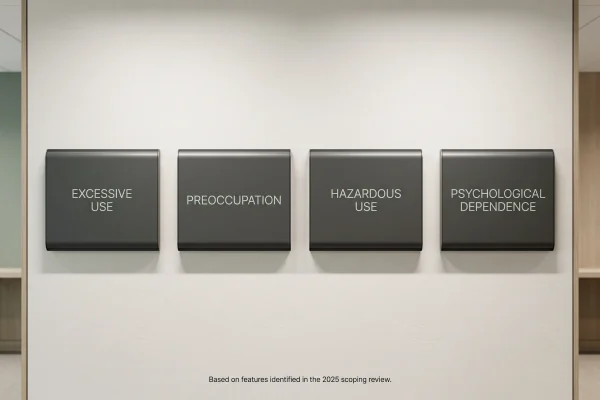
Addiction to plastic surgery describes a compulsive pattern of pursuing cosmetic procedures despite physical, financial, or emotional harm. It isn’t a standalone DSM-5 diagnosis. A 2025 scoping review in Aesthetic Plastic Surgery that compiled thirteen studies published between 2000 and 2024 found repeating evidence of excessive use, preoccupation, hazardous use, and psychological dependence.
This article won’t tell you whether you personally have a problem. I can’t diagnose that from a blog post and neither can anyone else. What it will do is lay out what the current research says, what I look for before I agree to operate, and why I turn some people away.
Being addicted to plastic surgery means the pursuit of procedures has taken over decisions you’d otherwise make differently. The research frames it as a behavioral pattern closer to gambling disorder than to a substance problem.
The Tilburg University team behind that 2025 review found four features repeating across the literature. Excessive use. Preoccupation with the next procedure. Hazardous use. Psychological dependence. Those authors stopped short of calling it a formal disorder and instead asked the field to study it properly, which is a more honest position than most clinics take on their own websites.
Someone books a procedure. It goes well. Three months later they’re back, pointing at something new.
The tell isn’t the number of procedures. Plenty of my patients have had two or three operations over a decade and are completely grounded about all of them. The tell is the interval shrinking while the target keeps moving. When the thing that bothered a patient in January is fixed and forgotten by March because a new flaw replaced it, that isn’t surgical planning. That’s a loop.
Most of the people I see for surgical body contouring have had no prior cosmetic work at all. The ones who concern me have had a lot of small things done, quickly, across a lot of different offices.
Most coverage of this topic treats “plastic surgery addiction” as a settled clinical entity. It isn’t, and pretending otherwise does damage.
Call a patient an addict and you’ve handed them a label with no treatment protocol attached. Meanwhile the condition that probably is driving the behavior, body dysmorphic disorder, has a treatment protocol with real evidence behind it, and nobody screened for it.
Actually, that framing isn’t quite right. Not every compulsive patient has BDD. Some are chasing a feeling that faded, which looks a lot more like a maintenance cycle than a psychiatric condition. But the core point holds. The label is popular because it’s dramatic, not because it’s useful to the person carrying it.
Roughly one in five people who’ve had cosmetic work show signs of addictive use. That number is higher than most surgeons would guess, including me before I read it.
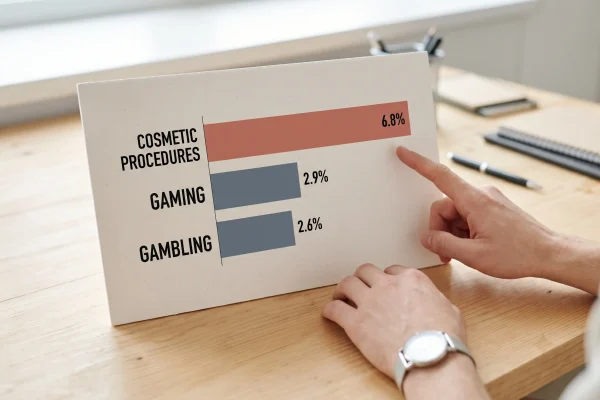
A study published in the Journal of Health Psychology in July 2026 surveyed 1,614 Israeli women between the ages of 25 and 71. Among the 710 who’d undergone at least one cosmetic procedure, 20% met the threshold for moderate-to-severe addictive use over their lifetime, and 15.4% within the past year. Across the full sample, the past-year rate landed at 6.8%.
Read that last figure next to the comparison the researchers drew themselves. Israeli past-year rates for gambling addiction among women sit near 2.6%, and gaming near 2.9%, from separate studies using different methods. Cosmetic procedures outran both.
Volume gives the finding weight. The American Society of Plastic Surgeons logged more than 28 million minimally invasive treatments in its 2024 count, against roughly 1.59 million cosmetic surgeries. Neuromodulator injections alone accounted for 9,883,711 of that total, up 4% year over year.
The ratio is the part almost nobody connects to addiction. Surgery gets the headlines and the documentaries. But injectables wear off, so they need repeating, and repetition is where a loop takes hold. If I had to bet on where compulsive patterns form, I’d bet on the injectable chair over the operating table. Some of my colleagues will disagree, and it’s a fair argument to have.
Every additional operation adds risk that doesn’t average out. Anesthesia exposure, scar tissue, blood clots, infection, nerve injury, and tissue loss are all real, and the fifth operation on the same area is not as safe as the first.
Scar tissue from a prior surgery changes how tissue behaves under the cannula. Blood supply gets less predictable. Skin that’s been operated on twice doesn’t redrape the way untouched tissue does, and planes that should separate cleanly instead tear.
I’ve done revision work on patients who came to Tampa after two or three prior operations elsewhere. The honest answer in those cases is that I can improve the result without restoring it to what a first-time result would have been. That’s the trade-off nobody states upfront. One well-planned operation is worth more than three corrective ones, every time. High-definition liposuction for men removes fat cells permanently, which is exactly why the plan has to be right on the first pass. You can’t put them back.
Dissatisfaction after surgery isn’t automatically a sign of bad surgery. Sometimes the result is good and the expectation was never going to be met by an operation in the first place.
The industry’s reflex in that moment is bad advice: if you’re unhappy, fix it with another procedure. For a patient with a genuine technical problem, sure, that’s what revision surgery exists for. For a patient whose dissatisfaction lives somewhere a scalpel can’t reach, a second operation buys a few weeks of relief and then the focus relocates to a new area. I’ve watched that happen to people who’d already spent years and a great deal of money on it.
Body dysmorphic disorder is a preoccupation with a flaw in appearance that other people barely notice or don’t see at all. It sits at the center of most compulsive cosmetic procedure use, and it’s classified alongside obsessive-compulsive conditions. Not vanity.
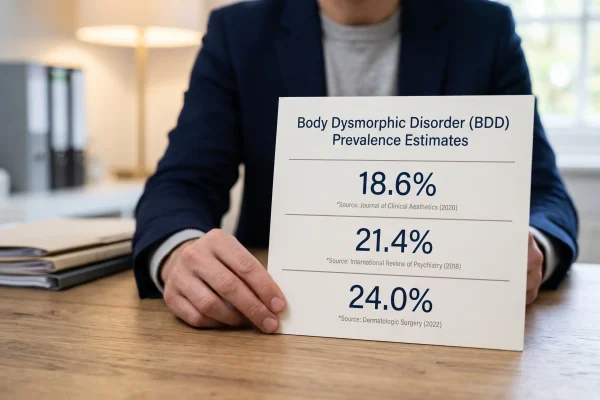
Estimates vary, and the variation itself tells you something. A 2024 meta-analysis in Healthcare that pooled sixty-five studies covering 17,107 patients put BDD prevalence in plastic and reconstructive surgery settings at 18.6%. A separate 2025 meta-analysis in the Journal of Cosmetic Dermatology reported 24% among plastic surgery patients, against 17% in the general population. A 2025 prospective French cohort published in JPRAS screened 842 patients and found 21.4% at high risk.
Call it somewhere between 19% and 24% depending on the setting and the screening tool. Either way, roughly one in five people sitting in a cosmetic consultation meets criteria for a psychiatric condition that surgery does not treat.
Fixing the nose doesn’t fix the preoccupation. It relocates it.
Cognitive behavioral therapy, and medication in many cases, have evidence behind them for BDD. Surgery has evidence of making it worse. A 2025 study in Frontiers in Public Health that followed 605 cosmetic surgery patients found adverse childhood experiences predicted cosmetic surgery addiction, with insecure attachment and self-alienation forming the pathway between them. None of that is reachable with a cannula, and no amount of surgical skill changes it.
Yes. Repeated surgery means repeated exposure to prescription opioids, and that exposure carries risk of its own.
One correction first, because this error circulates constantly in articles on this topic. Opioid-involved overdose deaths in the United States run in the tens of thousands annually in CDC mortality reporting, not the hundreds that several widely shared pages claim. Getting that number wrong makes the risk sound manageable when it isn’t, and it’s the kind of mistake that should disqualify a page from being anyone’s source.
At Formation the answer is multimodal pain control, short prescriptions, and a recovery plan built on compression, early movement, and lymphatic care rather than pills. Most of my liposuction patients are off narcotics within a few days. That isn’t a marketing claim, it’s the whole reason recovery here is actively managed instead of left alone to resolve.
Substance use and untreated mental health conditions also travel together. A patient cycling through procedures who’s simultaneously drinking more than they used to isn’t dealing with two unrelated problems, and treating them as separate is how both get missed.
Often, yes. People inside the pattern rarely experience it as compulsion. They experience it as having high standards.
Signs worth taking seriously, in rough order of how much they concern me:
That last one has data behind it. In the 2026 Israeli study, low body esteem and problematic social media use together predicted addictive use far better than either factor alone. Neither one by itself carried the same weight, which is why “just get off Instagram” is incomplete advice.
If you recognize three or more of these, the next appointment to book isn’t a surgical one. Even an HD liposuction consultation that ends in a clear no is more useful to you than another procedure booked somewhere that never asked.
Real screening means asking questions whose answers might cost the practice a case. Anything short of that is paperwork.
Most practices hand you an intake form with a checkbox on it. That’s documentation, not screening. What works is conversation. What brought you here now. What have you already had done. How did you feel about those results at six months rather than six weeks. Who else have you consulted. What happens in your life if this result isn’t what you pictured.
I ask about the last surgeon on purpose. How a patient describes a previous provider tells me more than any questionnaire will. Warmth is normal. Reasonable disappointment is normal, and plenty of people have legitimate complaints. A pattern where every single prior surgeon was incompetent is a signal, and I’ve learned to slow all the way down when I hear it.
Any board-certified surgeon working in aesthetics carries an ethical obligation here, and the dermatology literature has been blunter about it than the surgical literature has. A 2025 ethics review in the Journal of the American Academy of Dermatology argued that providers have a duty to screen for addictive behavior and underlying BDD, and to decline procedures when the indicators are present.
I limit my surgical volume on purpose, which means declining a case costs me the case rather than a slot I’d have filled anyway. That changes the math in a way patients should understand before they walk in.
When I say no, I don’t just say no and move on. I explain what I saw, I state plainly that I don’t think an operation gets them where they want to go, and I offer a referral to a mental health provider who works with body image. Some patients are relieved to hear it out loud. Some are angry and go elsewhere, and they usually find someone willing. That’s the part of this I can’t fix from my side of the desk.
Dr. Ahmad Saad, Formation’s plastic surgeon, holds the same line. It isn’t a policy printed on a wall. It’s a large part of why the practice runs at the size it does.
Start with a mental health professional who treats body dysmorphic disorder, not with another surgical consultation. Cognitive behavioral therapy adapted for BDD has the strongest evidence base, and psychiatrists commonly add medication when the preoccupation is severe.
A psychologist or psychiatrist with BDD or OCD experience is the right first call. A therapist trained in exposure and response prevention works too, and your primary care physician can make the referral if you’d rather start there. When money is the barrier, community mental health centers and university training clinics around Tampa accept sliding-scale patients. If you’re in crisis or having thoughts of harming yourself, call or text 988 to reach the Suicide and Crisis Lifeline.
If what you want is a surgical opinion from someone willing to tell you no, book a visit and bring your hardest questions. Consultations here are by appointment and long enough to actually get somewhere.
Being addicted to plastic surgery isn’t a character flaw and it isn’t a punchline. It’s a pattern with identifiable features, and the research finally caught up enough this year to describe it properly. The people who get out of it are the ones who stopped asking which procedure comes next and started asking why the last one didn’t hold.
Yes, though not as a formal diagnosis. Researchers describe it as addictive cosmetic procedure use, a behavioral pattern marked by preoccupation, failed attempts to stop, and continued pursuit despite harm. A 2026 study in the Journal of Health Psychology found that 20% of women who had undergone cosmetic procedures met the threshold for moderate-to-severe risk over their lifetime.
No. The DSM-5 does not include plastic surgery addiction as a standalone diagnosis. A 2025 scoping review in Aesthetic Plastic Surgery examined thirteen studies published between 2000 and 2024 and recommended that the field investigate whether the pattern should be recognized as a behavioral addiction. The closest recognized condition is body dysmorphic disorder.
Estimates run between roughly 19% and 24% depending on the setting. A 2024 meta-analysis in Healthcare pooling 65 studies and 17,107 patients found 18.6%, while a 2025 meta-analysis in the Journal of Cosmetic Dermatology reported 24% among plastic surgery patients against 17% in the general population.
Yes. Men develop the same patterns, and some 2025 research reported higher body dysmorphic disorder scores among male cosmetic surgery seekers than female ones in the sampled groups. Male patients are less likely to raise appearance preoccupation with a surgeon directly, which makes the pattern easier to miss during a short consultation.
Rarely, when the dissatisfaction comes from untreated body dysmorphic disorder rather than a technical problem. Surgery on a patient with active BDD tends to move the preoccupation to a new area rather than resolve it. A genuine technical complication is a different situation and can often be corrected.
When indicators of compulsive use or untreated body dysmorphic disorder are present, yes. A 2025 ethics review in the Journal of the American Academy of Dermatology argued that providers have a duty to screen for addictive behavior and decline procedures when warranted. Declining and referring to a mental health provider is the appropriate response.
Not necessarily, and possibly the opposite. Injectables and energy-based treatments wear off, which builds a maintenance cycle into the treatment itself. The American Society of Plastic Surgeons logged more than 28 million minimally invasive treatments in 2024 against roughly 1.59 million cosmetic surgeries, so the repetition volume sits on the non-surgical side.
The last one got 11/10.
Some of the biggest factors affecting liposuction results have nothing to do with what happens in the operating room.
Dr. Gopal rates 13 factors that can influence the final result, from working out before surgery and maintaining a stable weight to compression garments, skin elasticity, and lymphatic massage.
A few of his ratings might surprise you.
For example, he rates skin elasticity a 10/10 because even after the fat is removed, the skin still needs to contract and settle over the new contour.
And lymphatic massage? He gives it an 11/10 because of the role it plays in his recovery protocol, helping manage swelling and supporting how the skin settles over the newly sculpted areas.
The takeaway: great liposuction results depend on more than the surgery itself.
Patient preparation, anatomy, recovery, and long-term weight maintenance all play a role.
Considering liposuction or high-definition liposuction in Tampa?
Schedule a consultation with Dr. Gopal Grandhige at Formation Tampa. Link in bio.
#Liposuction #HDLiposuction #LiposuctionRecovery #LipoAftercare #tampa
The last one got 11/10.
Some of the biggest factors affecting liposuction results have nothing to do with what happens in the operating room.
Dr. Gopal rates 13 factors that can influence the final result, from working out before surgery and maintaining a stable weight to compression garments, skin elasticity, and lymphatic massage.
A few of his ratings might surprise you.
For example, he rates skin elasticity a 10/10 because even after the fat is removed, the skin still needs to contract and settle over the new contour.
And lymphatic massage? He gives it an 11/10 because of the role it plays in his recovery protocol, helping manage swelling and supporting how the skin settles over the newly sculpted areas.
The takeaway: great liposuction results depend on more than the surgery itself.
Patient preparation, anatomy, recovery, and long-term weight maintenance all play a role.
Considering liposuction or high-definition liposuction in Tampa?
Schedule a consultation with Dr. Gopal Grandhige at Formation Tampa. Link in bio.
#Liposuction #HDLiposuction #LiposuctionRecovery #LipoAftercare #tampa
Six to seven hours.
That’s how long an HD liposuction procedure can take with Dr. Gopal’s approach.
He’s not simply removing fat. He’s evaluating every square inch, considering the underlying anatomy, and shaping how each contour transitions into the next.
It’s detailed, physically demanding work.
So when Dr. Gopal says, “Someone’s gotta sweat for the fat to come off,” he means it.
Considering HD liposuction in Tampa? Schedule a consultation (link in bio).
#HDLiposuction #HighDefinitionLiposuction
Six to seven hours.
That’s how long an HD liposuction procedure can take with Dr. Gopal’s approach.
He’s not simply removing fat. He’s evaluating every square inch, considering the underlying anatomy, and shaping how each contour transitions into the next.
It’s detailed, physically demanding work.
So when Dr. Gopal says, “Someone’s gotta sweat for the fat to come off,” he means it.
Considering HD liposuction in Tampa? Schedule a consultation (link in bio).
#HDLiposuction #HighDefinitionLiposuction
Will neck lipo give you the jawline you want?
It depends…
Someone can have fullness under the chin and assume the answer is neck liposuction. But what looks like “fat” from the outside can actually come from several different structures.
Some fat sits directly beneath the skin and can respond very well to liposuction.
But fullness can also come from deeper fat beneath the platysma, the salivary glands under the jaw, muscles under the chin, or even the natural projection of the chin and jaw itself.
That distinction can completely change what neck liposuction can realistically accomplish.
This is why evaluating the anatomy matters before deciding on a procedure.
For the right anatomy, neck liposuction can create a significant change in the neck and jawline.
But when deeper structures are contributing to the fullness, liposuction alone may not create the contour someone is expecting.
A good neck lipo consultation should figure that out first.
Schedule a consultation with **Dr. Gopal Grandhige at Formation Tampa.** Link in bio.
#NeckLipo #NeckLiposuction #DoubleChin #JawlineContouring #NeckContouring
Will neck lipo give you the jawline you want?
It depends…
Someone can have fullness under the chin and assume the answer is neck liposuction. But what looks like “fat” from the outside can actually come from several different structures.
Some fat sits directly beneath the skin and can respond very well to liposuction.
But fullness can also come from deeper fat beneath the platysma, the salivary glands under the jaw, muscles under the chin, or even the natural projection of the chin and jaw itself.
That distinction can completely change what neck liposuction can realistically accomplish.
This is why evaluating the anatomy matters before deciding on a procedure.
For the right anatomy, neck liposuction can create a significant change in the neck and jawline.
But when deeper structures are contributing to the fullness, liposuction alone may not create the contour someone is expecting.
A good neck lipo consultation should figure that out first.
Schedule a consultation with **Dr. Gopal Grandhige at Formation Tampa.** Link in bio.
#NeckLipo #NeckLiposuction #DoubleChin #JawlineContouring #NeckContouring
Want more definition than workouts gave you?
Traditional liposuction focuses primarily on removing fat. HD liposuction goes further. It requires understanding the underlying muscle anatomy, where to remove fat, where to preserve it, and how each contour works together to create natural-looking definition.
That’s the art of it. The goal isn’t to give every patient the same abs or the same body. It’s to work with the anatomy that’s already there and determine how much definition will look right for that individual.
Dr. Gopal Grandhige specializes in high-definition liposuction and advanced body contouring, using nearly two decades of surgical experience to create results that look sculpted, athletic, and intentional.
Considering HD liposuction in Tampa?
Schedule a consultation with Dr. Gopal at Formation Tampa. Link in bio.
#HDLiposuction #HighDefinitionLiposuction #Liposuction #BodyContouring #Tampa
Want more definition than workouts gave you?
Traditional liposuction focuses primarily on removing fat. HD liposuction goes further. It requires understanding the underlying muscle anatomy, where to remove fat, where to preserve it, and how each contour works together to create natural-looking definition.
That’s the art of it. The goal isn’t to give every patient the same abs or the same body. It’s to work with the anatomy that’s already there and determine how much definition will look right for that individual.
Dr. Gopal Grandhige specializes in high-definition liposuction and advanced body contouring, using nearly two decades of surgical experience to create results that look sculpted, athletic, and intentional.
Considering HD liposuction in Tampa?
Schedule a consultation with Dr. Gopal at Formation Tampa. Link in bio.
#HDLiposuction #HighDefinitionLiposuction #Liposuction #BodyContouring #Tampa
Defined abs with HD liposuction.
Unlike traditional liposuction, where the primary goal is removing excess fat, HD liposuction is about strategically removing fat to reveal and enhance the underlying muscle structure.
Those markings you see before surgery help Dr. Gopal map out the patient’s anatomy and plan where to remove fat and where to preserve it to create more visible definition.
The second clip was taken immediately after surgery, so this is not the final result. Swelling and bruising will change significantly as the body heals and the final contour develops over the months that follow.
Considering high-definition liposuction? Schedule a consultation with Dr. Gopal Grandhige at Formation Tampa. Link in bio.
#HDLiposuction #HighDefinitionLiposuction #Liposuction #BodyContouring #MaleLiposuction
Defined abs with HD liposuction.
Unlike traditional liposuction, where the primary goal is removing excess fat, HD liposuction is about strategically removing fat to reveal and enhance the underlying muscle structure.
Those markings you see before surgery help Dr. Gopal map out the patient’s anatomy and plan where to remove fat and where to preserve it to create more visible definition.
The second clip was taken immediately after surgery, so this is not the final result. Swelling and bruising will change significantly as the body heals and the final contour develops over the months that follow.
Considering high-definition liposuction? Schedule a consultation with Dr. Gopal Grandhige at Formation Tampa. Link in bio.
#HDLiposuction #HighDefinitionLiposuction #Liposuction #BodyContouring #MaleLiposuction
Skin quality changes everything.
Neck liposuction can create a more defined jawline and neck contour by removing unwanted fat, but the result also depends heavily on skin quality and elasticity.
When skin has good elasticity, neck lipo alone may be enough for the skin to contract around the new contour. With some skin laxity, Dr. Gopal may combine liposuction with a skin-tightening treatment such as Renuvion or FaceTite. With significant laxity, a neck lift may be the more appropriate option.
That’s why evaluating the skin is an important part of determining the right approach before neck liposuction.
Considering neck liposuction in Tampa? Schedule a consultation with Dr. Gopal Grandhige at Formation Tampa.
#NeckLiposuction #NeckLipo #JawlineContouring #Tampa
Skin quality changes everything.
Neck liposuction can create a more defined jawline and neck contour by removing unwanted fat, but the result also depends heavily on skin quality and elasticity.
When skin has good elasticity, neck lipo alone may be enough for the skin to contract around the new contour. With some skin laxity, Dr. Gopal may combine liposuction with a skin-tightening treatment such as Renuvion or FaceTite. With significant laxity, a neck lift may be the more appropriate option.
That’s why evaluating the skin is an important part of determining the right approach before neck liposuction.
Considering neck liposuction in Tampa? Schedule a consultation with Dr. Gopal Grandhige at Formation Tampa.
#NeckLiposuction #NeckLipo #JawlineContouring #Tampa
Liposuction can change more than the body.
I’ve watched patients become more confident, make changes in their careers, show up differently in their relationships, and start making different choices for themselves.
That’s when I know I’ve done my job well.
Because high-definition liposuction isn’t only about creating a leaner, more defined physique. Sometimes the physical transformation becomes the catalyst for changes that reach far beyond the operating room.
Dr. Gopal Grandhige
Considering HD liposuction in Tampa? Schedule a consultation with Dr. Gopal Grandhige at Formation Tampa.
#BodyContouring #HDLiposuction #tampa #Liposuction
Liposuction can change more than the body.
I’ve watched patients become more confident, make changes in their careers, show up differently in their relationships, and start making different choices for themselves.
That’s when I know I’ve done my job well.
Because high-definition liposuction isn’t only about creating a leaner, more defined physique. Sometimes the physical transformation becomes the catalyst for changes that reach far beyond the operating room.
Dr. Gopal Grandhige
Considering HD liposuction in Tampa? Schedule a consultation with Dr. Gopal Grandhige at Formation Tampa.
#BodyContouring #HDLiposuction #tampa #Liposuction
Male liposuction requires a different approach.
The contours that create a more feminine shape aren’t necessarily the same ones that create a strong, athletic male physique.
With male high-definition liposuction, Dr. Gopal considers how the chest, abdomen, waist, ribs and back work together—and how the underlying muscle anatomy should guide where definition and shadow are created.
That’s also why the chest matters. A highly defined abdomen and back paired with a rounder, less-defined chest can make the overall result feel out of proportion.
The goal is a cohesive, athletic contour that works with the patient’s natural anatomy.
Considering male HD liposuction? Schedule a consultation with Dr. Gopal Grandhige at Formation Tampa.
Male liposuction requires a different approach.
The contours that create a more feminine shape aren’t necessarily the same ones that create a strong, athletic male physique.
With male high-definition liposuction, Dr. Gopal considers how the chest, abdomen, waist, ribs and back work together—and how the underlying muscle anatomy should guide where definition and shadow are created.
That’s also why the chest matters. A highly defined abdomen and back paired with a rounder, less-defined chest can make the overall result feel out of proportion.
The goal is a cohesive, athletic contour that works with the patient’s natural anatomy.
Considering male HD liposuction? Schedule a consultation with Dr. Gopal Grandhige at Formation Tampa.
Choosing a liposuction surgeon isn’t just about looking at before-and-afters.
Liposuction isn’t simply about removing fat. Decisions around how much to remove, which areas to treat, skin quality, post-op care and recovery can all influence the approach to your result.
How a surgeon answers these questions can tell you a lot about how they think, plan and care for their patients.
Save these 6 questions for your next consultation.
Considering liposuction? DM us or schedule a consultation with Dr. Gopal Grandhige at Formation Tampa.
#tampa #hdliposuction #liposuction #bodycountouring
Choosing a liposuction surgeon isn’t just about looking at before-and-afters.
Liposuction isn’t simply about removing fat. Decisions around how much to remove, which areas to treat, skin quality, post-op care and recovery can all influence the approach to your result.
How a surgeon answers these questions can tell you a lot about how they think, plan and care for their patients.
Save these 6 questions for your next consultation.
Considering liposuction? DM us or schedule a consultation with Dr. Gopal Grandhige at Formation Tampa.
#tampa #hdliposuction #liposuction #bodycountouring
6 months post high-definition liposuction with moderate definition.
The goal wasn’t just less fat. It was a leaner, more athletic contour with visible definition through the abdomen and torso, without pushing the result to the highest level of definition.
High-definition liposuction strategically sculpts around the underlying anatomy and can be customized based on a patient’s anatomy, muscle structure, and the degree of definition they want to achieve.
For this patient, moderate definition created the balance Dr. Gopal was looking for.
Results vary by patient and depend on individual anatomy, skin quality, and treatment plan.
Considering HD liposuction? Schedule a consultation with Dr. Gopal Grandhige at Formation Tampa. Link in bio.
#HDLiposuction #Liposuction #BodyContouring #MaleLiposuction #tampa

6 months post high-definition liposuction with moderate definition.
The goal wasn’t just less fat. It was a leaner, more athletic contour with visible definition through the abdomen and torso, without pushing the result to the highest level of definition.
High-definition liposuction strategically sculpts around the underlying anatomy and can be customized based on a patient’s anatomy, muscle structure, and the degree of definition they want to achieve.
For this patient, moderate definition created the balance Dr. Gopal was looking for.
Results vary by patient and depend on individual anatomy, skin quality, and treatment plan.
Considering HD liposuction? Schedule a consultation with Dr. Gopal Grandhige at Formation Tampa. Link in bio.
#HDLiposuction #Liposuction #BodyContouring #MaleLiposuction #tampa