

Written By: Jeffrey Atlas, PA-C, Health Content Writer
Medically Reviewed By: Dr. Gopal Grandhige, MD, FACS, Board-Certified Surgeon
Last Reviewed: June 26, 2026
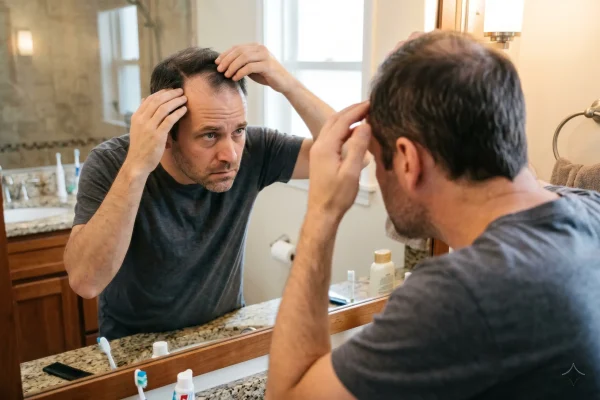
You booked PRP to grow hair. Now there’s more of it on your pillow and in the shower drain, and your stomach just dropped. Breathe. For most people, hair falling out after PRP is a short phase, not proof the treatment backfired. The growth factors in the plasma wake up sleeping follicles, and those follicles push out the old, thin hairs they were still hanging onto. That clears space for thicker ones. The shed usually shows up between week two and week eight, then settles on its own.
Why is my hair falling out after PRP? The short version: PRP nudges resting follicles back into their growth phase, and as they flip the switch, they let go of the weak hairs they were holding. Hair-loss circles call it the “dread shed.” For most patients it’s temporary and fades within a couple of months as fresh growth starts pushing through.
That doesn’t make it less alarming to watch. I’ve sat with patients who were ready to swear off the treatment three weeks in, right before the regrowth phase that would have changed their mind. So this piece is about one thing: why you’re shedding, and what that shedding is actually telling you. It’s not a hair-transplant guide or a rundown of every medication on the market. If you want to talk specifics about your own scalp, that’s a conversation for a board-certified surgeon, not a blog post.
It comes down to the hair cycle getting jolted out of its rut. PRP forces a bunch of dormant follicles to wake up at once, and waking up means dropping the old hair first. There are two flavors of this, and they’re not the same thing.
Most post-PRP shedding is this. The plasma is concentrated with growth factors, and those signals tell weak, resting follicles to start a new cycle. A follicle can’t grow a new hair while the old one is still plugged in, so the old hair gets evicted. You see that eviction as extra strands for a few weeks.
Think of it like clearing a parking spot. The beat-up car has to pull out before the new one can pull in. The shed is the old car leaving.
This is why a 2025 clinical trial in androgenetic alopecia, which is the medical name for male and female pattern hair loss, reported about a 62% jump in hair count after treatment even though some shedding shows up early in the process. The drop and the growth aren’t opposites. The drop is step one of the growth.
Shock loss is the version people actually fear, and it’s rare. We’re talking roughly 0.2% of patients, so two in a thousand. The injection briefly stresses the follicles in the treated area and they all pause at the same time, which reads as a sudden thin-out. It looks dramatic. It also resolves on its own, usually with new growth showing up within three to four months.
Shock loss does not mean PRP failed. It means a cluster of follicles hit the reset button harder than expected. In women especially, shedding patterns can run a little more pronounced, which is worth knowing going in so it doesn’t catch you off guard.
No. Shock loss isn’t a PRP quirk. Almost any treatment that pokes the hair cycle can trigger it. That detail matters, because if you’ve read scary PRP forum threads, you might think the procedure is uniquely risky. It isn’t.
Hair transplants cause shock loss. So does starting minoxidil, the over-the-counter regrowth liquid. The pattern is the same every time: you stimulate follicles, a wave of old hairs drops, and new ones follow. Hair restoration surgeons treat early shedding as an expected step, not a complication. The word “shock” makes it sound like damage. It’s closer to a system reboot.
Give it about six months, sometimes longer. Judging PRP at week four is like judging a garden the day after you plant it. The shed happens fast. The payoff is slow.
Here’s the timeline I give patients. Weeks two to eight: shedding, the part that scares you. Months two to four: the shed stops and the scalp goes quiet, which feels like nothing is happening. Months four to six: new growth gets visible, finer at first, then thicker. By month six you have something real to evaluate.
This isn’t unique to plasma. Across regenerative care, the pattern holds. With our peptide patients, the same rule applies: regenerative results take time, and the people who bail at the quiet stage never see what the treatment could have done. Patience isn’t a personality trait here. It’s part of the protocol.
PRP uses your own blood to feed your follicles. We draw a small sample, spin it in a centrifuge to separate out the platelet-rich layer, and inject that concentrate into the thinning areas of your scalp. The platelets carry growth factors, and growth factors are what tell follicles to get to work.
At our Tampa clinic, the injections are done by Jeff Atlas, PA-C. Jeff came to us from orthopaedics, a field built on precise needle placement and tissue healing, and that hands-on background shows in how he maps and treats a scalp. A lot of people assume the clinic owner does every injection. He doesn’t, and that’s by design. Jeff does this work all day.
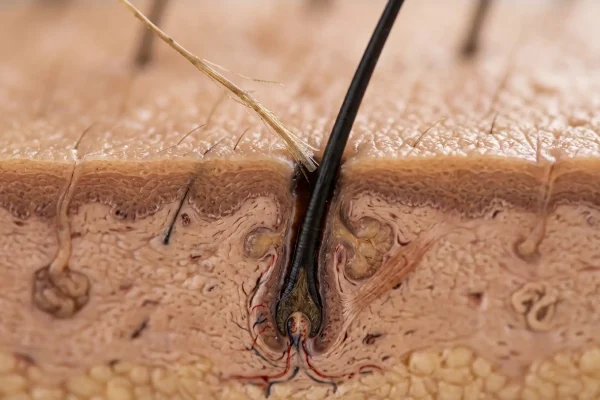
Once the plasma is in, three things happen at the follicle level. Blood flow to the scalp improves, so follicles get more oxygen and nutrients. Follicle cells get the signal to divide and grow. And the support structure around each follicle, the part that anchors and feeds it, gets stronger. Add those up and you get less shedding over time, thicker individual strands, and more hairs in the treated zone.
One thing nobody tells you to ask: how concentrated is the plasma? Not every system spins to the same strength. The difference between a weak prep and a strong one can be the difference between results and a wasted series. If a provider can’t tell you what concentration their system produces, that’s a question worth pushing on.
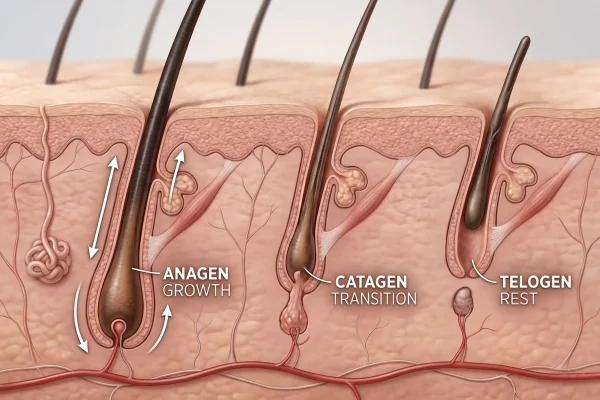
Every follicle runs its own clock, cycling through growth, transition, and rest. PRP works by changing where your follicles sit on that clock. Understanding the three phases is the fastest way to stop panicking about a shed.
And the clock runs at a different speed for everyone. Your age, your genetics, your stress levels, your diet, and any underlying health issue all shift the timing. Two people can get the same injection and shed on different schedules. That’s normal.
Anagen is the active growth stage, when a follicle is actually building hair. PRP’s main job is to drag follicles into anagen and keep them there longer. It does this by feeding the follicle with new blood vessels and firing up the cells at the root that control growth. Most of your scalp hair should be in this phase at any given time. With pattern hair loss, too little of it is.
Catagen is a short transition. The follicle stops building, blood supply to it dips, and it starts shrinking down toward rest. PRP seems to slow this stage down, which keeps follicles in active growth longer instead of letting them slide into retirement early. It’s the least dramatic phase and the shortest.
Telogen is the rest stop. The hair sits there, anchored but inactive, doing nothing. In people with hair loss, way too many follicles are stuck here, which is why the scalp looks thin. PRP’s whole trick is shoving these resting follicles back toward growth. When they make that jump, they release the old resting hair. That release is your shed. Stress can also push more follicles into this resting phase, so keeping your stress down helps the timing work in your favor.
You’ll read “shedding means it’s working” on every PRP page online. It’s not quite right, and the gap matters. The cleaner version: shedding usually means your follicles are switching gears, but whether that turns into lasting regrowth depends on what else you’re doing.
Here’s the contrarian part most clinics won’t say out loud. PRP on its own is not a cure for pattern hair loss. It’s a strong assist. If the underlying cause keeps running in the background, you can shed, regrow, and then slowly lose ground again, because the thing thinning your hair never stopped. I’ve watched people spend a full series on PRP alone, get a nice bump, and feel let down a year later because nobody addressed the root driver.
This is where Formation’s whole approach to regenerative work comes in. Peptides, exosomes, and stem cells don’t do the work. Your body does. These tools fine-tune the process and make your body’s own repair more efficient. They’re the support staff, not the surgeon. That’s also why the peptides we use are matched to a specific target rather than thrown at everything.
And your body fights back. Push hard on one biological pathway and it’ll often answer through a different pathway to cancel you out, which leaves you with a weaker result than you expected. That’s why we chase a goal through several pathways at once instead of betting everything on a single one. It’s the same logic behind pairing compounds together in our peptide protocols: one job, several routes, so the body can’t quietly undo the work.
One more thing on safety, because the regenerative space has a sketchy underbelly. Formation only uses human-grade compounds. Research-grade molecules are a separate category, and they’re not legal to administer, prescribe, buy, or dispense. We don’t carry them, full stop. We also hold SSRP and ISSCA certification, two bodies that set standards for peptides, exosomes, and stem cells, which is part of how we keep the line between real medicine and internet experiment clear. The FDA has warned about unproven regenerative products for a reason. PRP itself isn’t approved as a drug for hair loss, even though the devices used to prepare it are cleared, so provider judgment is the safeguard.
Most shedding needs nothing but time. A few situations deserve a call to your provider. Knowing the difference saves you from both needless panic and from ignoring a real problem.
Watch for shedding that’s still ramping up past the three-month mark instead of slowing down. Watch for hair coming out in patches rather than a diffuse thin-out across the treated area. Watch for redness, pain, or anything that looks like infection at the injection sites. And if you’ve finished a full series with zero regrowth by month six, that’s not a wait-longer situation. That’s a reassess the plan situation, and it usually means the cause wasn’t being addressed, the plasma wasn’t concentrated enough, or PRP simply isn’t the right tool for your stage of loss.
Satisfaction with PRP runs about 70% to 85% in recent reviews, which is solid but not universal. The patients in that unhappy slice almost always share one of two stories: nobody checked their underlying cause, or they quit during the quiet phase. Both are avoidable.
If you take one thing from this, let it be this: hair falling out after PRP is, for most people, the front end of regrowth, not the start of going bald. The shed is your follicles dumping old hair so they can build new. It shows up early, it fades within a couple of months, and the real verdict comes around month six.
So the next time you ask yourself why is my hair falling out after PRP, remember what the shed actually is, give the timeline room to play out, and pair the treatment with a multi-pathway plan plus the small daily habits that keep your body from working against you. Get your protein, sleep, and iron and vitamin D levels handled. If your shed looks off, or you’ve hit month six with nothing to show, talk to our team in Tampa and we’ll figure out what your scalp is actually doing.
For most patients, hair falling out after PRP is temporary and shows up between week two and week eight. The treatment pushes resting follicles into a new growth cycle, and they release old hairs to make room for new ones. Regrowth typically becomes visible around month six. Permanent loss from PRP is rare.
Shedding usually peaks within the first eight weeks and then tapers off as the scalp moves into a quiet phase. New growth tends to appear between months four and six. If shedding is still increasing past three months, that's worth a call to your provider rather than waiting it out.
It's uncommon. So-called shock loss affects only about 0.2% of patients and resolves on its own, usually within three to four months. The bigger risk isn't PRP harming your hair, it's relying on PRP alone while the underlying cause of pattern loss keeps running, which can erode results over time.
Often, yes, but not always on its own. Shedding signals that follicles are switching from rest to growth. Whether that becomes lasting regrowth depends on addressing the root cause and supporting the work with sleep, protein, checked iron and vitamin D levels, and lower stress. Satisfaction in recent reviews runs about 70% to 85%.
At Formation in Tampa, Jeff Atlas, PA-C performs the PRP scalp injections. He came from orthopaedics, a field built on precise needle placement and tissue healing. Formation is led by Dr. Gopal Grandhige, a board-certified general surgeon, and the clinic uses only human-grade compounds.
Yes. The body tends to counter a single pushed pathway by compensating through another, which weakens results. Pursuing hair regrowth through several pathways at once, alongside lifestyle fundamentals, holds up better than PRP by itself. Formation holds SSRP and ISSCA certification for its peptide, exosome, and stem cell standards.
Be concerned if shedding is still ramping up past three months, comes out in patches instead of a diffuse thin-out, is paired with redness or pain at injection sites, or if six months pass with no regrowth at all. Any of those warrants a reassessment with your provider.
The next step after losing 100 pounds.
After significant weight loss, the skin doesn’t always shrink back to match the body’s new shape. And no amount of exercise can remove that excess skin.
In this surgery, Dr. Gopal performs a 360° circumferential body lift to remove excess skin and reshape the patient’s waistline, abdomen, and lower back.
The approach involves lifting the skin on the back and pulling it downward on the front to create a smoother, flatter contour while positioning the incision low enough to be concealed by underwear.
This patient lost over 100 pounds. During surgery, Dr. Gopal explains how approximately 3 pounds of skin were removed from the back, with another 5 pounds planned for removal from the front.
It’s not just about removing skin. It’s about reshaping the body after a significant weight-loss journey.
📍 Dr. Gopal Grandhige | Formation, South Tampa
Interested in body contouring after major weight loss? Schedule a consultation to explore your options.
#BodyLift #CircumferentialBodyLift #ExcessSkinRemoval #WeightLoss #BodyContouring
There’s lean. Then there’s sculpted.
High-definition liposuction goes beyond traditional fat removal. It’s about strategically sculpting around the underlying muscles to create more visible definition in the chest, abdomen, and waist.
For this patient, the goal was a leaner, more defined, athletic appearance without an exaggerated look.
Dr. Gopal Grandhige specializes in male HD liposuction, customizing each procedure to the patient’s anatomy, muscle structure, and desired level of definition.
The result? A more sculpted physique that complements his natural build.
Interested in HD liposuction? Schedule a consultation with Dr. Gopal at Formation Tampa. Link in bio.
Actual patient photos. Individual results vary.
#HDLiposuction #MaleLiposuction #HighDefinitionLiposuction #BodySculpting #Tampa
“That responsibility means everything to me.”
When a patient chooses a plastic surgeon, they’re placing an extraordinary amount of trust in someone else’s hands.
And that responsibility goes far beyond what happens in the operating room.
For Dr. Gopal, it means taking the time to understand each patient’s goals, carefully planning their procedure, making thoughtful decisions throughout surgery, and being there for them during recovery.
Every detail matters because there’s a real person behind every procedure, with hopes, concerns, and expectations.
And that person deserves to feel cared for every step of the way.
#Tampa #CosmeticSurgery #PatientCare #bodycountouring #hdliposuction
Every body needs a different plan.
An HD liposuction consultation with Dr. Gopal is much more than discussing which areas to treat.
He takes the time to evaluate each patient’s anatomy, explain what he’s seeing, and walk through exactly how he would approach the procedure.
Where should fat be removed? Where should it be preserved? How can the waist be sculpted while maintaining natural curves? And when might additional skin tightening be needed?
These are just some of the decisions Dr. Gopal walks patients through, explaining not only what he recommends, but why.
This Reel is a small glimpse into a consultation that typically involves a much more detailed conversation, with time for patients to ask questions and understand their options.
📍 Formation | South Tampa
Considering high-definition liposuction? Schedule a consultation with Dr. Gopal to discuss your goals and explore what’s possible.
#HDLipo #HighDefinitionLiposuction #BodyContouring #Tampa
There’s lean. Then there’s sculpted.
For some men, even years of consistent training and cutting cycles don’t produce the abdominal definition they’re working toward.
Here’s what one patient shared in his Google review of Formation:
⭐️⭐️⭐️⭐️⭐️
“Waited a few months to write this because I wanted to make sure the results held up.
The HD technique did what years of cutting cycles couldn’t. Abs actually show now, even relaxed, even in bad lighting. If you’ve chased a six pack for years you know what that means. Recovery was more involved than I expected and the bruising was wild for a bit. But the result looks like me, just leaner and more defined. Doesn’t look surgical, which was my biggest fear going in. Would recommend, but only if you’re already putting in the work.”
Dr. Gopal Grandhige specializes in male high-definition liposuction, an advanced body-contouring technique that goes beyond traditional fat removal.
By strategically removing fat around the underlying muscles, HD liposuction can enhance natural muscle definition and create a leaner, more sculpted, athletic appearance.
The goal isn’t to create artificial abs. It’s to reveal and enhance the muscle contours already there, with the level of definition customized to each patient’s anatomy and goals.
📍 Formation, South Tampa
Interested in male HD liposuction? Schedule a consultation with Dr. Gopal to explore your options.
Google patient review.
#HDLiposuction #MaleLiposuction #BodyContouring #Tampa
Crunches can only do so much.
You can spend hours strengthening your abdominal muscles, but that doesn’t guarantee visible definition.
A layer of fat sits between the muscles and the skin, and crunches can’t specifically target that fat.
For many people, exercise and reducing overall body fat can help reveal their abs. But even people who are already lean and fit can have stubborn fat that hides their natural muscle definition.
That’s where high-definition liposuction may help.
Dr. Gopal uses HD lipo to selectively remove fat around the natural contours of the abdominal muscles, helping reveal the definition that’s already there.
📍 Formation | South Tampa
Interested in HD lipo? Schedule a consultation to learn more.
#HDLipo #HighDefinitionLiposuction #AbdominalSculpting #BodyContouring
Which one had surgery 1 or 2? 👀
High-definition liposuction goes beyond traditional fat removal. Instead of simply reducing fat evenly, the surgeon strategically removes fat around the underlying muscles to make their natural contours more visible.
But here’s what makes it interesting: HD lipo doesn’t create the same six-pack on everyone. Each person’s anatomy, muscle development, and desired level of definition influence the final result.
Now take another look at these two patients.
Which one do you think had HD liposuction, 1 or 2?
Drop your guess below, then check the pinned comment for the answer!
#HDLiposuction #MaleLiposuction #BodyContouring #Tampa
There’s a story behind every decision.
Cosmetic surgery is a personal decision. Yet people who choose it often find themselves having to explain or defend that choice to others.
Some want to restore changes after pregnancy or weight loss. Others have worked hard to get in shape but still have areas they’d like to improve. And some simply want to feel more comfortable with their appearance.
The reasons are different for everyone. And they don’t have to make sense to anyone else.
At Formation, Dr. Gopal believes the decision to pursue cosmetic surgery should be guided by a patient’s personal goals, realistic expectations, and what’s medically appropriate for them.
Because ultimately, the person making that decision is the one who will live with it.
#Tampa #CosmeticSurgery #BodyContouring #Liposuction
Our first four-legged patient. 🐾
Dr. Gopal takes his liposuction and body contouring very seriously.
Even when his patients have four legs.
From loose skin and neck liposuction to a jawline that deserves its own before-and-after reveal, this might be his most dramatic transformation yet.
And yes, he even got the patient’s permission to share the results. 😂
A little Halloween fun from Dr. Gopal and his two very patient pups! 🎃🐶
No dogs underwent surgery. Just two willing participants and one very committed surgeon.
#SurgeonLife #tampa #necklipo
What weight loss can’t fix.
After losing over 100 pounds, this patient had achieved significant weight loss, but was left with excess skin around his abdomen and back that weight loss alone couldn’t address.
During an 8-hour surgery, Dr. Gopal performed a circumferential body lift, a procedure that removes excess skin around the entire midsection to improve body contour.
In this video, Dr. Gopal walks through the procedure, explaining how he removed approximately 3 pounds of skin from the back and estimated another 4–5 pounds would be removed from the abdomen.
He’s also using a small amount of fat collected during the procedure to add volume to the upper chest, improving its contour without performing a separate chest lift.
For patients who have experienced major weight loss, body contouring can help address the excess skin that remains after the weight is gone.
Considering surgery after weight loss? Schedule a consultation with Dr. Gopal at Formation in Tampa to explore your options.
Actual patient footage. Individual results vary.
#BodyContouring #BodyLift #ExcessSkinRemoval

What weight loss can’t fix.
After losing over 100 pounds, this patient had achieved significant weight loss, but was left with excess skin around his abdomen and back that weight loss alone couldn’t address.
During an 8-hour surgery, Dr. Gopal performed a circumferential body lift, a procedure that removes excess skin around the entire midsection to improve body contour.
In this video, Dr. Gopal walks through the procedure, explaining how he removed approximately 3 pounds of skin from the back and estimated another 4–5 pounds would be removed from the abdomen.
He’s also using a small amount of fat collected during the procedure to add volume to the upper chest, improving its contour without performing a separate chest lift.
For patients who have experienced major weight loss, body contouring can help address the excess skin that remains after the weight is gone.
Considering surgery after weight loss? Schedule a consultation with Dr. Gopal at Formation in Tampa to explore your options.
Actual patient footage. Individual results vary.
#BodyContouring #BodyLift #ExcessSkinRemoval