
Written By: Jeffrey Atlas, PA-C, Health Content Writer
Medically Reviewed By: Dr. Gopal Grandhige, MD, FACS, Board-Certified Surgeon
Last Reviewed: October 19, 2026
PDO threads work better on younger patients, and the published data says so more plainly than most clinic pages will. A multicenter review of 1,500 thread lift patients found age was an independent predictor of dissatisfaction, with the statistical cutoff at 43 years. A separate cohort of 2,000 cases found complication odds rising with every decade. That doesn’t make threads pointless at 55. It means the honest answer shifts with the tissue, and so does my recommendation.
This article won’t rank thread brands or list aftercare rules. It answers one thing: whether your age changes what a thread can actually do, and what you should do with that answer.
A PDO thread lift places absorbable polydioxanone sutures under the skin to reposition tissue and trigger new collagen. Age matters because both of those effects lean on tissue quality. Large multicenter datasets tie older age to higher dissatisfaction and higher complication odds, which is why patients in their thirties with mild laxity tend to walk away happier.
Two large studies point the same direction, and both landed within the past year.
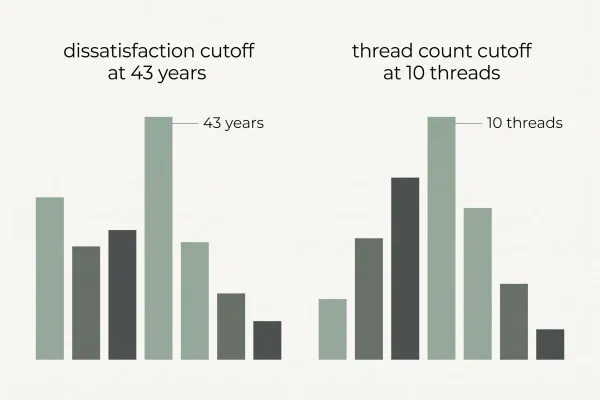
The first tracked 1,500 PDO thread lift patients across a network of Japanese clinics. Dissatisfaction, defined as coming back because the result wasn’t enough, showed up in 51 patients, or 3.4%. Age and thread count were both independent predictors, and the cutoff landed at 43 years. Read it with the authors’ own limits attached. The study was retrospective, ran inside one clinic group, and counted only patients who came back. Anyone quietly unhappy who never returned isn’t in that 3.4%.
The second study looked at how 105 clinics actually choose. Across 106,639 patients, PDO was used in 57.2% of cases and clustered in patients in their twenties and thirties, while polycaprolactone, or PCL, a slower-absorbing material, appeared more often in older patients. Mean thread count ran 10.52 for PDO against 6.57 for PCL. That’s a practice snapshot rather than an outcomes trial. It still tells you something. Clinics running this at volume already sort patients by age before they open a package.
A barbed thread grips tissue and holds it somewhere new. What it can hold depends on what it’s gripping.
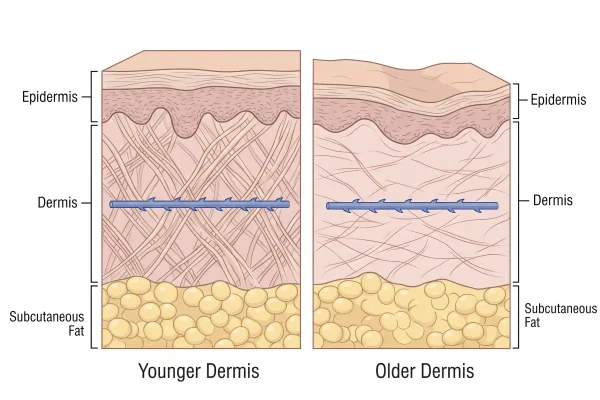
Younger dermis is thicker, denser, and springs back when you release it. A thread anchored there has something to pull against. Older skin is thinner, heavier, and slower to recoil, so the same thread carries more weight with less to hold. The collagen side works the same way. Threads prompt fibroblasts to lay down new collagen, and fibroblast activity falls off with age.
This is also why threads keep disappointing people who wanted them to tighten loose skin. A thread repositions. It doesn’t remove anything.
Yes, and the climb is steeper than most patients expect.
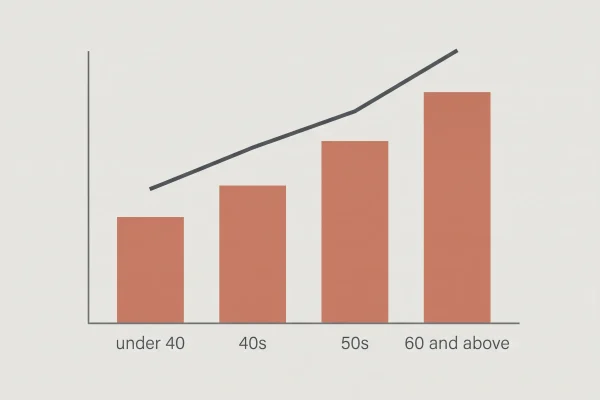
A retrospective cohort of 2,000 PDO thread lift cases from 105 clinics, treated between November 2020 and December 2023, put the overall complication rate at 12.4%. Skin retraction led at 6.35%, then asymmetry at 2.9% and pain at 1.75%. What follows are odds rather than promises, and each age band is compared with the youngest patients in the study, not with a risk-free baseline. Against that youngest group, complication odds were 2.14 times as high in the forties, 3.38 times as high in the fifties, and 5.08 times as high at 60 and above.
Skin retraction is the dimple or pucker that forms where a thread pulls harder than the skin around it. Most of those settle. Not all of them.
The authors graded their own work Level III evidence, retrospective and drawn from a single clinic network, so the direction holds up better than the exact percentages do. Neither caveat shortens the list of risks of threads that belongs in an honest consent conversation.
Both datasets flag thread count, and it moves the wrong way.
Dissatisfaction odds climbed 9% per additional thread. Complication odds climbed 12% per thread. The dissatisfaction cutoff sat at 10 threads, so patients above that line were likelier to come back unhappy, not likelier to be pleased.
That matches how we work. Four threads that hold beat twelve that fight each other, and I write the plan that way. Aggression reads on a face. It shows up as tightness in one vector and slack in the next, and it ages badly.
Nobody should be able to count your threads.
A fair number of the surgeons who dislike threads are objecting to over-placement rather than to the material itself.
Age predicts outcomes because it tracks tissue quality. The birthday itself does nothing.
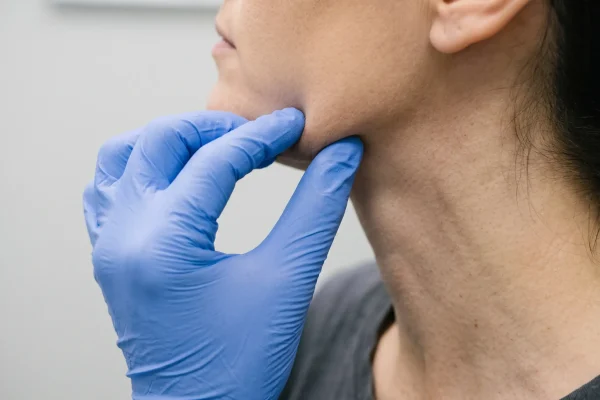
Two things tell me more than a date of birth. Pinch the skin and let go, and watch whether it snaps back or crawls back. Then look at the face at rest, nothing pulled and nothing smiling, and see whether the fold is still sitting there.
A 48-year-old with real recoil is a better thread candidate than a 38-year-old who has lost it. Sun, weight swings, smoking and genetics all move that line.
Along the jawline and neck, the useful elasticity window runs roughly from skin age 25 to 55. Outside it, the conversation changes rather than the technique.
That window is also why how long threads hold varies so much between two people born the same year.
Mild to moderate laxity, tissue that still moves, and expectations measured in months.
Threads Are A Reasonable Fit | Threads Are The Wrong Tool |
Skin recoils when you pinch and release it | The fold stays put with the face at rest |
Mild to moderate laxity at the cheek or jawline | Heavy jowling or a hanging neckline |
Goal is refining a contour that already exists | Goal is the change only a lift produces |
Fine with a result that fades and repeats | Wants one procedure and one recovery |
The third item does the most damage when it gets skipped. A thread loosens its mechanical hold before the collagen response finishes, so the lift at week two isn’t the lift you keep.
The regulatory wording is a useful reality check. Barbed PDO sutures reach the market through FDA clearance rather than approval, and where a lifting use appears at all, the cleared indication covers temporary fixation of the cheek sub dermis in an elevated position. The word temporary sits in the label. Any page promising a permanent lift from an absorbable suture is arguing with the paperwork.
We say so, and then we point you somewhere else.
If the fold hangs at rest, no thread lifts it. That’s excess skin, and excess skin has to come out, which is a lift. Formation stays in contact with the surgeons who do that work well and sends patients to the right one instead of selling a smaller procedure that won’t reach.
There’s middle ground too. FaceTite, a radiofrequency device, tightens from underneath for patients who sit between threads that won’t hold and readiness for a lift. For the neck, MyEllevate, a permanent suspension suture, stays where it’s placed and can be taken out later, which is the opposite of an absorbable thread dissolving on its own schedule. Age alone doesn’t settle any of this, which is why the best age for threads has a longer answer than a number.
The evaluation comes first, and sometimes it ends with no threads at all.
I evaluate every patient personally and design the plan myself, and Formation keeps volume deliberately low so that stays possible. Jeffrey Atlas, PA-C places the threads. He handles all of the injectable work here and came to aesthetics from orthopaedics, where a needle in the wrong plane has immediate consequences.
Then there’s what happens around the appointment. Health and diet get assessed before we treat anything. Nutrition, supplements and peptides get adjusted in the weeks right before and after, so your tissue builds as much structure as it can while the threads still hold. Every clinic in Tampa can buy the same box of sutures. The thinking around it isn’t for sale, and every non-surgical thread lift we plan sits inside the limits above rather than pretending they aren’t there.
The in-office consultation with me carries a fee, it’s a full surgical assessment, and that fee can be applied toward any procedure or product here. If you’d rather start smaller, Hanna, our patient coordinator, offers a complimentary virtual evaluation to go through your goals and sketch a plan before you commit to coming in.
On average, yes, PDO threads work better on younger patients. But averages don’t sit in the chair. What your skin does when I let go of it tells me more than the year printed on your license.
On average, yes. Multicenter data identifies age as an independent predictor of both dissatisfaction and complications after a PDO thread lift, with dissatisfaction odds rising roughly 6% per year of age. Tissue quality is the reason behind that, so a younger patient who has already lost elasticity can still be a poor candidate.
Only if you have something to correct. Threads reposition tissue that has started to descend. On a face that hasn't, there's nothing to reposition. Placing them early doesn't prevent aging, and every round carries the same complication risk.
No. They're absorbable, which isn't the same thing. No enzyme dissolves a PDO thread the way hyaluronidase dissolves hyaluronic acid filler. Taking one out early requires a procedure, and it isn't always possible.
Fewer than you might guess. In published multicenter data, each additional thread raised dissatisfaction odds by 9% and complication odds by 12%, and the dissatisfaction cutoff sat at 10 threads. The right number is whatever your anatomy needs and nothing past it.
No. In a cohort of 2,000 cases, complication odds at 60 and above ran 5.08 times those of the youngest group, and threads can't remove skin. If a fold stays put with your face at rest, skin removal is the answer, and we'll refer you to a surgeon who does that work.
Cleared, not approved. Barbed PDO sutures reach the US market through the FDA 510(k) clearance pathway for soft tissue approximation, and where a lifting indication exists, the cleared wording describes temporary fixation of the cheek sub dermis in an elevated position.
Skin retraction, at 6.35% in a cohort of 2,000 cases, followed by asymmetry at 2.9% and pain at 1.75%. Retraction is a dimple or pucker where a thread pulls against the skin around it, and most cases settle as swelling resolves.
Our first four-legged patient. 🐾
Dr. Gopal takes his liposuction and body contouring very seriously.
Even when his patients have four legs.
From loose skin and neck liposuction to a jawline that deserves its own before-and-after reveal, this might be his most dramatic transformation yet.
And yes, he even got the patient’s permission to share the results. 😂
A little Halloween fun from Dr. Gopal and his two very patient pups! 🎃🐶
No dogs underwent surgery. Just two willing participants and one very committed surgeon.
#SurgeonLife #tampa #necklipo
What weight loss can’t fix.
After losing over 100 pounds, this patient had achieved significant weight loss, but was left with excess skin around his abdomen and back that weight loss alone couldn’t address.
During an 8-hour surgery, Dr. Gopal performed a circumferential body lift, a procedure that removes excess skin around the entire midsection to improve body contour.
In this video, Dr. Gopal walks through the procedure, explaining how he removed approximately 3 pounds of skin from the back and estimated another 4–5 pounds would be removed from the abdomen.
He’s also using a small amount of fat collected during the procedure to add volume to the upper chest, improving its contour without performing a separate chest lift.
For patients who have experienced major weight loss, body contouring can help address the excess skin that remains after the weight is gone.
Considering surgery after weight loss? Schedule a consultation with Dr. Gopal at Formation in Tampa to explore your options.
Actual patient footage. Individual results vary.
#BodyContouring #BodyLift #ExcessSkinRemoval
Only 3 months after surgery. And still healing.
This patient had previously undergone a tummy tuck but wanted to improve his abdominal contour, create more definition, and address the appearance of his existing scar.
Dr. Gopal combined several body contouring techniques, including HD liposuction, skin tightening with Renuvion, fat transfer to the chest, and revision of the previous tummy tuck scar.
The result so far? A more defined abdomen, improved body contours, and a revised scar that’s still in the early stages of healing.
At just three months after surgery, these aren’t the final results. Swelling can continue to decrease, and scars typically soften and fade as healing progresses.
Swipe to see a closer look at the scar revision.
Considering body contouring or looking to improve the results of a previous procedure? Schedule a consultation with Dr. Gopal at Formation Tampa. Link in bio.
Actual patient photos. Individual results vary.
#HDLiposuction #BodyContouring #ScarRevision #SkinTightening #TummyTuck
Your fat is liquid gold.
The fat you don’t want might be exactly what another part of your body needs.
During liposuction, the fat we remove doesn’t always have to be discarded. In fact, Dr. Gopal refers to it as “liquid gold.”
Why? Because that fat can sometimes be transferred to another area of the body to add volume, enhance natural contours, and create a more balanced shape.
For women, that might mean adding volume to the breasts, hips, or buttocks. For men, fat transfer can help enhance the chest or shoulders.
And because we’re using your own fat, we can potentially improve two areas during the same surgery.
Of course, fat transfer isn’t right for everyone. It’s something Dr. Gopal discusses with patients beforehand and incorporates into the surgical plan when appropriate.
Considering liposuction in Tampa? Schedule a consultation with Dr. Gopal at Formation to explore your body contouring options.
#TampaLiposuction #FatTransfer #BodyContouring
Cosmetic surgery isn’t just cosmetic.
We often measure the success of plastic surgery by what we can see in before-and-after photos. But some of the most meaningful changes happen in ways a photograph can’t capture.
How someone feels about themselves. The confidence they carry into everyday life. The freedom of no longer feeling uncomfortable in their own skin.
For Dr. Gopal, that’s what makes this work so meaningful.
A patient who underwent body contouring in 2025 recently reached out to share how much the experience continues to mean to her.
She didn’t talk about measurements or how her body looked. She talked about how much better her days had become.
And that’s something Dr. Gopal has always believed: Cosmetic surgery isn’t simply about changing how someone looks. It’s about understanding what that change means to the person choosing it.
#Tampa #CosmeticSurgery #BodyContouring
A flatter stomach without a tummy tuck? 👀
Pregnancy, and sometimes increased pressure from fat deep inside the abdomen, can cause the abdominal muscles to separate down the middle. This is called diastasis recti, and it can make your belly stick out even if you’re otherwise lean.
Traditionally, repairing that separation often meant undergoing a tummy tuck. But what if you don’t have much loose skin to remove?
For the right patient, Dr. Gopal can use robotic-assisted surgery to bring those separated muscles back together through three small incisions, without the long scar associated with a traditional tummy tuck.
That’s exactly what he did for the patient in these before-and-after photos. No tummy tuck. No additional procedures.
**But this approach isn’t for everyone.** If you have significant loose skin or excess fat, a different treatment may be more appropriate. That’s why understanding what’s causing your belly to protrude matters before deciding on surgery.
Curious whether you’re a candidate? DM us or schedule a consultation with Dr. Gopal at Formation Tampa. Link in bio.
Actual patient results. Individual results vary.
#DiastasisRecti #MuscleSeparation #DiastasisRectiRepair #RoboticSurgery #Tampa
Why does fluid sometimes collect after surgery?
After certain surgical procedures, fluid can accumulate beneath the skin, forming what’s called a seroma.
In this video, Dr. Gopal demonstrates how he drains a seroma in a patient recovering from diastasis recti repair.
This is one of the reasons postoperative follow-up matters. It allows Dr. Gopal to monitor healing, identify any issues, and address them when necessary.
Considering surgery? DM us to schedule a consultation with Dr. Gopal at Formation Tampa.
#DiastasisRecti #Seroma #TampaSurgeon #AbdominalMuscleRepair
The fat is gone. But what takes its place?
When fat is removed during liposuction, it leaves behind space beneath the skin. As the body heals, fluid can sometimes collect in that space, creating what’s called a seroma.
And here’s why that matters.
If fluid continues to collect, it can potentially affect the final contour.
That’s why Dr. Gopal pays close attention to fluid buildup during recovery. His approach is to identify seromas early and address them quickly.
Considering liposuction in Tampa? Schedule a consultation with Dr. Gopal at Formation to learn more.
#Liposuction #Seroma #BodyContouring
From medical weight loss to body contouring, her transformation was approached as a journey, not just a single procedure.
This patient started with a personalized medical weight loss program at Formation, working with Dr. Gopal to achieve significant weight loss. Once she reached her goal, Dr. Gopal performed a tummy tuck to remove excess abdominal skin and refine her contour.
Considering medical weight loss or a tummy tuck? Schedule a consultation with Dr. Gopal at Formation Tampa. Link in bio.
Actual patient results. Individual results vary.
Not every patient who wants surgery is ready for it.
One patient came to Dr. Gopal wanting a tummy tuck. Over the next 18 months, she returned multiple times, having lost more weight each time. And each time, the answer was still no.
Not because she couldn’t have the surgery, but because she wasn’t where she wanted to be yet.
Instead of rushing into surgery, the focus was on helping her reach a healthier, more sustainable weight through nutritional counseling, lifestyle support, and medical weight management.
By the time she had lost 80 pounds, she was ready, both physically and mentally.
For Dr. Gopal, being a good surgeon isn’t just about knowing how to perform a procedure. It’s also about knowing when not to perform one.
Sometimes the best result starts long before the operating room.
Considering a tummy tuck? DM us to schedule a consultation with Dr. Gopal at Formation Tampa.
#Tampa #TummyTuck #BodyContouring

Not every patient who wants surgery is ready for it.
One patient came to Dr. Gopal wanting a tummy tuck. Over the next 18 months, she returned multiple times, having lost more weight each time. And each time, the answer was still no.
Not because she couldn’t have the surgery, but because she wasn’t where she wanted to be yet.
Instead of rushing into surgery, the focus was on helping her reach a healthier, more sustainable weight through nutritional counseling, lifestyle support, and medical weight management.
By the time she had lost 80 pounds, she was ready, both physically and mentally.
For Dr. Gopal, being a good surgeon isn’t just about knowing how to perform a procedure. It’s also about knowing when not to perform one.
Sometimes the best result starts long before the operating room.
Considering a tummy tuck? DM us to schedule a consultation with Dr. Gopal at Formation Tampa.
#Tampa #TummyTuck #BodyContouring