
Written By: Jeffrey Atlas, PA-C, Health Content Writer
Medically Reviewed By: Dr. Gopal Grandhige, MD, FACS, Board-Certified Surgeon
Last Reviewed: September 2, 2026
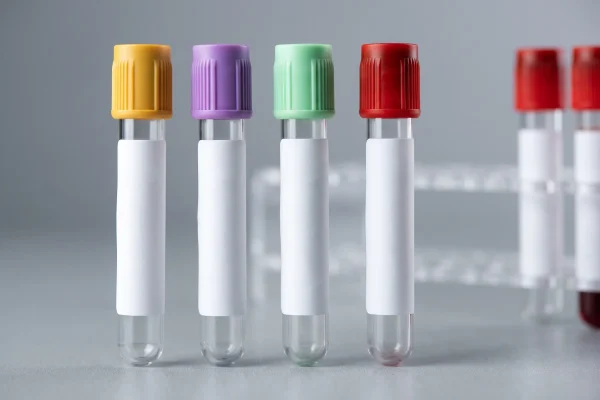
Peptides and bloodwork belong in the same conversation, and the labs come first. Before a first injection you want a comprehensive metabolic panel, a complete blood count, a lipid panel, and HbA1c with fasting glucose and insulin. Add thyroid function with free T4, hs-CRP, sex hormones, and IGF-1 if the plan touches the growth hormone axis. Then you monitor on a schedule. Draw again early, while a problem is still small and still reversible.
This article skips dosing protocols. It also skips the shopping list you could hand to a direct-to-consumer lab portal. Ordering a panel is the easy half. The hard half is reading it against your own numbers. Then changing the plan when one of them moves.
I’m a board-certified general surgeon and I own Formation, a regenerative medicine clinic in Tampa. I don’t do the injections. Jeff Atlas, PA-C does, and he came to us from orthopaedics.
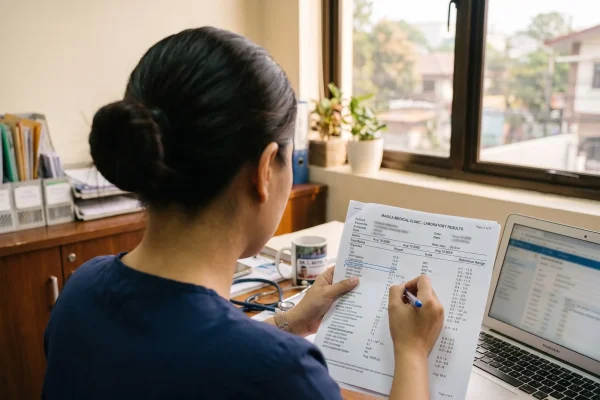
Bloodwork on a peptide plan does two jobs. It sets your personal starting point, and it catches drift before you can feel it.
Peptide bloodwork is a set of lab panels drawn before a protocol begins and repeated while it runs. The panels read liver and kidney function, blood sugar and insulin, lipids, thyroid, inflammation, sex hormones, and IGF-1. They compare you against your own numbers rather than a population average.
Most of the peptides people ask about carry no monitoring guideline at all. That absence is not a footnote. What to monitor gets built from the pathway you’re pushing, not copied off a protocol sheet.
Because after the first dose you no longer have a baseline. You have a number with a peptide already inside it.
Early drift is quiet. Blood sugar creeping up on a growth hormone secretagogue doesn’t announce itself. Neither does a liver enzyme sliding out of range. By the time something feels wrong, you’ve lost the ability to say whether the peptide caused it.
There’s a harder reason, too. Sometimes the labs say no.
Say the panel shows poor glucose control. Or a thyroid already struggling. Or a marker that needs a real workup. That’s not a green light with footnotes. It’s a different plan, often in a different order. Saying no is part of this job. I’d rather have that talk on day one than three months in. Safety in this field lives in the source and the supervision, not in the molecule.
A baseline panel covers metabolism, organ function, inflammation, and hormones. Eight pieces do most of the work.
The thyroid piece surprises people. Published growth hormone guidance reports that treatment can lower free T4. It can lower cortisol too, sometimes exposing adrenal insufficiency that was masked. That’s an argument for reading thyroid and adrenal markers together rather than glancing at TSH alone.
The panel follows the mechanism. A healing peptide and a growth hormone secretagogue stress different systems, so they earn different add-ons.
No society guideline exists to copy here, and the reason is worth sitting with. When FDA reviewers worked through these compounds for legal compounding, they found several of them poorly characterized. Impurity questions stayed open, and BPC-157 has no USP monograph for the substance at all. When the compound itself isn’t standardized, you monitor the pathway instead.
IGF-1 is the marker that matters, and glucose is the one that gets missed. A random growth hormone level is close to useless, because the hormone comes out in pulses.
Add IGF-1, fasting insulin and glucose, a full thyroid panel, and morning cortisol with prolactin for the compounds that reach those pathways. Analogs like CJC-1295 lift IGF-1 by signaling the pituitary rather than replacing hormone directly, which is gentler and still measurable. Redraw IGF-1 after any dose change.
The glucose worry isn’t theoretical. In one placebo-controlled trial of growth hormone therapy, 13 percent of patients slipped into impaired glucose tolerance. Another 4 percent developed diabetes. That trial ran on growth hormone replacement rather than secretagogues, at one dosing regimen. It’s still the clearest reason to track HbA1c instead of assuming.
Metabolic and pancreatic markers lead here. Semaglutide is a peptide, and it gets watched like a drug.
Add lipase, kidney filtration rate, and thyroid. When weight comes off fast, check ferritin, B12 and vitamin D, because rapid loss costs nutrients as well as fat. This is the one class where standard drug monitoring already exists, so there’s no excuse for improvising it.
Inflammation markers carry the signal, and the systemic panel often stays flat. Flat is expected here, not a failure.
Peptides like TB-500 act mostly on local tissue, so hs-CRP and ESR track response better than a metabolic panel does. Keep the CMP and CBC anyway for safety. Then pair the labs with what you can measure in the room. Pain, range of motion, how the joint behaves on day four of training.
Early, then on a rhythm. The first recheck lands weeks in, not at the end of a cycle.
An end-of-cycle draw tells you what happened. An early draw tells you what’s happening, and that’s the only version you can act on.
The Endocrine Society’s growth hormone deficiency guideline holds the closest published schedule. It checks patients every one to two months while a dose is being adjusted. Then every six months once the dose settles. Lipids and fasting glucose get reviewed yearly. The guideline says plainly that this schedule comes from clinical experience rather than large controlled trials. It also covers growth hormone replacement in diagnosed deficiency, not secretagogues, so treat it as a starting framework.
Timing matters more than most people expect. Fast for glucose, insulin and lipids. A morning draw before the next dose keeps results comparable. Injectable protocols move levels around across the day.
A single IGF-1 value means almost nothing. It gets useful next to your age, your sex, and your last result.
Ask for it as a standard deviation score, sometimes called a Z score. A bare “within range” tells you little, because the range is wide.
Two 52-year-olds can sit inside that same range and be in completely different shape.
So where should you aim? The same guideline says clinicians commonly target the upper half of the age-adjusted range. It then adds that no published studies offer real guidance on that choice. Hold it loosely, as a working convention rather than a target anyone has proven.
This is why we work from bloodwork showing declining IGF-1 alongside symptoms rather than symptoms alone. A number moving the wrong way is something you can act on. Feeling tired is where the conversation starts.
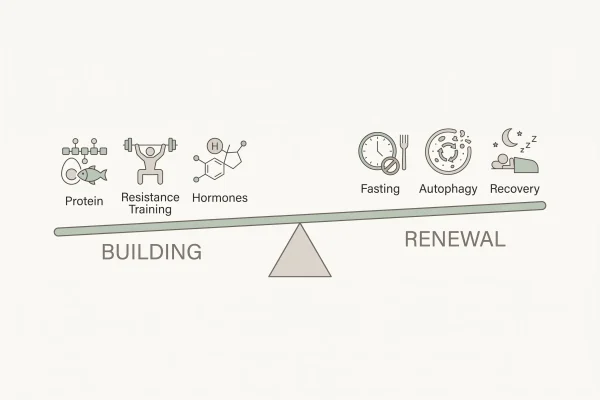
Your panel is a snapshot of a seesaw. One side builds, the other renews, and health lives in the movement between them.
The building side runs on protein, resistance training, growth hormone, IGF-1 and testosterone. The renewal side runs on fasting, autophagy, and the cellular cleanup that clears damaged parts out. Nature already cycles this way, in day and night, feeding and fasting, training and recovery. Most of the trouble I see comes from people trying to live permanently on one side of it. Always eating, never fasting. Always training, never recovering.
Bloodwork is how you find out which side you’re stuck on. A climbing HbA1c next to a high-normal IGF-1 describes someone parked on the building side. Falling testosterone with a quiet inflammation marker reads as a different problem.
Hallmarks addressed: deregulated nutrient-sensing, measured directly by insulin and HbA1c. Chronic inflammation, tracked by hs-CRP. Mitochondrial dysfunction, which surfaces indirectly through metabolic and energy markers. Altered intercellular communication, which is what the hormone panel reads.
This is also why we chase a goal down more than one pathway. Push one pathway hard on its own and the body compensates through another. The result comes out worse than a plan that works several angles together. Peptides don’t do the work, either. Lifestyle does. Sleep, protein, resistance training and real recovery are what move these markers. Peptides, exosomes and stem cells fine-tune work that’s already happening and make it go further.
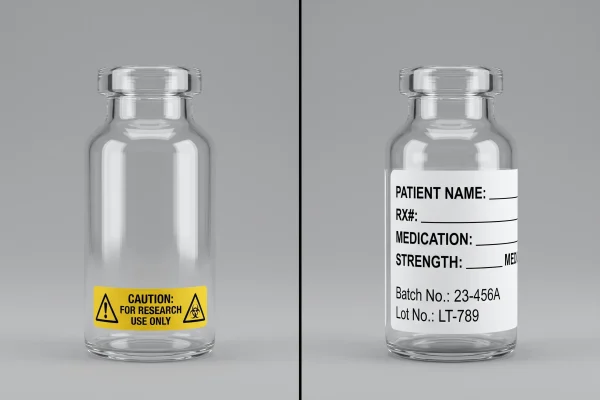
Monitoring only works when you know what went into you. With a research-grade vial, you don’t.
Formation uses only human-grade compounds from licensed compounding pharmacies. We don’t touch research-grade material, and that isn’t a house preference. Vials labeled research use only are illegal to administer, prescribe, purchase or dispense. Independent testing keeps turning up wrong concentrations, contaminants and endotoxins inside them.
Now think about what that does to a result. Your IGF-1 comes back high. Was the dose too much, or was the vial three times stronger than the label claimed? Your liver enzymes climb. Peptide, or contaminant? You’ve paid for a panel that can’t answer the question it was drawn to answer.
Formation holds SSRP and ISSCA certification, the bodies that certify training in peptides, exosomes and stem cells. That matters here for one narrow reason. It’s why we can put the sourcing answer in writing, with a certificate of analysis attached.
Not yet, and not in the way most of the coverage suggested. The vote was a recommendation, not a rule change.
At its July 2026 advisory meeting, the FDA’s Pharmacy Compounding Advisory Committee reviewed seven peptides. It voted by narrow margins to recommend six of them for the list that makes legal compounding possible. BPC-157, KPV, TB-500, MOTS-C, Semax and Epitalon cleared. DSIP didn’t.
The parts that drew less attention matter more. The agency’s own reviewers recommended against all seven, calling the human evidence short and underpowered. Advisory committee votes are non-binding by design. Nothing becomes legal to compound until formal rulemaking finishes. So the monitoring conversation holds where it was, because the sourcing conversation hasn’t moved.
Peptides and bloodwork are one decision, not two. A plan that doesn’t open with a panel and a person who reads it isn’t a plan.
That’s the argument, and it isn’t about the compound or the protocol you found online. It isn’t about how you feel at week three either. Feeling better is real. It just isn’t evidence.
Formation offers a complimentary virtual evaluation with our patient coordinator, Hanna. She works through your goals and outlines a direction before you decide to come in. The in-office consultation with me is a full clinical assessment and carries a fee. Your baseline labs are covered with it. That fee can also be applied toward any procedure or product at the practice.
Bring your last labs if you have them. If you don’t, peptides and bloodwork start on the same day. That’s the right order to do it in.
A baseline panel should include a comprehensive metabolic panel, a complete blood count with differential, a lipid panel, HbA1c with fasting glucose and insulin, a thyroid panel with TSH and free T4, hs-CRP, and sex hormones. Add IGF-1 when the plan touches the growth hormone axis. The point is to establish your own reference numbers before a peptide is in your system.
The first recheck belongs weeks into a protocol rather than at the end of a cycle, because early drift in glucose or liver enzymes is reversible and silent. The closest published schedule comes from the Endocrine Society's adult growth hormone guideline, which checks patients every one to two months while a dose is being adjusted, then every six months once it settles. Any dose change resets that schedule.
Yes, and this is the one class where standard drug monitoring already exists. Alongside a metabolic panel, lipids and HbA1c, monitoring usually adds lipase, kidney filtration rate and thyroid. When weight comes off quickly, ferritin, B12 and vitamin D are worth checking, because rapid loss depletes nutrients as well as fat.
A single IGF-1 number carries almost no meaning on its own, since normal levels shift substantially with age and sex. A standard deviation score, sometimes called a Z score, compares your result against people of the same age and sex. A result described only as within range can hide a value sitting at either edge of a wide band.
Fasting is needed for glucose, insulin and lipids, and it improves consistency across most hormone panels. A morning draw taken before the next scheduled dose also keeps results comparable from visit to visit. Injectable protocols move hormone levels around across the day, so draw timing changes what the number means.
A direct-to-consumer panel can produce accurate numbers, but numbers are not the hard part. Interpretation against your baseline, dose adjustment, and management of an out-of-range result all require clinical context. Many of these compounds also remain unapproved, so the prescribing decision itself needs a licensed provider.
Monitoring assumes you know what was injected. Research-grade vials are illegal to administer, prescribe, purchase or dispense, and independent testing keeps finding wrong concentrations and contaminants in them. If a result comes back abnormal, an unverified vial makes it impossible to tell whether the peptide, the dose or an impurity caused it.
“Glad I took my time researching.”
That line matters.
Choosing to have plastic surgery isn’t just about deciding you want a change. It’s about deciding who you trust to understand the result you’re looking for, especially when the goal isn’t simply removing fat, but creating a shape that still looks natural to you.
For our lovely patient, that meant a tighter stomach and waist, feeling more comfortable in fitted clothing, and most importantly, getting the result she wanted “without looking fake.”
That’s the goal of thoughtful body contouring: not to make you look like someone else, but to create a result that works with your body and your goals.
Dr. Gopal Grandhige specializes in liposuction and body contouring in Tampa, creating treatment plans around each patient’s anatomy, proportions, and goals.
Considering liposuction? DM us or Schedule a consultation at Formation to learn what approach may be right for you (link in bio).
“Glad I took my time researching.”
That line matters.
Choosing to have plastic surgery isn’t just about deciding you want a change. It’s about deciding who you trust to understand the result you’re looking for, especially when the goal isn’t simply removing fat, but creating a shape that still looks natural to you.
For our lovely patient, that meant a tighter stomach and waist, feeling more comfortable in fitted clothing, and most importantly, getting the result she wanted “without looking fake.”
That’s the goal of thoughtful body contouring: not to make you look like someone else, but to create a result that works with your body and your goals.
Dr. Gopal Grandhige specializes in liposuction and body contouring in Tampa, creating treatment plans around each patient’s anatomy, proportions, and goals.
Considering liposuction? DM us or Schedule a consultation at Formation to learn what approach may be right for you (link in bio).
More definition doesn’t automatically mean a better liposuction result.
The goal of body contouring is to create definition that makes sense for your anatomy, not to create the most sculpted abdomen possible simply because we can.
Low-, medium-, and high-definition liposuction can create very different looks, from subtle contouring to a more athletic or highly sculpted appearance.
The right level depends on your existing muscle definition, proportions, surrounding areas of the body, and the result you want to achieve.
For Dr. Gopal Grandhige, a board-certified surgeon specializing in body contouring and high-definition liposuction in Tampa, the goal is balance: the abdomen, chest, back, arms and shoulders should look like they belong to the same body.
The result should feel cohesive, proportional, and natural to your anatomy.
Considering liposuction? DM us or schedule a consultation at Formation to discuss the level of definition that makes sense for your body and your goals (link in bio).
More definition doesn’t automatically mean a better liposuction result.
The goal of body contouring is to create definition that makes sense for your anatomy, not to create the most sculpted abdomen possible simply because we can.
Low-, medium-, and high-definition liposuction can create very different looks, from subtle contouring to a more athletic or highly sculpted appearance.
The right level depends on your existing muscle definition, proportions, surrounding areas of the body, and the result you want to achieve.
For Dr. Gopal Grandhige, a board-certified surgeon specializing in body contouring and high-definition liposuction in Tampa, the goal is balance: the abdomen, chest, back, arms and shoulders should look like they belong to the same body.
The result should feel cohesive, proportional, and natural to your anatomy.
Considering liposuction? DM us or schedule a consultation at Formation to discuss the level of definition that makes sense for your body and your goals (link in bio).
One of the biggest misconceptions about liposuction? That the fat either “comes back” or simply moves somewhere else.
Liposuction permanently removes fat cells from the treated area. But it doesn’t remove every fat cell, and the cells that remain can still grow larger with weight gain.
That’s why long-term results aren’t just about what happens during the procedure. Maintaining a relatively stable weight helps preserve the contour created through liposuction.
Dr. Gopal Grandhige specializes in advanced high definition liposuction and body contouring, with an emphasis on creating results that complement each patient’s natural anatomy.
If you’re considering liposuction in Tampa, schedule a consultation at Formation to learn what approach makes sense for your body and goals (Link in bio).
One of the biggest misconceptions about liposuction? That the fat either “comes back” or simply moves somewhere else.
Liposuction permanently removes fat cells from the treated area. But it doesn’t remove every fat cell, and the cells that remain can still grow larger with weight gain.
That’s why long-term results aren’t just about what happens during the procedure. Maintaining a relatively stable weight helps preserve the contour created through liposuction.
Dr. Gopal Grandhige specializes in advanced high definition liposuction and body contouring, with an emphasis on creating results that complement each patient’s natural anatomy.
If you’re considering liposuction in Tampa, schedule a consultation at Formation to learn what approach makes sense for your body and goals (Link in bio).
6 months post HD liposuction with moderate definition.
The goal was a leaner, more athletic contour with visible definition through the abdomen and torso, without pushing the result to the highest level of definition.
HD liposuction can be customized based on anatomy, muscle structure, and the degree of definition someone wants to achieve.
For this patient, moderate definition created the balance Dr. Gopal was looking for.
Considering HD liposuction?
Schedule a consultation with Dr. Gopal Grandhige at Formation Tampa (link in bio).
6 months post HD liposuction with moderate definition.
The goal was a leaner, more athletic contour with visible definition through the abdomen and torso, without pushing the result to the highest level of definition.
HD liposuction can be customized based on anatomy, muscle structure, and the degree of definition someone wants to achieve.
For this patient, moderate definition created the balance Dr. Gopal was looking for.
Considering HD liposuction?
Schedule a consultation with Dr. Gopal Grandhige at Formation Tampa (link in bio).
These lipo terms aren’t interchangeable.
Traditional liposuction, Lipo 360, and high-definition liposuction can all address unwanted fat, but the approach depends on what you’re actually trying to change.
Maybe it’s one stubborn area that hasn’t responded to diet and exercise.
Maybe the goal is creating better proportion throughout the entire midsection.
Or maybe you’re already lean and looking for more visible, athletic definition.
Those are different goals, and they call for different treatment plans.
Dr. Gopal Grandhige is a board-certified surgeon specializing in body contouring and high-definition liposuction in Tampa.
Each treatment plan starts with your anatomy, your current body composition, and the result you want to achieve.
Considering liposuction? DM us or schedule a consultation at Formation to discuss your goals and determine which approach makes the most sense for you.
These lipo terms aren’t interchangeable.
Traditional liposuction, Lipo 360, and high-definition liposuction can all address unwanted fat, but the approach depends on what you’re actually trying to change.
Maybe it’s one stubborn area that hasn’t responded to diet and exercise.
Maybe the goal is creating better proportion throughout the entire midsection.
Or maybe you’re already lean and looking for more visible, athletic definition.
Those are different goals, and they call for different treatment plans.
Dr. Gopal Grandhige is a board-certified surgeon specializing in body contouring and high-definition liposuction in Tampa.
Each treatment plan starts with your anatomy, your current body composition, and the result you want to achieve.
Considering liposuction? DM us or schedule a consultation at Formation to discuss your goals and determine which approach makes the most sense for you.
Everyone’s anatomy and aesthetic goals are unique—which is why a personalized assessment is key.
Ready to see if Renuvion is the right fit for your transformation?
DM us or give us a call at (813) 922-2920 to schedule your consultation.
#renuvion #jplasma #skintightening #skingoals
Everyone’s anatomy and aesthetic goals are unique—which is why a personalized assessment is key.
Ready to see if Renuvion is the right fit for your transformation?
DM us or give us a call at (813) 922-2920 to schedule your consultation.
#renuvion #jplasma #skintightening #skingoals
Tampa, we have a secret… and ELLE Magazine just confirmed it. 😉✨
Say hello to Picofy by InMode—officially named the Best Glass Skin Laser by ELLE! And the best part? We are the ONLY clinic in Tampa that has it.
If you’ve been dreaming of that effortless, glowing glass skin with zero downtime, this is your sign.
Why we’re obsessed with Picofy:
🌟 Painless treatments (yes, really!)
🌟 Safe & effective for ALL skin tones
🌟 Ultimate skin rejuvenation, pigment reduction, and glow
Ready to upgrade your skincare routine?
Drop a 🪞 in the comments or head to the link in our bio to book your consultation!
You can also stop by for our open house this Thursday, July 30 to check it out in person!!✨🥂
Tampa, we have a secret… and ELLE Magazine just confirmed it. 😉✨
Say hello to Picofy by InMode—officially named the Best Glass Skin Laser by ELLE! And the best part? We are the ONLY clinic in Tampa that has it.
If you’ve been dreaming of that effortless, glowing glass skin with zero downtime, this is your sign.
Why we’re obsessed with Picofy:
🌟 Painless treatments (yes, really!)
🌟 Safe & effective for ALL skin tones
🌟 Ultimate skin rejuvenation, pigment reduction, and glow
Ready to upgrade your skincare routine?
Drop a 🪞 in the comments or head to the link in our bio to book your consultation!
You can also stop by for our open house this Thursday, July 30 to check it out in person!!✨🥂
“I just want to look like me, but fitter.” — Mission accomplished. 🙌
Here is an incredible 3-month update for our patient following a circumferential body lift with liposculpting.
By addressing excess skin 360 degrees around the beltline while strategically sculpting the chest, shoulders, and abdomen, we achieved a smooth, athletic frame without sacrificing a natural appearance. He looks leaner, stronger, and completely redefined.
Ready to start your journey? DM us or click the link in our bio to book your consultation.
#tampa #360lift #plasticsurgeryclinic
“I just want to look like me, but fitter.” — Mission accomplished. 🙌
Here is an incredible 3-month update for our patient following a circumferential body lift with liposculpting.
By addressing excess skin 360 degrees around the beltline while strategically sculpting the chest, shoulders, and abdomen, we achieved a smooth, athletic frame without sacrificing a natural appearance. He looks leaner, stronger, and completely redefined.
Ready to start your journey? DM us or click the link in our bio to book your consultation.
#tampa #360lift #plasticsurgeryclinic
RSVP (link in bio) and get a raffle entry.
‼️get another raffle ticket for every three friends you tag. Unlimited entries. You can essentially guarantee a prize !
We’re going ALL OUT for our July 30th Party, and our raffle lineup this year is unmatched. 🥳
Every ticket you get puts you in the running for some serious glow-ups and top-tier treatments!
Take a look at what you could win:
1️⃣ 3-Pack Picofy Laser Facials✨($3,375 value)
2️⃣ COMPLETE Tattoo Removal — Unlimited sessions until it’s gone! 🚫🎨 ($4,340 value)
3️⃣ 100 Units of Botox 💉 ($1,500 value)
4️⃣ Full Syringe of Filler ( @juvederm ) 💋 ($900 value)
5️⃣ $500 Gift Card toward Peptides 🧬
6️⃣ FULL Permanent Makeup Brow Set (Nano/Powder/Combo)👁️✨ ($1,000 value) @bladingbybrent
7️⃣ Epicutis Gift Bag packed with luxury skincare 🛍️
*Exclusive Event-Only Discounts just for showing up!* 💸
Which prize are you claiming? Drop the number in the comments below! 👇💬
📅 When: July 30th
📍 Where: Formation (1315 S Howard Ave, Tampa)
⏰ Time: 5:30pm
Tag your party bestie who needs to enter with you! 👯♀️👇
Edited · 2d
RSVP (link in bio) and get a raffle entry.
‼️get another raffle ticket for every three friends you tag. Unlimited entries. You can essentially guarantee a prize !
We’re going ALL OUT for our July 30th Party, and our raffle lineup this year is unmatched. 🥳
Every ticket you get puts you in the running for some serious glow-ups and top-tier treatments!
Take a look at what you could win:
1️⃣ 3-Pack Picofy Laser Facials✨($3,375 value)
2️⃣ COMPLETE Tattoo Removal — Unlimited sessions until it’s gone! 🚫🎨 ($4,340 value)
3️⃣ 100 Units of Botox 💉 ($1,500 value)
4️⃣ Full Syringe of Filler ( @juvederm ) 💋 ($900 value)
5️⃣ $500 Gift Card toward Peptides 🧬
6️⃣ FULL Permanent Makeup Brow Set (Nano/Powder/Combo)👁️✨ ($1,000 value) @bladingbybrent
7️⃣ Epicutis Gift Bag packed with luxury skincare 🛍️
*Exclusive Event-Only Discounts just for showing up!* 💸
Which prize are you claiming? Drop the number in the comments below! 👇💬
📅 When: July 30th
📍 Where: Formation (1315 S Howard Ave, Tampa)
⏰ Time: 5:30pm
Tag your party bestie who needs to enter with you! 👯♀️👇
Edited · 2d
1 Month Post-Op Transformation! 💥
Fixing previous surgical outcomes requires precision, expertise, and a tailored approach.
Here’s how Dr. Grandhige transformed this patient’s core and chest:
The Challenge:
Previous tummy tuck left uneven abdominal fat distribution
High scar placement creating a visible “shelf” effect
The Solution:
HD Liposculpture to refine and sculpt a athletic, masculine core and chest
Scar Revision to eliminate the shelf-like appearance and create a smoother profile
Keep in mind, at just 1 month post-op, swelling is still settling and we are nowhere near final results! Can’t wait to see this shape mature over the next few months. 🔥
💬 Questions about revision procedures? Drop them in the comments or send us a DM!

1 Month Post-Op Transformation! 💥
Fixing previous surgical outcomes requires precision, expertise, and a tailored approach.
Here’s how Dr. Grandhige transformed this patient’s core and chest:
The Challenge:
Previous tummy tuck left uneven abdominal fat distribution
High scar placement creating a visible “shelf” effect
The Solution:
HD Liposculpture to refine and sculpt a athletic, masculine core and chest
Scar Revision to eliminate the shelf-like appearance and create a smoother profile
Keep in mind, at just 1 month post-op, swelling is still settling and we are nowhere near final results! Can’t wait to see this shape mature over the next few months. 🔥
💬 Questions about revision procedures? Drop them in the comments or send us a DM!

References:
Muttenthaler, M., King, G. F., Adams, D. J., & Alewood, P. F. (2021). Trends in peptide drug discovery. Nature Reviews Drug Discovery, 20(4), 309–325. https://pubmed.ncbi.nlm.nih.gov/33536635/
Wang, L., Wang, N., Zhang, W., Cheng, X., Yan, Z., Shao, G., Wang, X., Wang, R., & Fu, C. (2022). Therapeutic peptides: Current applications and future directions. Signal Transduction and Targeted Therapy, 7(1), 48. https://pubmed.ncbi.nlm.nih.gov/35165272/
Lau, J. L., & Dunn, M. K. (2018). Therapeutic peptides: Historical perspectives, current development trends, and future directions. Bioorganic & Medicinal Chemistry, 26(10), 2700–2707. https://pubmed.ncbi.nlm.nih.gov/28720325/
Wilding, J. P. H., Batterham, R. L., Calanna, S., Davies, M., Van Gaal, L. F., Lingvay, I., McGowan, B. M., Rosenstock, J., Tran, M. T. D., Wadden, T. A., Wharton, S., Yokote, K., Zeuthen, N., & Kushner, R. F. (2021). Once-weekly semaglutide in adults with overweight or obesity. New England Journal of Medicine, 384(11), 989–1002. https://pubmed.ncbi.nlm.nih.gov/33567185/
Xiao, W., Jiang, W., Chen, Z., Huang, Y., Mao, J., Zheng, W., Hu, Y., & Shi, J. (2025). Advance in peptide-based drug development: delivery platforms, therapeutics and vaccines. Signal Transduction and Targeted Therapy, 10(1), 74. https://pubmed.ncbi.nlm.nih.gov/40038239/
Peptides optimize the effort you are putting in. Get a FREE 15-minute Virtual Protocol Review + our Regenerative Treatment Newsletter.
We’ll show you exactly how we evaluate candidacy — plus, we cover the cost of your baseline labs with all in-person consults ($100).